Managing an older adult’s prescription medications has long been a persistent financial drain for families and caregivers alike. Historically, individuals navigating the healthcare system were forced to confront convoluted coverage phases that made personal budgeting nearly impossible. However, the introduction of the 2026 Medicare Part D changes has eliminated much of that historic volatility, bringing a new era of forced financial predictability to the prescription drug market.
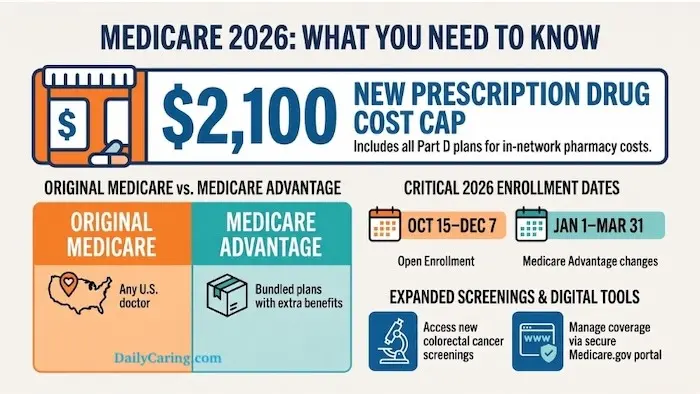
Thanks to the final implementation phases of the landmark Inflation Reduction Act, out-of-pocket costs for covered prescription drugs are now strictly capped at $2,100 annually. Alongside this significant consumer protection, the maximum standard deductible has been legally set at $615 for the year. For millions of seniors and the family members who support them, these structural reforms alter how eldercare financial planning must be approached.
The End of the Donut Hole
For over a decade, perhaps the most destructive and widely criticized element of Medicare Part D for seniors was the coverage gap, universally known as the donut hole. Under that older system, seniors who reached a specific spending threshold suddenly found themselves responsible for a massive percentage of their total drug costs. They were forced to shoulder these heavy financial burdens until their total spending finally crossed over into catastrophic coverage.

As of the 2026 plan year, the donut hole is permanently dead. It no longer exists within the federal healthcare framework.
Understanding these Medicare Part D changes and the associated prescription caps has quickly become a mandatory component of comprehensive eldercare financial planning. Once an enrollee spends exactly $2,100 out of pocket within a single calendar year, their Part D plan or Medicare Advantage plan steps in to pay 100% of the cost of covered medications for the remainder of the year. There are no exceptions to this rule, and the previous catastrophic phase where patients were still on the hook for a 5% coinsurance rate has been completely erased. Once the threshold is met, the patient cost drops straight to zero.
The Real Threat: Formulary Manipulation
Despite the welcome relief provided by the new spending caps, healthcare advocates warn that families should not assume their current insurance coverage is entirely safe. Insurance companies are businesses that are not absorbing these new financial responsibilities out of the goodness of their hearts. Instead, many are aggressively manipulating their approved drug lists, known as formularies, and shifting medications into higher pricing tiers to offset the mandated caps.

A prescription drug that was fully covered and affordable in 2025 might be dropped entirely or restricted by policies like step therapy in 2026. Beneficiaries and caregivers must meticulously verify that their loved one’s specific medications remain firmly on their plan’s formulary during the Annual Enrollment Period. This step is critical because if a drug is dropped and is not on the active formulary, any money spent on it out of pocket will not count toward the vital $2,100 annual cap.
How the Medicare Prescription Payment Plan Works
To prevent seniors from facing immediate and potentially overwhelming deductible hits at the pharmacy counter during the month of January, the 2026 updates mandate the continuation of the Medicare Prescription Payment Plan. This opt-in program was designed specifically to help enrollees smooth their out-of-pocket prescription costs evenly across the entire calendar year.
Instead of paying a large lump sum upfront when picking up vital medications, a caregiver can opt their loved one into this structured payment program. Under this arrangement, the pharmacy bills the insurance plan directly, and the insurance plan then sends the enrollee a manageable monthly bill for their share of the costs. This prevents sudden cash-flow crises for households living on fixed incomes.

Another critical, though frequently overlooked, Medicare Part D change involves the federal premium stabilization program. To prevent insurance companies from simply jacking up monthly premiums exponentially to compensate for the new out-of-pocket spending caps, the law limits base premium increases to a maximum of 6% per year.
However, experts caution that this safeguard only applies to the base premium. Individual plan premiums across the market will still fluctuate based on provider choices and regional factors, making annual comparison shopping an absolute necessity for households trying to keep fixed expenses under control. Reviewing available coverage options early in the season provides families with a distinct financial advantage.
What the New $2,100 Limit Means for You
Understanding these updated Medicare prescription caps remains vital for anyone engaged in long-term eldercare financial planning. The days of the dreaded coverage gap are officially over, offering a predictable financial ceiling that was previously unimaginable for many fixed-income seniors. Once a beneficiary spends $2,100 out of pocket over the course of the year, their plan assumes full financial responsibility for all covered medications.
At the same time, the ongoing shifting of drug formularies by major insurance providers means constant vigilance is required. Families must regularly check that their prescribed treatments remain fully approved under their chosen plan.
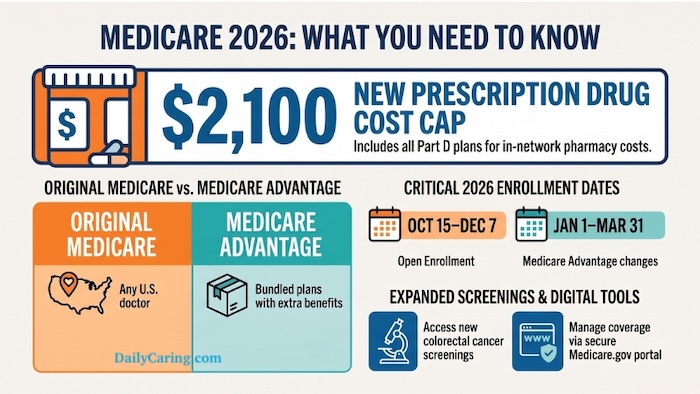
The policy updates also establish clear financial parameters for the year. The annual out-of-pocket maximum is strictly capped at $2,100, while the standard deductible is set at $615 for the plan year. Utilizing tools like the optional Medicare Prescription Payment Plan can further assist households in smoothing out these expenses over twelve months, avoiding sudden financial shocks at the pharmacy.
While these federal reforms provide significant relief and predictability for millions of older adults, navigating the nuances of modern healthcare coverage still demands careful attention to detail during every enrollment cycle.