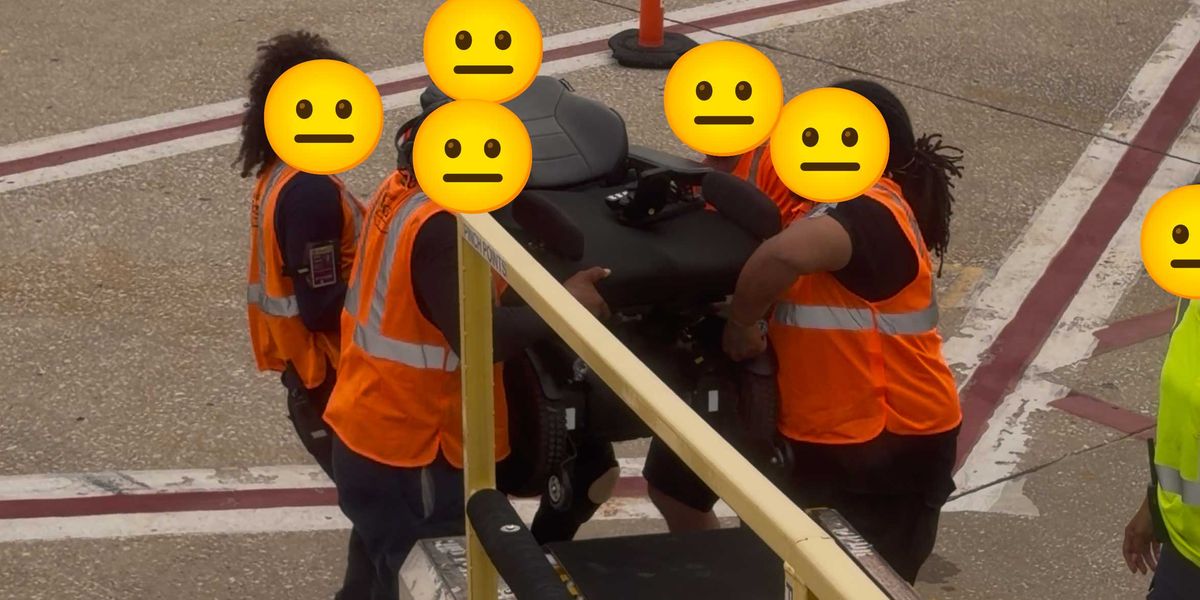
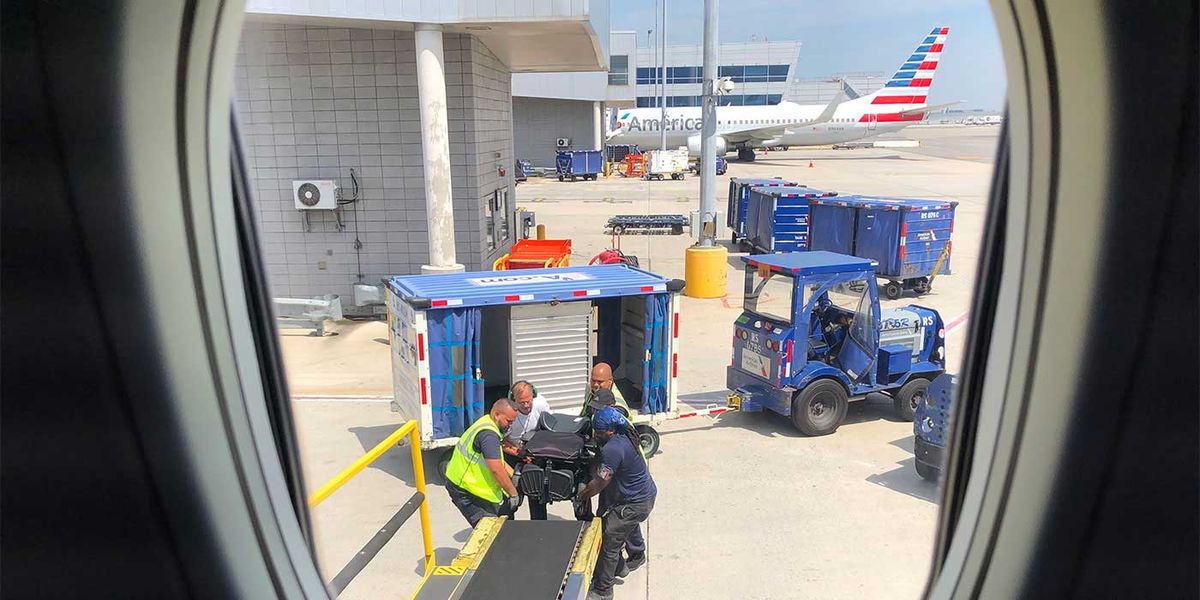
Early this year, a familiar and frustrating ordeal began on an American Airlines flight, highlighting an ongoing crisis in accessible air travel. Rather than utilizing standard, proper wheelchair lifts to safely lower equipment from the aircraft, baggage handlers physically lifted a heavy, motorized wheelchair directly from the belt loader. The outcome was entirely predictable: the 400-pound apparatus proved far too heavy for the handlers to manage safely, resulting in the chair slipping and dropping onto the pavement at a jarring, awkward angle.
Observing the careless mishandling from the passenger cabin window, the traveler immediately anticipated severe structural repercussions. Although the full extent of the calamity could not be determined from the seat view, a deep-seated suspicion remained. When filing the initial formal wheelchair damage claim with the carrier, the traveler reported what could be visually verified at the time: a broken piece of plastic trim, a bent headlight, and, most alarmingly, a persistent, unusual noise emitting from the wheel assembly. Visually, the chair appeared mostly intact on the surface, but in the specialized world of complex mobility equipment, appearances can be entirely deceiving.

A Revolving Door of Futile Repairs
In response to the claim, a local wheelchair repair technician was dispatched to the owner’s home. After a preliminary evaluation, the technician diagnosed the issue as a bent drive wheel. A couple of weeks later, the component was finally replaced, yet the troubling noise persisted unchanged.
A subsequent technician was sent out to take a second look, this time diagnosing a damaged motor. Another waiting period ensued before a replacement motor was ordered, shipped, and installed. Once again, despite the new hardware, the noise remained entirely unaffected.

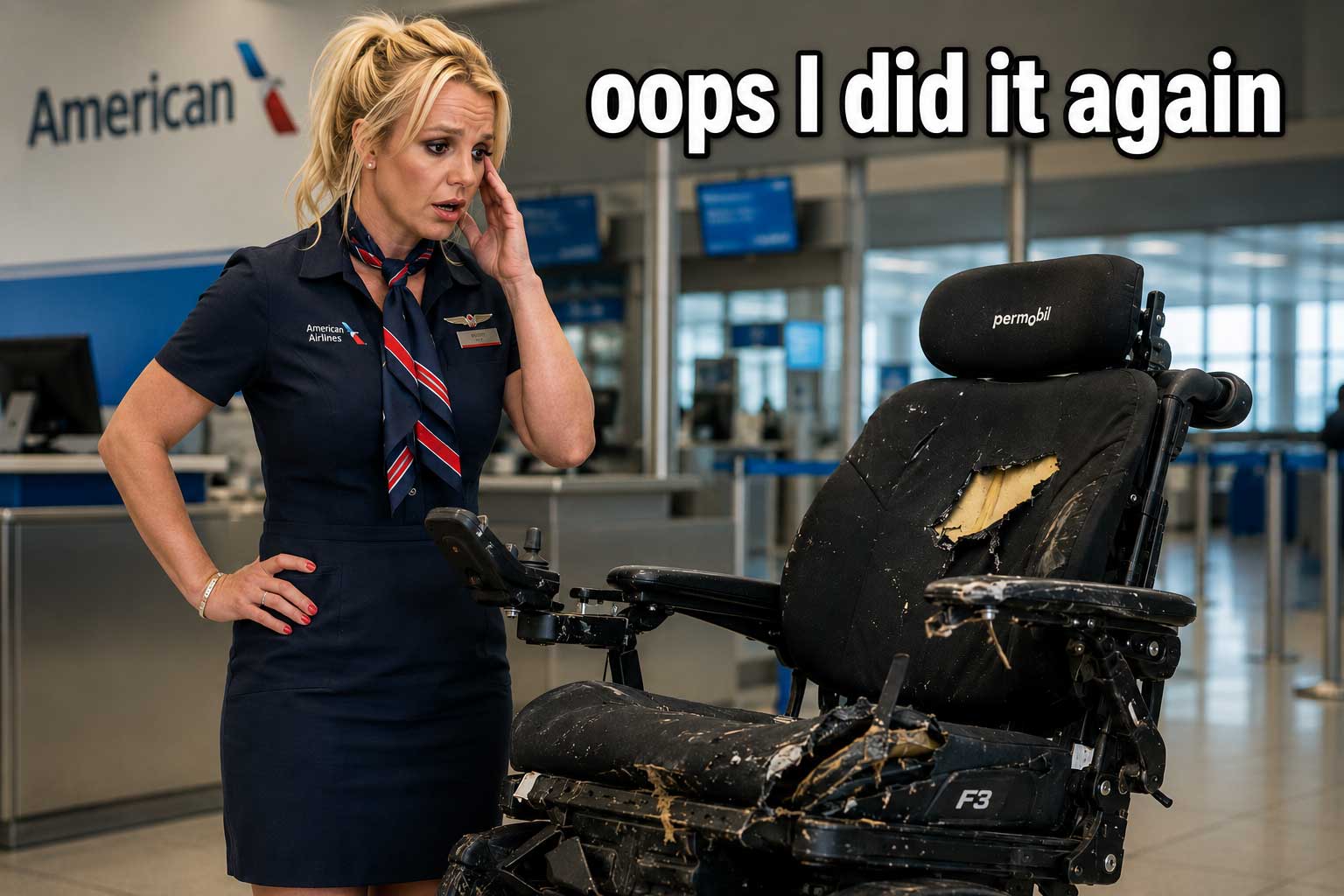
During this protracted and unsuccessful repair cycle, the mobility device suffered further indignities. Mishandled not once, but twice more—this time by United Airlines—the wheelchair was dropped even harder during transit. The impacts left the chair with a newly bent armrest, a torn seat cushion, and a significantly louder, far more irritating grinding noise emanating directly from the undercarriage.
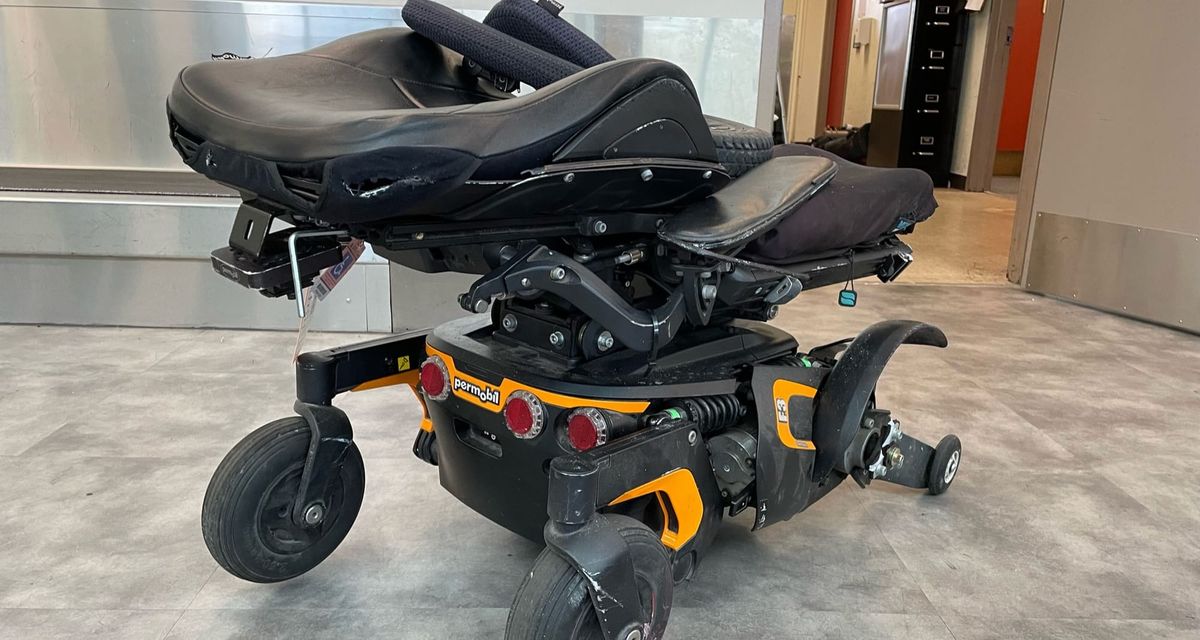
Over the following weeks, a revolving door of repair personnel cycled through the owner’s residence. A series of technicians assessed the equipment, swapping out virtually every major component including motors, wheels, casters, and shock absorbers. Yet, despite dozens of hours sacrificed across more than ten separate service appointments, the underlying mechanical issue never went away. Exhausted and ready to concede defeat, the traveler made one final, desperate appeal, requesting that the actual equipment manufacturer examine the severely compromised chair.
Uncovering the Root Cause
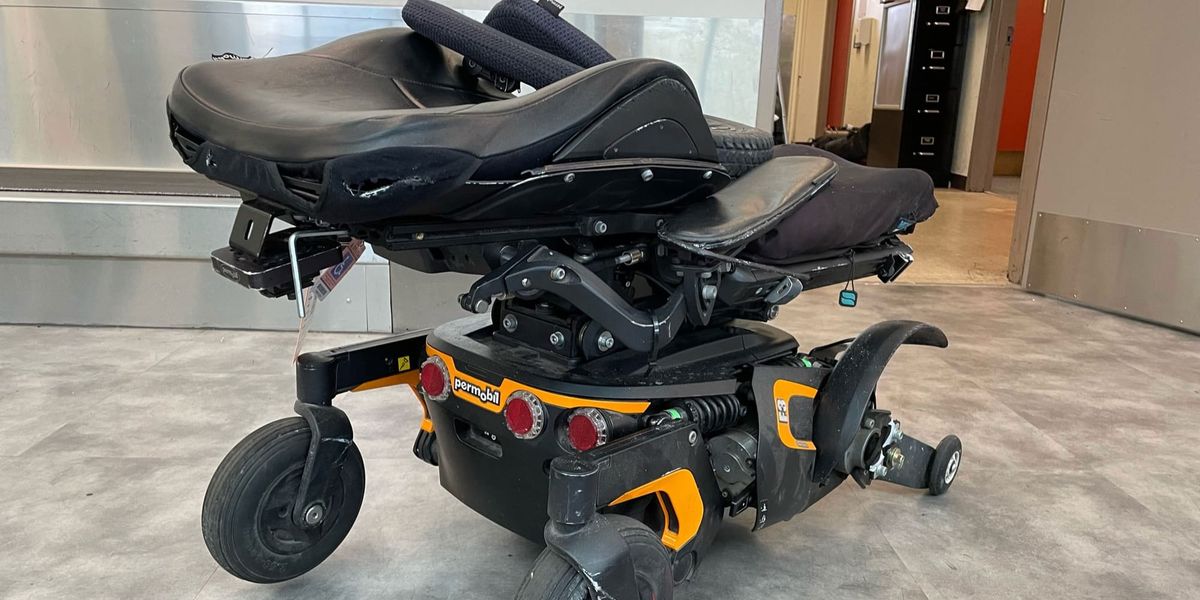
When a Permobil representative—an expert intimately familiar with the exact engineering and specifications of the device—finally inspected the wheelchair, the truth emerged. The manufacturer’s expert determined definitively that the wheelchair’s frame had indeed suffered structural damage during the initial airline drops. The expert delivered a sobering assessment: once a specialized power wheelchair of this caliber is dropped, the manufacturer can no longer certify that it is safe for the user to operate.

Those expert words proved decisive. Armed with the manufacturer’s formal assessment, United Airlines ultimately approved a complete replacement wheelchair. With this latest resolution, the traveler achieved a dubious milestone: having a heavy-duty power chair completely destroyed and subsequently replaced by each of the major three U.S. carriers—once by Delta Air Lines, multiple times by American Airlines, and now by United.
The ordeal exposed a fundamental disconnect in how the broader repair industry understands specialized mobility equipment. Local wheelchair repair technicians possess virtually no experience in diagnosing or identifying structural frame damage in advanced power chairs. Their daily routines consist of straightforward, local service calls—changing worn tires, installing fresh batteries, and swapping out simple, localized failed parts. The wheelchairs they typically service are utilized exclusively within homes and local communities, a stark contrast to equipment loaded onto more than a hundred commercial flights every single year.

When these well-meaning technicians were dispatched to assess airline-inflicted damage, they heard a noise and logically attempted to fix it based on their standard training. While a seemingly reasonable approach on the surface, the structural damage was inherently unrepairable. Every repair attempt by local contractors turned out to be an exercise in utter futility because the foundational integrity of the frame had been fatally compromised.
A Persistent Threat to Accessible Travel
The harsh reality is that commercial airlines subject wheelchairs to catastrophic forces that would never be encountered anywhere else in daily life. A 400-pound motorized wheelchair is never hoisted off its wheels or dropped onto tarmac anywhere except when placed into the supposed "care" of commercial aviation personnel. Moving forward, travelers facing similar incidents will know to bypass general local contractors and call upon manufacturer representatives much earlier in the process—experts who are uniquely qualified to identify structural, irreparable damage.

The saga continued shortly after a new replacement wheelchair was delivered. Taking its maiden voyage on a round-trip journey from St. Louis to Dallas aboard American Airlines, the brand-new equipment survived the outbound leg without incident. However, upon the return flight, the brand-new wheelchair was mishandled once again. While the full extent of the new trauma remains to be seen, loud squeaking noises have begun emitting from the seating system and central pillar, signaling that the exhausting cycle of airline damage and bureaucratic friction may be starting all over again.