Across Southern California, the urban layout of the Greater Los Angeles region continues to serve as an expansive hub for inclusive travel, offering wide-ranging accessibility features across its iconic coastal stretches, cultural institutions, and entertainment centers. From the oceanfront promenades of Santa Monica and Long Beach to the historic cultural corridors of Pasadena and Downtown Los Angeles, urban planners, park departments, and cultural institutions across the region have integrated inclusive design principles to ensure seamless access for travelers using wheelchairs and other mobility devices.
The Greater Los Angeles region—an expansive metropolitan area encompassing neighboring coastal, valley, and inland cities alongside Los Angeles proper—presents a diverse array of accessible experiences. Recent updates to local infrastructure highlight how municipalities across the region have emphasized barrier-free access, featuring smooth beach paths, elevated public observatories with dedicated viewing platforms, expansive museum galleries, and level urban park loops.
Hollywood and Iconic Regional Landmarks
At the heart of the region’s entertainment identity, classic landmarks across the Hollywood footprint and surrounding hills have adapted historic and modern structures to accommodate visitors with physical mobility needs.
Perched along the southern slope of Mount Hollywood within Griffith Park, the historic Griffith Observatory stands as one of the most visible public landmarks in the city. The site provides sweeping, panoramic vistas across the entire Los Angeles basin, extending to the Pacific Ocean, along with direct views of the world-famous Hollywood Sign. The observatory grounds and public viewing decks feature smooth outdoor plazas and step-free access paths, allowing wheelchair users to navigate between outdoor telescopes, the historic main building, and surrounding grounds without architectural barriers.
Below in the flatlands of Hollywood Boulevard, the Hollywood Walk of Fame offers a continuous sidewalk-level experience along one of the most recognized thoroughfares in the world. Visitors navigating on wheels can travel directly over the paved stars embedded into the sidewalks along Hollywood Boulevard and Vine Street, exploring decades of entertainment history directly at street level.
Directly adjoining this stretch is the TCL Chinese Theatre, a historic movie palace famed for hosting Hollywood premieres and housing the concrete forecourt containing handprints and footprints of iconic film personalities. The exterior forecourt and surrounding courtyard areas are level and directly accessible from the sidewalk, enabling visitors using mobility equipment to inspect the historic celebrity impressions up close.
Further north along the hillside corridor, Universal CityWalk functions as a vibrant, open-air shopping, dining, and entertainment promenade situated adjacent to Universal Studios Hollywood. Designed as a modern, multi-level pedestrian plaza, CityWalk utilizes wide paved avenues, accessible ramps, and smooth transitions between retail storefronts, live music venues, and outdoor dining patios.
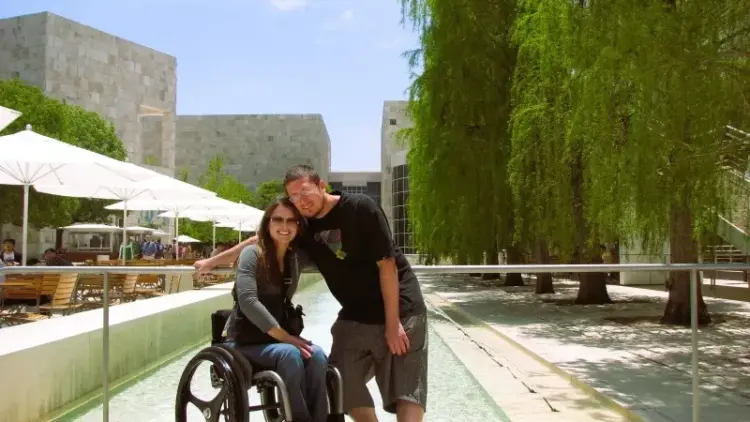
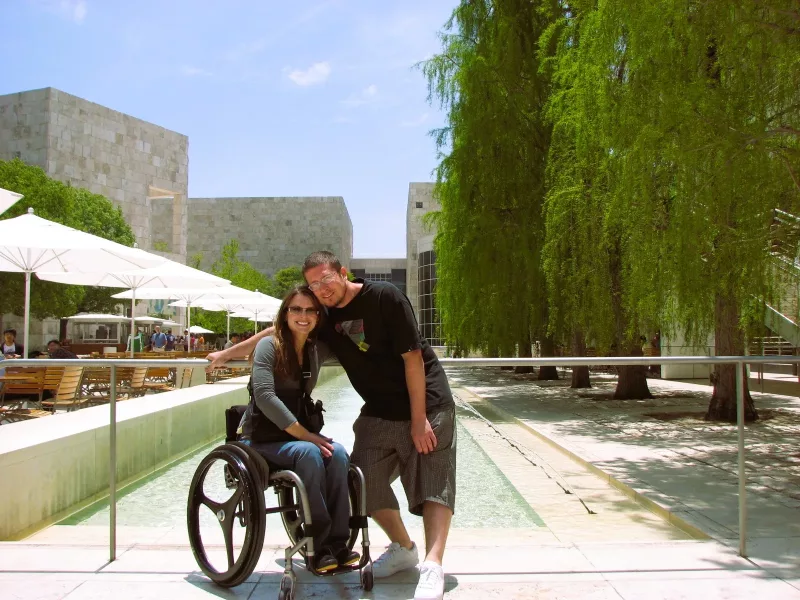
Positioned on a crest in the Santa Monica Mountains above the Interstate 405 corridor, The Getty Center pairs world-class art collections with modern architectural design. Visitors access the hilltop campus via an accessible computer-operated tram that rises from the lower parking structure. Once at the summit, the campus features wide travertine plazas, accessible outdoor garden terraces, and multi-level art pavilions connected by spacious elevators and step-free walkways.
Coastal Waterfronts and Oceanfront Trails
The coastal municipalities of Greater Los Angeles feature miles of paved waterfront paths, pier structures, and oceanfront boardwalks that allow visitors with mobility devices to experience Southern California’s iconic coastline without navigating loose sand.
In Santa Monica, the historic Santa Monica Pier extends out into the Pacific Ocean, offering paved and timber-decked surfaces that accommodate wheelchairs throughout its arcade zones, outdoor dining venues, and historic amusement park spaces. Running directly beneath and alongside the pier is the Marvin Braude Bike Trail, commonly known as the Beach Path. This paved coastal route provides a continuous, smooth surface running parallel to the tide, allowing users to roll along the beachfront with direct ocean views.
Just south along the same coastal stretch, the Venice Beach Boardwalk provides an eclectic oceanfront promenade environment. Flanked by local vendors, street performers, and active recreation zones, the boardwalk is completely flat and wide, offering unobstructed rolling access along the beachfront strip.
In the northern coastal enclave of Malibu, Malibu Surfrider Beach and Pier offers a serene oceanfront setting known globally for its surf culture. The historic wooden pier features smooth timber decking and barrier-free access, allowing visitors using wheelchairs to travel over the water to view the coastline, local marine life, and historic surfing breaks.
Further south in the region, the Long Beach Shoreline Path provides an expansive, flat waterfront route along the Long Beach harbor and marina. The dedicated pedestrian path features smooth concrete paving, continuous harbor views, and easy access to nearby waterfront commercial districts, passing near historic maritime attractions and calm marina waters.
Completing the coastal belt, the Manhattan Beach Strand offers a classic beach-town corridor. The wide, paved multi-use pathway runs along the elevated sand line, providing clear views of oceanfront homes, the historic Manhattan Beach Pier, and the open ocean on a smooth, well-maintained surface.
Cultural Institutions and Museum Corridors
Greater Los Angeles houses several major museum corridors designed with expansive indoor floor plans, step-free gallery entries, and modern accessibility standards that ensure equal access to historical, scientific, and artistic collections.
In Downtown Los Angeles, The Broad stands as a major contemporary art museum housing thousands of modern works, including Yayoi Kusama’s famous, immersive Infinity Mirror Rooms. The museum’s striking honeycomb-like architecture includes wide gallery spaces, smooth polished concrete floors, and large elevators designed to accommodate heavy visitor traffic and mobility equipment.
Along the Miracle Mile corridor, the Los Angeles County Museum of Art (LACMA) represents the largest art museum in the western United States. Its multi-building campus features wide outdoor plazas—including the iconic Urban Light installation composed of restored historic streetlamps—alongside accessible indoor galleries containing art spanning from antiquity to contemporary eras.
Located in Exposition Park, the California Science Center offers an interactive educational experience highlighted by the display of the Space Shuttle Endeavour. The multi-story facility features spacious, climate-controlled exhibit halls, ramped displays, wide elevators, and accessible touch-based science exhibits suitable for visitors of all ages and abilities.
Directly neighboring the science center within Exposition Park is the Natural History Museum of Los Angeles County. The historic museum houses massive dinosaur skeleton displays, mineral exhibits, and meticulously preserved dioramas illustrating native California wildlife and ecosystems, all connected through accessible ramps, smooth walkways, and modernized elevator systems.
Also situated on Miracle Mile, the Petersen Automotive Museum features a striking ribboned exterior and broad interior exhibition floors. Dedicated to automotive history, engineering, and design, the museum offers wide, barrier-free galleries displaying classic, luxury, racing, and futuristic concept vehicles.
Botanical Gardens, Urban Parks, and Natural Spaces
Beyond urban centers and museum complexes, the region contains expansive botanical gardens, public parks, and protected nature preserves engineered with accessible trails and paved loop paths.
Located in La Cañada Flintridge at the foot of the San Gabriel Mountains, Descanso Gardens offers a tranquil retreat centered around native California flora and cultivated botanical collections. The site features paved and firmly packed accessible pathways that wind through blooming rose gardens, lilac groves, camellia collections, and seasonal floral displays.
In Pasadena, The Huntington Library, Art Museum, and Botanical Gardens spans over 100 acres of landscaped grounds, historic library collections, and classic art galleries. The estate features wide, paved walkways that navigate through themed spaces, including Japanese gardens, desert plant collections, and European art galleries, with dedicated accessible routes throughout the property.
In the urban heart of the city, Echo Park Lake features a popular public loop trail surrounding a central urban reservoir. The flat, paved pathway allows wheelchair users to roll alongside blooming lotus beds, view the historic fountain, watch pedal boat activity, and take in backdrop views of the Downtown Los Angeles skyline.
Positioned in the Baldwin Hills, the Kenneth Hahn State Recreation Area provides open green spaces, manicured lawns, and elevated vantage points overlooking the city basin. The park includes smooth, paved walking paths and accessible hilltop areas that deliver unobstructed views stretching from Downtown LA to the coast.
In Long Beach, the El Dorado Nature Center provides a peaceful escape from the surrounding urban area. Nestled within a 105-acre park, the center features smooth, accessible dirt and paved trails that wind around quiet lakes, stream beds, and wooded habitats, offering a tranquil nature experience tailored for mobility devices.
Family Attractions and Historic Community Markets
Rounding out the region’s accessible offerings are historic public markets and major family-friendly recreation destinations operating across Griffith Park, Downtown LA, and Long Beach.
The Los Angeles Zoo, located in the northern stretches of Griffith Park, spans 133 acres containing diverse animal exhibits representing habitats from around the globe. While situated in natural, hilly terrain, the zoo features wide, paved main paths, accessible viewing glass for animal enclosures, and dedicated shuttle services to assist guests navigating elevation changes across the park.
In Long Beach, the Aquarium of the Pacific offers a fully accessible, climate-controlled indoor environment housing thousands of marine animals. The facility features touch tanks designed at accessible heights, wide viewing panels into large ocean habitats, and spacious pathways that accommodate families and mobility devices throughout the two-story complex.
Near the Grove shopping complex in Mid-City, the Original Farmers Market at 3rd & Fairfax has operated continuously since 1934. The open-air historic market features level, paved aisles and wide corridors lined with dozens of local food stalls, specialty bakeries, and open dining areas.
Adjacent to LACMA on Miracle Mile, the La Brea Tar Pits & Museum sits on an active ice-age fossil excavation site. Visitors can navigate flat outdoor paths surrounding bubbling asphalt pits in Hancock Park before entering the fully accessible museum to view preserved mammoths, saber-toothed cats, and ongoing paleontological research.
In Downtown Los Angeles, Grand Central Market has served as a bustling culinary destination since 1917. Occupying a large ground-floor hall beneath historic residential space, the market features accessible entrances and flat, open aisles connecting diverse food vendors representing Southern California’s rich culinary traditions.