The encounter was so pointed and so remarkably specific that it left Stevie Morris entirely speechless. Sitting across from her partner, John, during a breakfast date in Knoxville, Tennessee, she braced herself for the familiar, albeit condescending, brand of inspiration porn that frequently shadows the disability experience. Having raised her teenage son, Robert, who also navigates the world as a wheelchair user, Morris felt well-versed in the spectrum of public reactions directed at disabled individuals.
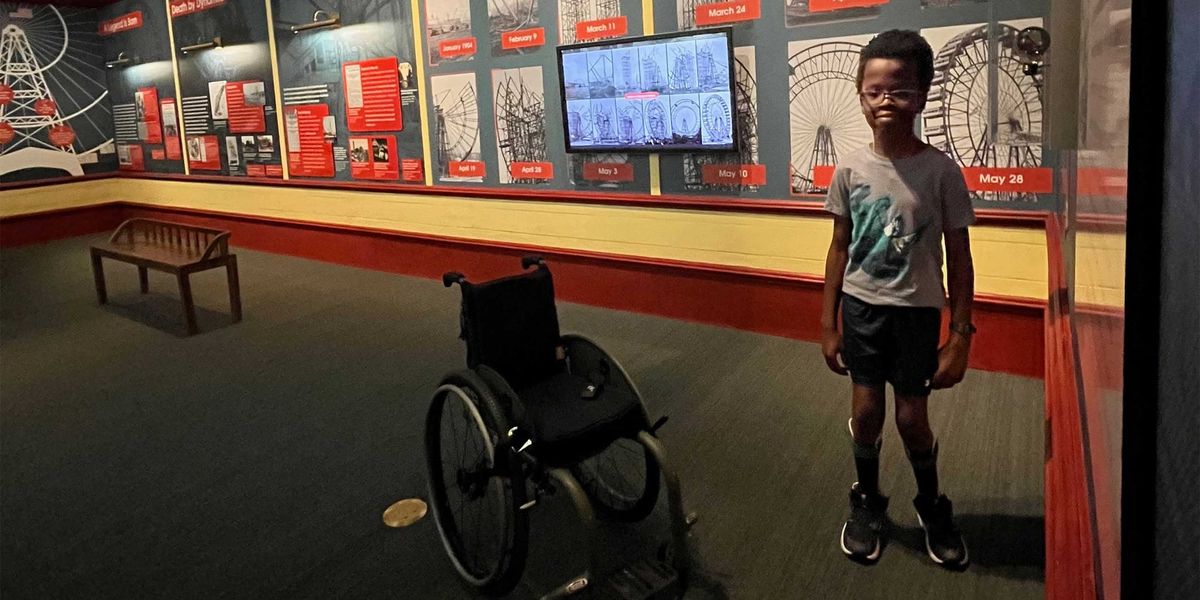
Yet, the restaurant staff member managed to catch her completely off guard. Lingering by their table with a gaze caught somewhere between a downturned pout and a sympathetic smile, the employee expressed profound amazement that John was not only responsible for his own meal, but had also managed to retrieve his own juice from the serving station. Then came the exclamation: “He doesn’t even have a whole body!”
It was a staggering display of intrusive observation. Stifling a grin, Morris gave a curt head nod and briskly left the restaurant, barely making it through the front door before bursting into laughter—the first of many giggle-fits John would witness during their relationship. For Morris and John, finding humor in the absolute absurdity of everyday ignorance has become a standard coping mechanism. While it frequently elicits an eye-roll from a teenage Robert, the family recognizes that this shared humor ultimately serves as a vital tool for processing the daily friction of living in an inaccessible and often uneducated society.

That interaction, like many others, sparked deeper reflections for Morris regarding how she teaches Robert to recognize and respond to ableism. Navigating these moments is a constant mental exercise, requiring a delicate balance that often runs counter to the behavioral rules society implicitly teaches children to ensure smooth conformity. Uncovering these hidden biases and equipping Robert with the tools to push back has become one of the most recurring conversations in their household.
Society teaches children that it is rude to ignore people, yet Morris has explicitly taught Robert that walking away is a completely acceptable response when faced with intrusive, infantilizing, or invasive comments. Similarly, people are conditioned to automatically submit to authority figures, regardless of how arbitrary or harmful their demands might be. John and Robert actively challenge this conditioning, prioritizing their own needs and questioning claims to authority when necessary.

A prime example of this occurs during air travel. It is not uncommon for airline wheelchair assistance staff to demand that John and Robert exit an aircraft before their personal wheelchairs have been returned to the jetbridge—a logistical nightmare and a violation of dignity that forces them to decline compliance. John has extensively documented these recurring struggles, including instances where airlines have threatened disabled passengers with police intervention, highlighting the vital importance of standing one’s ground against arbitrary gate authority.
The expectation of compliance extends to personal boundaries and medical privacy. Strangers routinely expect disabled individuals to offer unsolicited explanations for mobility aids and accommodations. To combat this, the family keeps a repertoire of set responses ready for deployment, such as the firm boundary that they do not share personal medical information. Furthermore, while conventional etiquette dictates that a polite "thank you" is the mandatory response whenever assistance is rendered, Morris has explicitly told Robert that he is under no obligation to express gratitude. He is fully empowered to pull away without a glance if an overzealous stranger attempts to grab his wheelchair without permission—a dynamic Morris has analyzed deeply in her writing regarding how disabled children are conditioned to show excessive gratitude simply for receiving equal access.
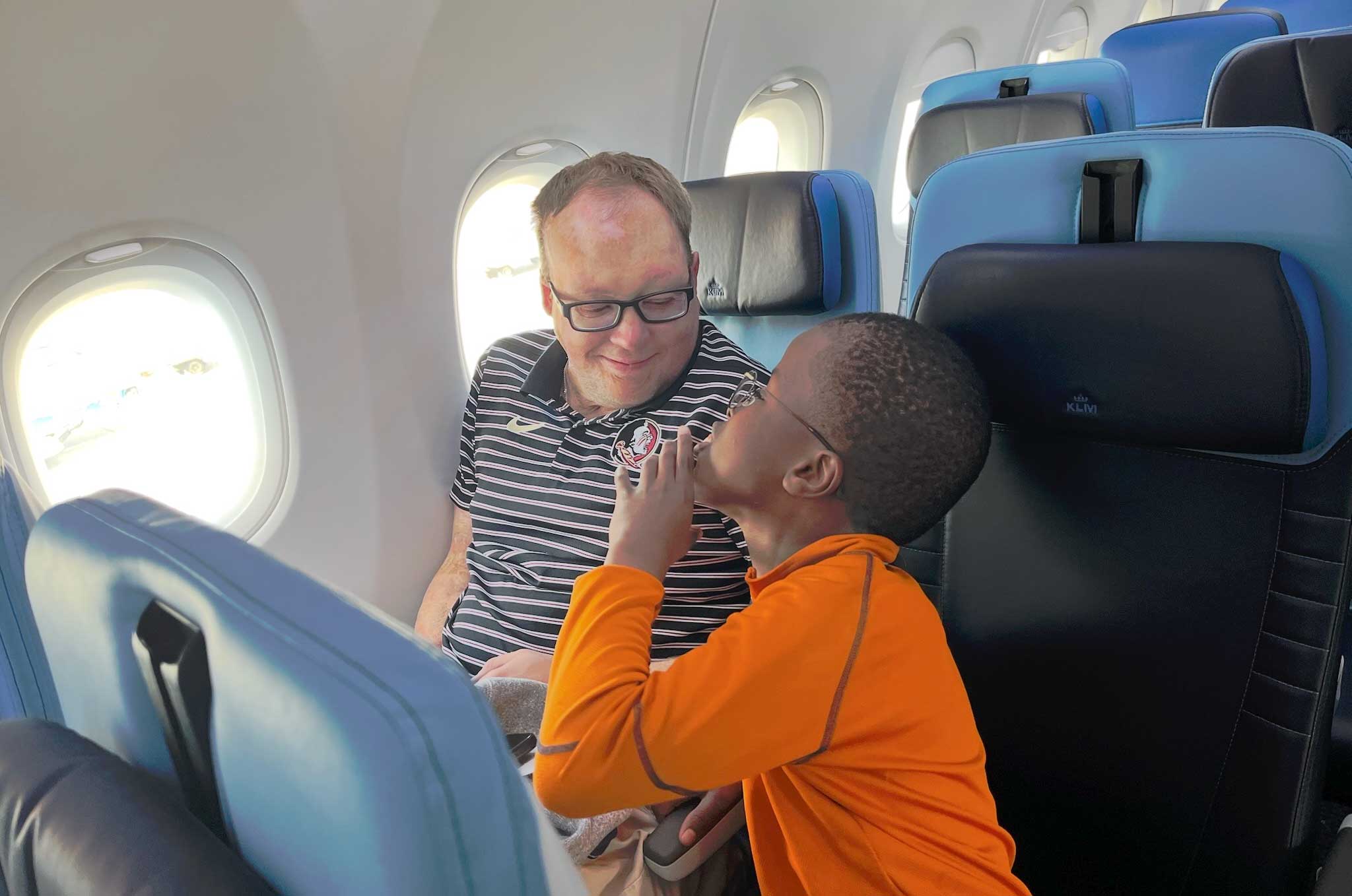
Honesty is held as a paramount value within their home, with one notable and amusing exception: fabricating utterly ridiculous, entirely false backstories to shut down intrusive "What happened to you?" inquiries. To deter nosy strangers, John has occasionally resorted to deadpan explanations involving mythical shark attacks to permanently halt inappropriate questioning about his limb differences.
Critics might argue that it would be easier to streamline a single response strategy for Robert, or to bypass giving him full agency over his reactions to avoid how he might be perceived by a judgmental public. However, Morris and John must weigh the long-term cost of such an approach. The alternative is raising a teenager who meticulously follows every unwritten social rule and fits neatly into an ableist mold, but does so at the direct expense of his personal dignity. They consciously choose the path that fosters a young person who is true to himself and capable of fierce self-advocacy, even if it occasionally ruffles feathers.

Tackling a widespread social justice issue on a personal, day-to-day level is undeniably heavy work. To maintain focus without burning out, Morris relies on specific mental shifts. Chief among them is reframing her perspective on the work itself, comparing it to doing household laundry. There is never a point where laundry is permanently finished; it is an endless cycle of sorting, washing, drying, folding, and putting clothes away. Sometimes chores are avoided for an embarrassing amount of time, while other days involve powering through multiple loads to catch up. Recognizing the cyclical nature of dismantling ableism—rather than treating it like a checklist with a definitive end date—has provided a balanced viewpoint. Success is no longer measured by the full completion of an impossible task, but by steady, incremental engagement.
Communication remains the bedrock of their strategy. Morris consistently engages Robert in reflective discussions after encounters with ableism, asking targeted questions such as what can be learned from an incident, what worked, what did not, and how specific interactions made him feel. Because his responses and emotional landscape evolve with age and maturity, the objective is never a singular magic fix, but rather collaborative problem-solving.
To prepare for high-stress environments, the family actively rehearses responses to recurring problems. They have practiced scenarios using stuffed animals, acted out complex social interactions, and even collaborated on comic books illustrating specific strategies they intend to use. Air travel, for instance, has historically been a significant source of stress due to assistance staff frequently making unilateral decisions about mobility equipment without consultation. By discussing optimal approaches and practicing them at home—with Morris simulating an overeager assistant attempting to grab a wheelchair without asking—Robert builds the confidence needed to respond clearly and respectfully when faced with the real thing.
Even with a wide array of skills and preparation, the family still encounters moments where they stumble or wonder if a different approach might have been more effective. Navigating these interactions under the constant gaze of the public eye carries immense pressure. Furthermore, John and Morris acknowledge that what is deemed an acceptable response to ableism frequently shifts depending on intersecting factors such as age, race, gender, and the specific nature of a disability, as these elements heavily influence pre-existing public assumptions. By combining proactive planning with flexible, adaptive strategies, they continue to foster Robert’s confidence, offering a practical framework for other families navigating the complexities of a largely inaccessible world.