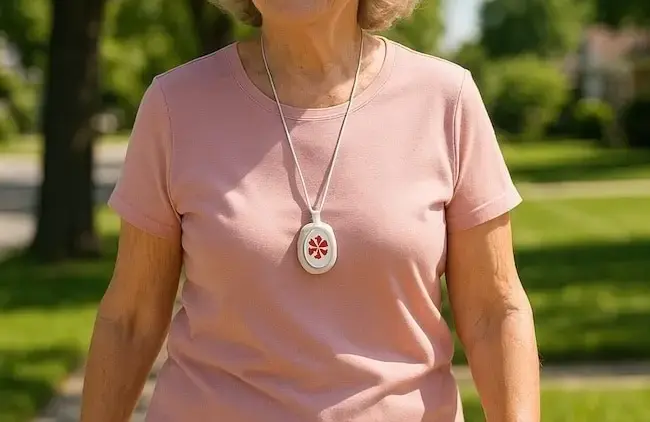
The decision to invest in a personal emergency response system, commonly known as a medical alert system, is frequently described as a critical turning point for older adults wishing to maintain their independence while living at home. With an expansive market offering a wide array of devices, identifying a solution that guarantees reliability, ease of use, and overall peace of mind has become increasingly complex. Industry experts and family caregivers alike emphasize that selecting the right configuration requires a careful balancing act between lifestyle needs, technical capabilities, and financial constraints.

Whether families are exploring options for an in-home system designed to secure a daily routine or seeking a mobile device equipped with global positioning system tracking to accommodate an active lifestyle, understanding foundational features remains essential. Experts in senior care suggest that buyers must carefully evaluate several critical dimensions before making a financial commitment, ranging from automatic fall detection and professional monitoring center response times to total cost structures and device wearability.
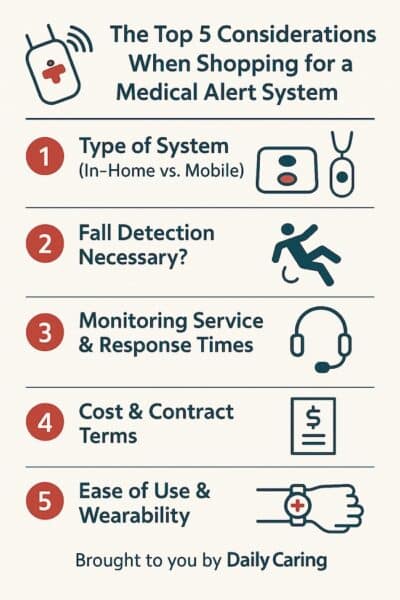
The primary consideration in any search for a personal emergency response system involves determining whether an in-home or mobile configuration best suits the individual. Standard in-home systems typically rely on a base unit connected either to a traditional landline or a modern cellular network. These setups are generally favored by seniors who spend the vast majority of their time within the confines of their residence. Users of traditional in-home setups can typically wander between 800 and 1,400 feet from the base station before experiencing a drop in signal strength. For many older adults, this coverage area provides ample freedom to move about the house or step out onto a porch or patio to tend to plants.

Conversely, cellular-based mobile pendants and smartwatches cater to individuals who maintain a more active routine, allowing them to drive to local appointments, visit pharmacies, or run errands without sacrificing their safety net. These wearable devices incorporate advanced location-tracking capabilities, which prove particularly valuable for seniors who may be prone to wandering or disorientation. Hybrid options have also emerged on the market, bridging the gap between indoor and outdoor coverage. These setups utilize a pendant that communicates with a larger base station connected to a cellular network rather than a traditional landline, offering robust protection for residents in modern apartments where traditional phone jacks may be absent. Base stations of this nature often include built-in battery backups to ensure uninterrupted service during temporary power failures.
A second major factor influencing the selection process is the inclusion of automatic fall detection technology. This specialized capability utilizes built-in motion sensors, such as accelerometers and gyroscopes similar to those found in modern smartphones and smartwatches, to identify sudden changes in motion indicative of a fall. When a fall is detected, the device can automatically alert emergency services even if the user is incapacitated and unable to manually press the emergency button. While standard medical alert buttons remain a reliable industry baseline, they depend entirely on the user’s ability to trigger an alert during a crisis. Industry analysts note that fall detection features typically carry an additional monthly fee, making them an optional add-on that families must weigh against the specific fall risk profile of the senior.

Evaluating the remote monitoring services associated with a provider represents a third critical step. Prospective buyers are advised to examine the operational standards of the monitoring center, ensuring that professional personnel are on duty around the clock to handle emergencies. Response times serve as a key performance indicator, with industry standards favoring systems that connect users to operators in under thirty seconds. Furthermore, the underlying connection method of the monitoring hardware plays a vital role in reliability. Cellular-based monitoring units are frequently recommended over traditional landline models because they remain operational during residential power outages, eliminating a potential point of failure during severe weather events or local grid disruptions.
Financial considerations and contractual terms form the fourth major category of evaluation for families navigating the medical alert market. Upfront expenses can vary significantly depending on the provider, with some companies requiring separate equipment purchases while others roll the hardware cost into a broader subscription model. Monthly monitoring fees generally fluctuate between twenty and fifty dollars depending on the tier of service and technological complexity. Consumer advocates strongly advise families to avoid long-term service contracts whenever possible, favoring flexible month-to-month agreements that prevent financial lock-in if the user’s living situation or care needs change. Additionally, buyers must remain vigilant regarding potential hidden costs, such as activation fees, equipment return charges, or recurring fees for optional features like fall detection.

The physical comfort and usability of the wearable device constitute the final core area of assessment. Because a medical alert system only provides protection if it is actively worn, manufacturers place significant emphasis on ergonomic design. Pendants and wristbands must be lightweight, waterproof, and unobtrusive enough to be worn comfortably throughout the day and night. Bulky watch designs or heavy pendants can discourage consistent use among older adults. For mobile units, battery longevity is another critical metric, with acceptable models requiring charging intervals between twenty-four and forty-eight hours to ensure continuous protection. Furthermore, the installation process should remain straightforward, offering clear instructions that accommodate both seniors and their supporting family members.
Beyond these primary categories, several secondary considerations often influence the final purchasing decision. Some modern systems incorporate family notification features that alert designated relatives alongside emergency dispatchers when a button is pressed. Others offer integration capabilities with smart home ecosystems, allowing emergency hardware to interface with voice assistants or home automation networks. Caregivers researching these options frequently consult independent customer reviews and Better Business Bureau ratings to gauge the reliability and customer service track record of various providers before finalizing a selection.
Industry professionals emphasize that the process of securing an emergency response system is most successful when approached through a careful assessment of individual living patterns, medical history, and budgetary limits. By thoroughly analyzing these core factors, seniors and their families can establish a safety net that supports daily independence without introducing unnecessary financial or logistical complications.