

Navigating public spaces while disabled often invites intrusive commentary, unsolicited pity, and blatant boundary violations from strangers. For Stevie Morris, her partner John, and her teenage son Robert, confronting ableism is not an occasional inconvenience—it is a continuous, generational journey. By blending humor, open dialogue, and practical preparation, the family is redefining how disabled youth are conditioned to respond to societal biases, shifting the focus from polite compliance to genuine self-advocacy and personal dignity.
The reality of these daily intrusions was brought into sharp focus during an early breakfast on a trip to Knoxville, Tennessee. John and Stevie were on their second date, enjoying a quiet meal before heading to the Knoxville Museum of Art. Their relationship had quickly progressed from an ongoing long-distance friendship to a committed partnership, built on shared understanding and deep affection.
However, the excitement of their quality time was abruptly broken when a restaurant staff member interrupted them. Looking toward John with a mixture of a downturned pout and a sympathetic smile, the employee expressed audible amazement that John was capable of managing his own meal and fetching his own juice from the serving station.
"He doesn’t even have a whole body!" the staff member exclaimed.
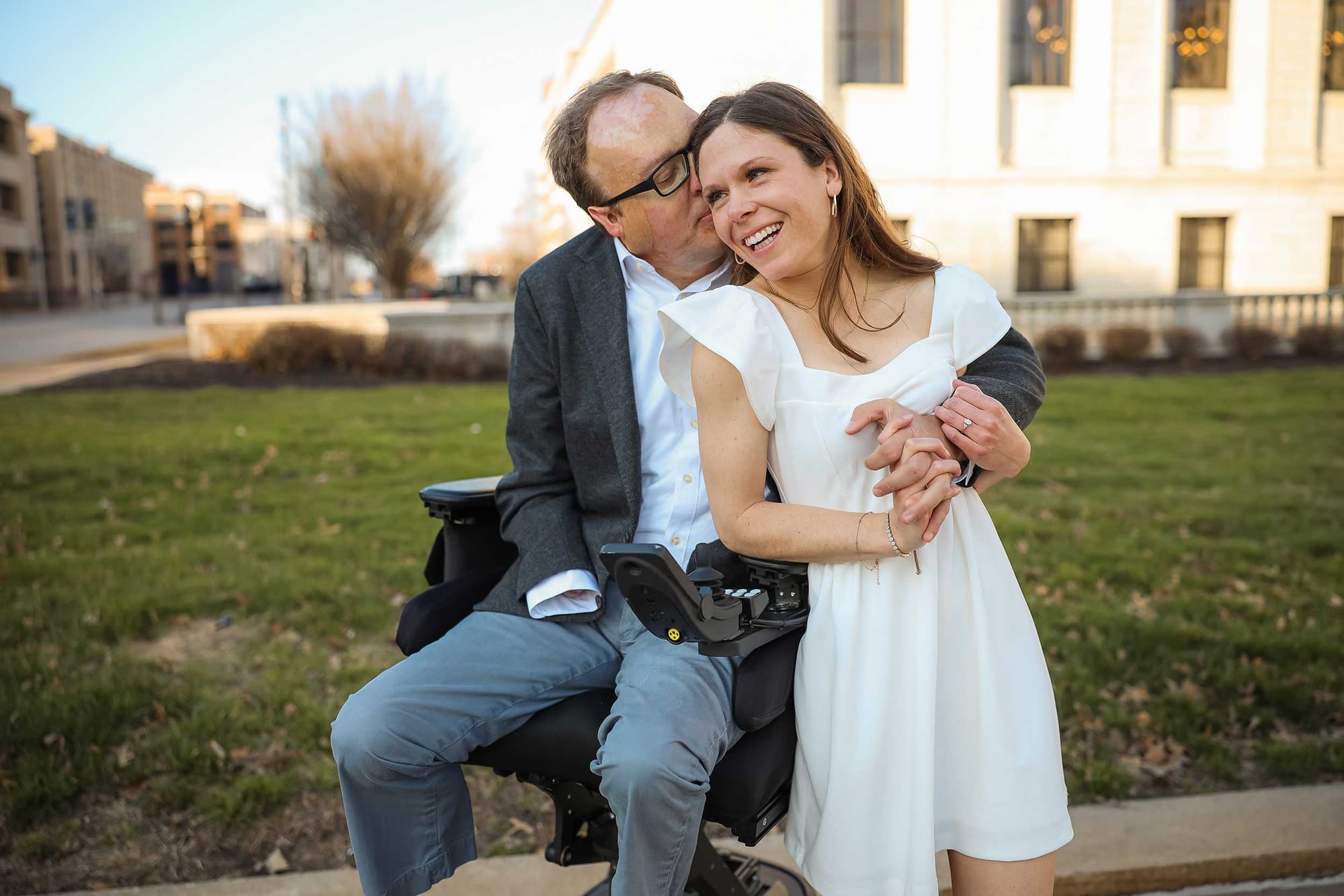
The comment was so pointed and specifically absurd that Stevie momentarily lost her words. Stifling a grin, she offered a curt nod and briskly walked out of the restaurant, barely making it past the front doors before bursting into laughter—the first of many giggle-fits John would witness throughout their relationship.
For this family, finding humor in the sheer absurdity of public ignorance has become a coping mechanism. While Robert, navigating normal teen angst, sometimes responds to these moments with an eye-roll, the underlying lesson is clear. The shared laughter helps neutralize the sting of intrusive behavior and demonstrates that ignorance belongs to the observer, not the individual being targeted.
This dynamic has prompted Stevie to deeply reflect on how she guides Robert through a world laden with unspoken social expectations that often marginalize disabled individuals. Teaching a teenager how to respond to ableism requires untangling many of the polite norms society blindly enforces. For instance, while mainstream etiquette dictates that ignoring people is rude, Stevie has taught Robert that walking away from intrusive or infantilizing remarks is entirely acceptable.
Similarly, disabled individuals are frequently conditioned to automatically submit to authority figures, regardless of whether those demands respect their bodily autonomy or personal safety. John and Robert actively challenge this expectation, modeling how to prioritize their needs and question questionable claims to authority. A prime example occurs frequently during air travel, where airline wheelchair assistants sometimes demand that disabled passengers exit an aircraft before their personal wheelchairs have been returned to the jetbridge. John and Robert routinely decline these premature directives, standing firm against unaccommodating gate staff.
The pressure to conform also extends to invasive inquiries about medical history and mobility aids. While society often expects disabled people to offer polite explanations or express deep gratitude for basic accessibility, the family takes a different approach. They maintain a set of practiced responses, such as stating firmly that they do not share personal medical information. Furthermore, Stevie has reinforced to Robert that he is under no obligation to say "thank you" or even acknowledge someone who attempts to grab or manipulate his wheelchair without permission.
Honesty is a core value in their household, with one humorous exception: inventing elaborate, entirely fictitious tales to shut down intrusive "What happened to you?" questions. John has famously used the absurdity of claiming his leg amputations were the result of a shark attack to derail inappropriate curiosity from strangers.

Some critics might argue that it would be easier to adopt a uniform response strategy for Robert, or to strip away his agency in these situations to shield him from how he might be perceived by the public. However, Stevie emphasizes the steep cost of such compliance. Parents face a choice between raising a teenager who follows every conventional rule and fits an uncontroversial mold at the expense of his dignity, or a young person who may ruffle feathers but remains fiercely true to himself and capable of self-advocacy. For the family, the choice is unequivocally in favor of the latter.
Addressing a widespread societal issue through day-to-day parenting is undeniably heavy and overwhelming. To maintain focus without burning out, Stevie has adopted specific mental shifts and practical strategies to navigate the ongoing cycle of ableism.
Perspective plays a major role in managing the emotional weight. Stevie compares the work against ableism to doing laundry—it is a perpetual household chore that is never truly finished. There are times when clothes pile up, times when multiple loads are washed and folded, and moments of exhaustion when the task is avoided altogether. Recognizing that ableism cannot simply be checked off a permanent to-do list allows for a more balanced viewpoint. Success is not measured by the complete eradication of bias, but by addressing it incrementally, learning, pivoting, and taking necessary breaks when bandwidth runs low.
Communication is another foundational pillar. The family constantly discusses interactions as they happen, asking questions like what can be learned, what worked, what failed, and how specific comments made Robert feel. Because Robert’s perspectives and emotional responses evolve as he grows, these continuous conversations focus on collaborative problem-solving rather than searching for a single magic fix.

To prepare for high-stress environments, the family actively rehearses potential scenarios. Whether using stuffed animals, acting out scenes, or drawing comic books together, practicing responses ahead of time builds confidence. For instance, because boarding commercial flights historically presented a major source of stress—with assistance staff frequently moving Robert’s wheelchair or making decisions without consulting him—the family role-played these encounters at home. Stevie would pretend to be an overreaching staff member, and Robert would practice responding clearly and respectfully. This repetition ensures that when high-stress situations arise in the real world, the appropriate response feels familiar and accessible.
As they continue navigating the complexities of public life as a family, John and Stevie acknowledge that no single approach is foolproof. They still experience moments of hesitation, wondering if a different tactic might have yielded a better outcome. They also recognize that responses to ableism must account for intersecting factors such as age, race, gender, and the specific nature of a disability, all of which influence the preconceived notions of others.
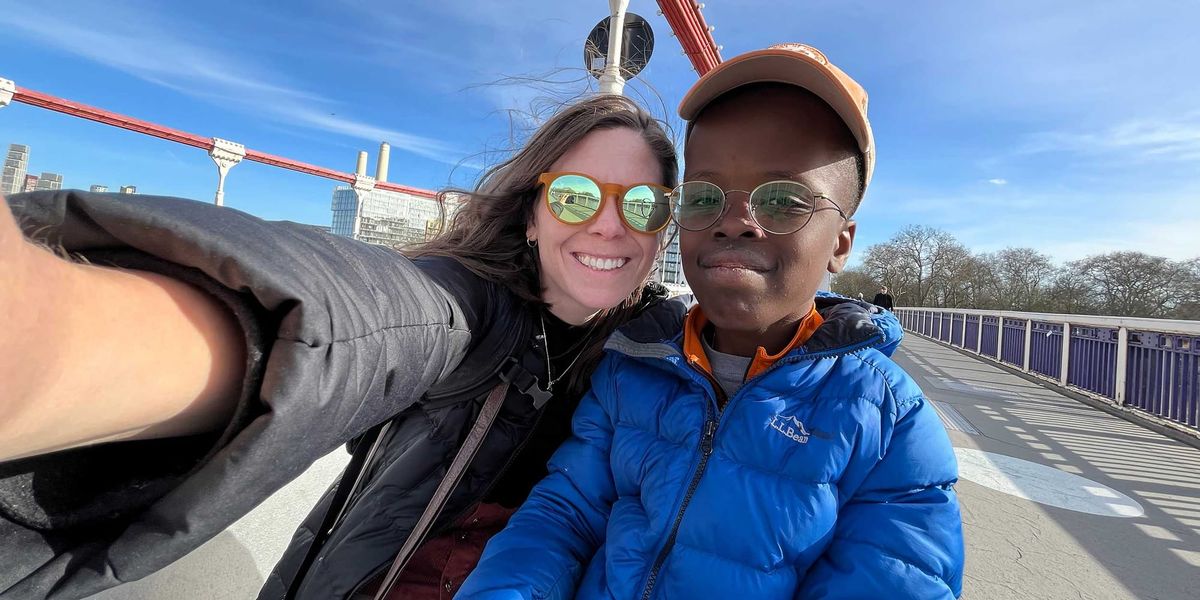
By combining proactive planning, continuous dialogue, and a healthy dose of shared humor, the family continues to build Robert’s confidence. Through their ongoing journey, they offer a meaningful roadmap for others navigating the delicate balance between societal expectations and personal dignity.



