
As the winter season settles in and schools approach the critical windows directly before and after holiday breaks, educators, parents, and child development specialists are increasingly highlighting the vital need for targeted self-regulation strategies. Defined as the foundational ability to manage thoughts, feelings, and behaviors, self-regulation enables children and young adults to navigate everyday emotions, maintain focus on academic and personal tasks, and build positive social connections. However, the unique pressures of the winter months—marked by shifting daily routines, reduced physical activity, prolonged periods indoors, and the overarching stress of the holiday season—often create a challenging environment for young minds.

To combat seasonal dysregulation and support children through these transitions, experts emphasize that building these essential life skills can and should be an engaging, interactive process. Rather than relying solely on traditional behavioral management, schools and families are adopting a comprehensive suite of creative activities designed to foster mindfulness, emotional balance, and cognitive focus. From sensory exploration and mindful breathing to physical movement and creative arts, these evidence-based practices offer children the tools they need to anchor themselves when environmental and emotional stressors rise.

Winter Breathing Exercises
At the core of emotional control lies the fundamental practice of mindful breathing, a technique experts point to as an essential self-regulation exercise. By intentionally focusing on inhales and exhales, children learn to effectively hit the pause button on immediate impulses and emotional reactivity. Educators introducing winter-themed breathing exercises explain that conscious breathwork activates the parasympathetic nervous system, the physiological mechanism responsible for allowing the body to truly rest and relax. Extensive scientific research underscores that incorporating mindful breathing into a child’s daily routine significantly supports emotional regulation, enhances cognitive focus, and cultivates an overarching sense of internal calm that can be accessed at any time.

Outdoor Nature Walks
While winter often drives children indoors, stepping outside for a guided nature walk offers a powerful antidote to seasonal stress. These outdoor excursions invite young participants to engage their senses fully by noticing sights, sounds, feelings, smells, and even tastes in the immediate environment, such as the chill of a winter breeze or the flight of a bird overhead. Environmental and psychological research consistently shows that spending time in nature reduces stress hormones, strengthens attention spans, and elevates overall mood and well-being. Furthermore, bundling up for an outdoor walk encourages much-needed physical exercise and exposure to natural sunlight, two critical components for maintaining mental health during the darker winter months.

Cultivating Winter Gratitude
Shifting cognitive focus toward appreciation is another powerful method for helping children navigate the colder months. Winter gratitude initiatives encourage students to reflect on the positive aspects of the season, moving beyond superficial observations to deep, specific acknowledgments, such as the warmth of sunshine on a cold day or the comfort of spending quality time with loved ones. Psychological research indicates that practicing gratitude actively rewires neural pathways to prioritize positive stimuli, yielding a wide array of mental health benefits. These include reduced anxiety levels, improved emotional resilience, better sleep patterns, and a heightened sense of overall life satisfaction.

Mindful Winter Coloring
For children who struggle with the stillness required by traditional meditation, mindful coloring offers an accessible and evidence-based alternative for stress reduction. By engaging with winter-themed coloring pages paired with positive self-talk phrases, students are given dedicated time to slow down, breathe, and focus on the present moment. The primary objective of mindful coloring is not artistic perfection, but rather the promotion of relaxation and emotional release. Because this hands-on activity integrates mild movement with focused attention, it serves as an effective self-regulation strategy for energetic learners who require physical engagement to achieve mental calm.

Cozy Reading Time
Immersing children in literature provides another reliable pathway to relaxation and emotional stability. Whether through independent silent reading or shared classroom read-alouds, getting lost in a compelling book helps lower physiological stress levels, ease muscle tension, and enhance empathy. When educators incorporate cozy reading environments—often accompanied by visual projections of crackling fireplaces—children benefit from a healthy cognitive reprieve from the various academic and social stressors encountered throughout the day. Shared reading sessions offer the added advantage of co-regulation, fostering a deep sense of connection between participants.

Winter Sensory Bins
Tactile exploration through winter-themed sensory bins provides a hands-on approach to building calm and concentration. By filling large containers with safe, winter-inspired materials, educators and parents create tactile environments that naturally invite curiosity and focused play. Sensory integration supports not only emotional self-regulation through grounding tactile experiences, but also the refinement of fine motor skills and narrative storytelling abilities as children interact with the materials around them.

Mindful Hot Cocoa Experiences
Transforming a simple winter treat into a mindful exercise allows children to experience relaxation in real time. The ritual of holding a warm mug, noticing its heat, breathing in its sweet aroma, and sipping slowly encourages young participants to engage all their senses. Experts note that this mindful approach to consumption acts as mindfulness in action, effectively quieting racing thoughts. Additionally, warm beverages naturally signal the central nervous system to relax muscles and reduce physiological tension, offering immediate comfort during high-stress periods.

Winter Imagination and Visualization
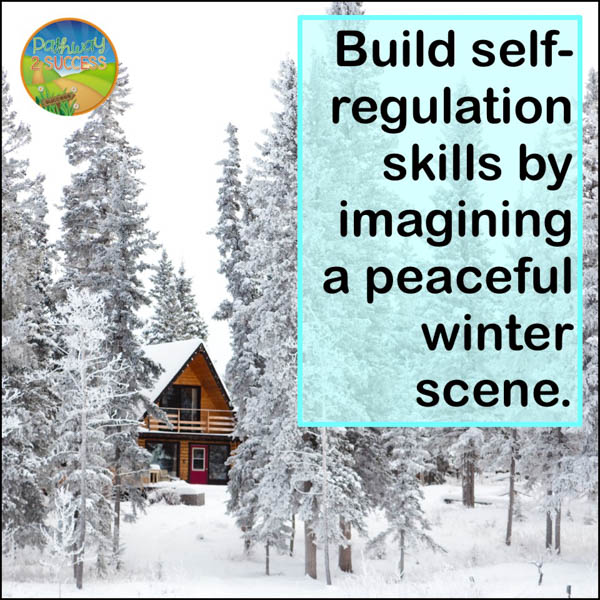
Guided visualization exercises invite children to close their eyes and mentally transport themselves to tranquil winter landscapes. By prompting young minds to imagine the sights, sounds, and textures of a serene snow-covered scene, adults help facilitate a shift toward a state of physiological and mental calm. Visualization techniques train the brain to utilize internal imagery as a reliable tool for self-soothing whenever emotional turbulence arises.

Winter Crafts and Creative Expression
Engaging in hands-on winter crafts allows children to channel their energy into structured, creative projects. Whether following specific design instructions or exercising independent creative freedom, young learners practice essential self-regulation skills as they concentrate on multi-step processes, manage frustration when challenges occur, and apply fine motor control. The structured nature of crafting offers a predictable framework that supports emotional stability and focus.
Winter Music and Movement
Auditory stimulation plays a profound role in shaping classroom and home atmospheres. Playing gentle, winter-themed instrumental music during transitions or independent work sessions can trigger a natural relaxation response, helping children maintain focus and composure. To combine auditory focus with physical expression, activities like winter-themed freeze dance encourage children to practice impulse control. By requiring dancers to instantly freeze their bodies upon hearing specific winter vocabulary words, the game reinforces listening skills, body awareness, and the ability to rapidly shift between active movement and complete stillness.



