

It is a scenario that many individuals with disabilities and their loved ones know all too well: the lingering stare, the hesitation caught somewhere between a downturned pout and a sympathetic smile, and the inevitable, misguided declaration of inspiration. For Stevie Morris, sitting across from her partner, John, during a breakfast date in Knoxville, Tennessee, these moments are a familiar aspect of moving through public spaces.
However, the encounter that morning quickly deviated from the ordinary script.
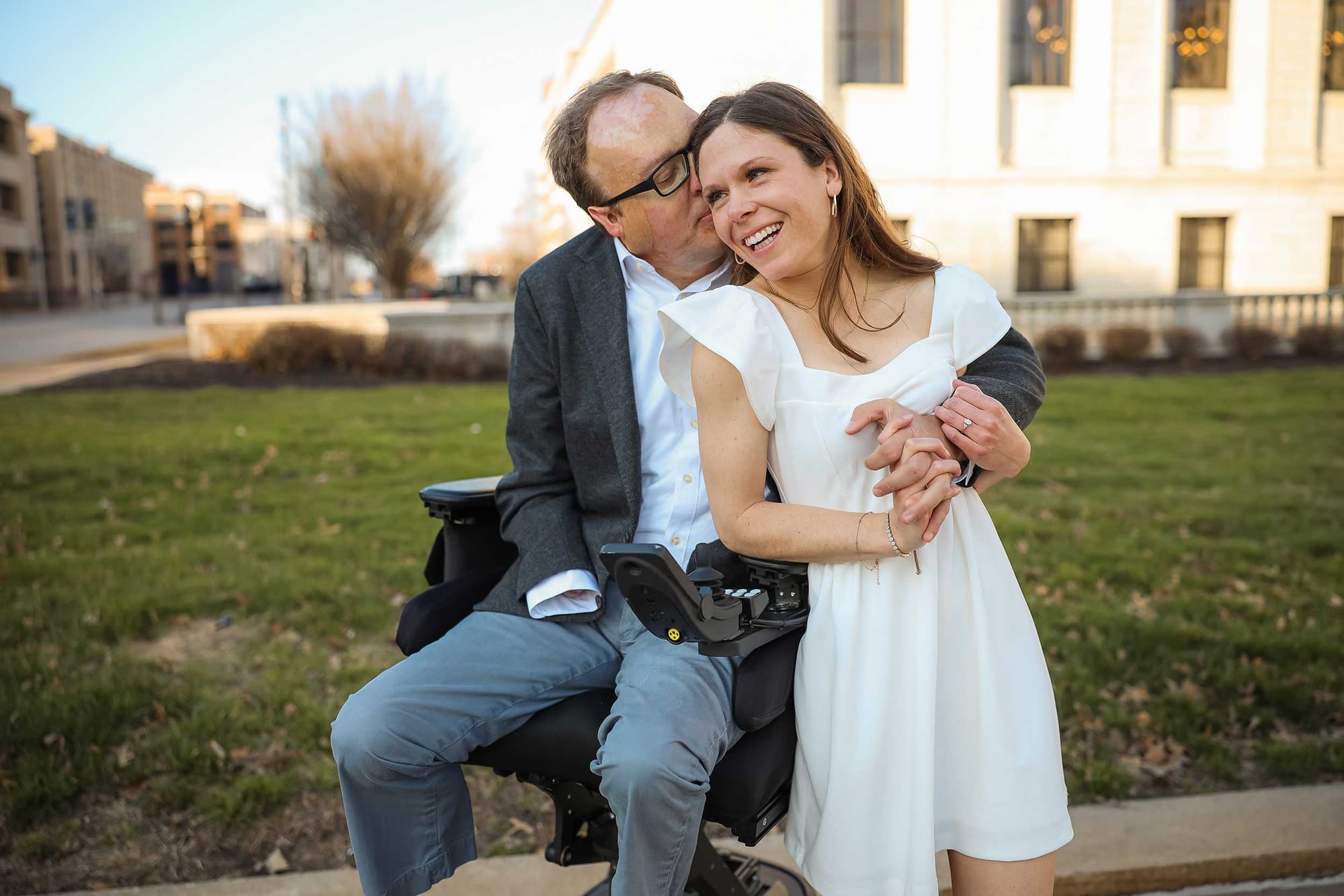
The couple had traveled to Knoxville to enjoy a quiet weekend together, planning a visit to the Knoxville Museum of Art following breakfast. Although their first in-person date had taken place only the night before, their relationship was already built upon a strong foundation of deep friendship and ongoing long-distance communication. They were relishing the rare, uninterrupted quality time when a staff member approached their table. Overcome with visible astonishment, the employee remarked on John’s ability to handle his own meal and retrieve his own juice from the serving station. Then, punctuating her bewilderment, she exclaimed, "He doesn’t even have a whole body!"
The comment was so startlingly pointed and specific that it rendered Stevie temporarily speechless. Stifling a grin, she offered a curt nod of the head and briskly walked out of the restaurant, barely making it through the front door before bursting into laughter—the first of many giggle-fits John would come to witness throughout their relationship.
For Stevie and John, finding humor in the sheer absurdity of public ignorance has become a standard coping mechanism. It is an approach that occasionally draws an eye-roll from Stevie’s teenage son, Robert, though the family recognizes this as typical teenage skepticism masking the genuine benefits of shared laughter in navigating everyday life.
The interaction, however, prompted deeper reflection for Stevie, particularly concerning how she guides Robert through similar encounters. Teaching a teenager how to respond to ableism is a complex, continuous mental exercise that often defies the standard social rules instilled in children from a young age. While society dictates that ignoring people is rude, Stevie has taught Robert that walking away is an acceptable, protective response when faced with intrusive or infantilizing remarks. Similarly, whereas children are traditionally conditioned to submit automatically to authority figures, John and Robert actively practice prioritizing their own needs and questioning the validity of questionable demands.
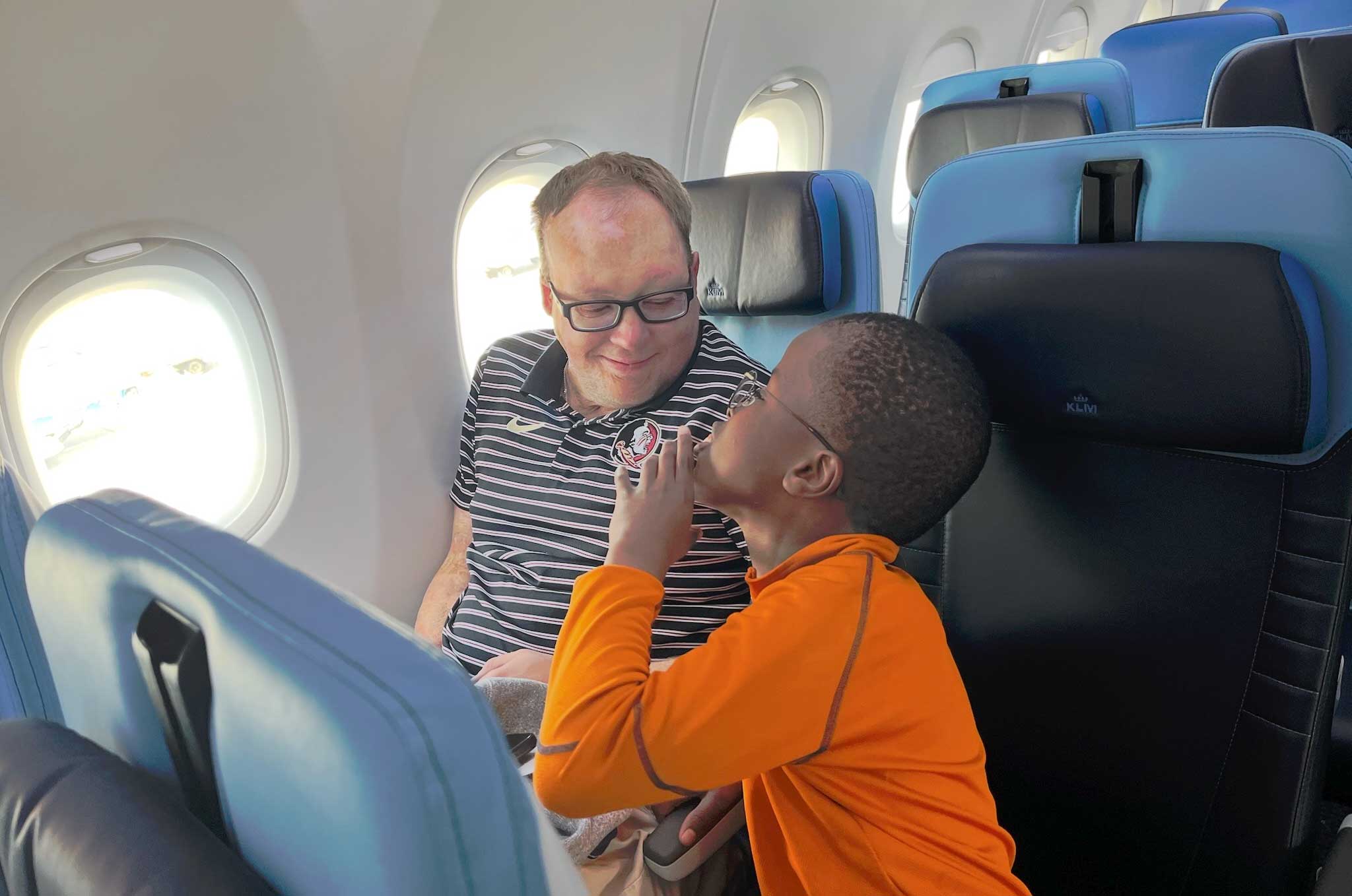
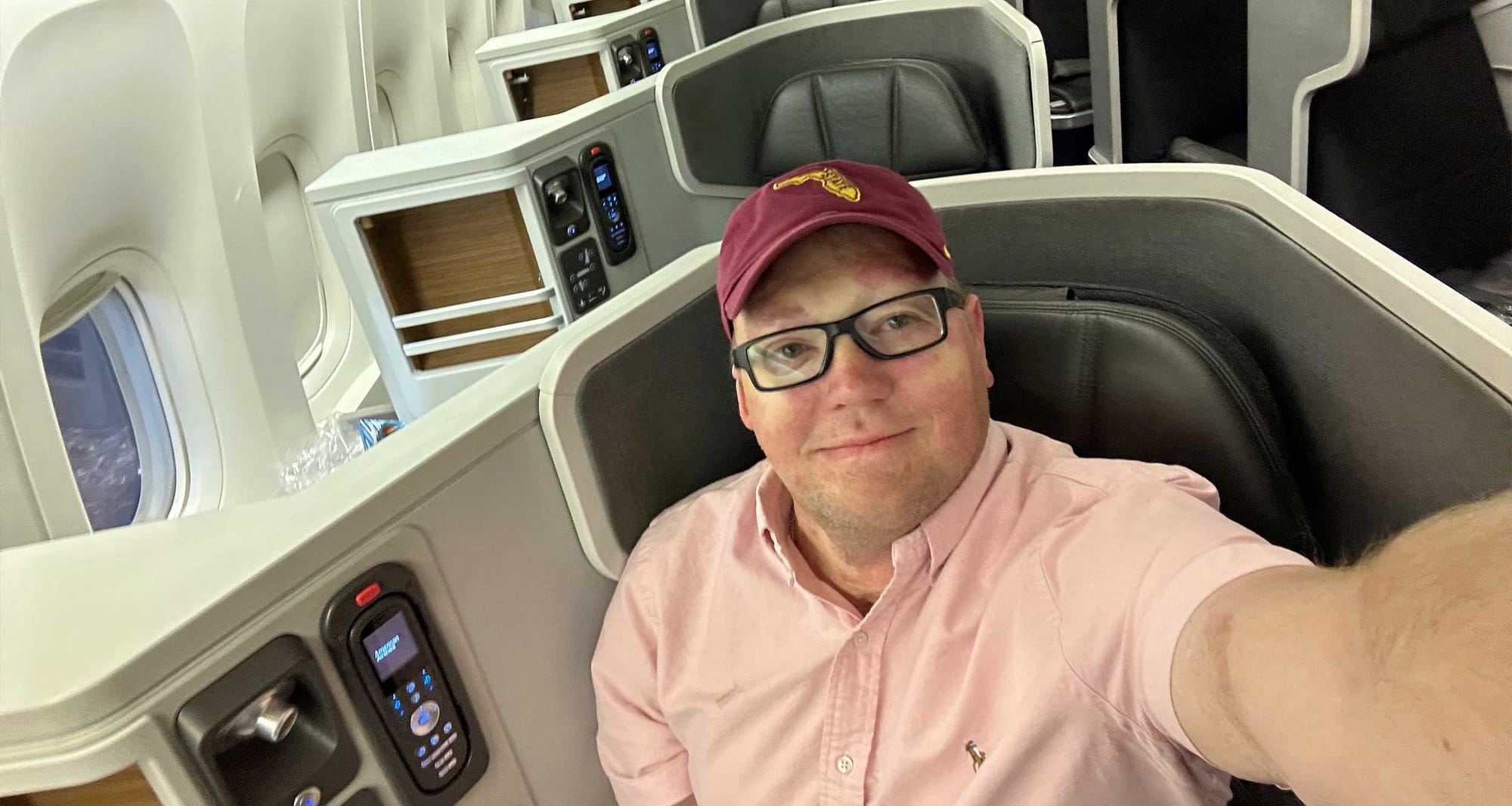
A prime example of this dynamic occurs during air travel. Assistance staff frequently demand that John and Robert exit airplanes before their personal wheelchairs have been returned to the jetbridge, a directive the two men consistently and rightly decline. Such recurring clashes with gate agents and airline personnel have made challenging unwarranted authority a critical component of their advocacy work, underscoring the broader systemic barriers disabled passengers face when traveling.
Public interactions often carry implicit demands for emotional labor and personal transparency. Strangers frequently expect detailed explanations regarding mobility aids and accommodations, viewing disabled individuals as public educators. To counter this, the family maintains a set of rehearsed, boundary-setting responses, such as stating plainly that they do not share personal medical information.
Gratitude is another societal expectation frequently weaponized against the disability community. Disabled individuals are routinely conditioned to express profuse thanks simply for receiving basic equal access or reasonable accommodations. Stevie and John have actively pushed back against this dynamic, encouraging Robert to prioritize his autonomy—going so far as to pull away without a glance if an unauthorized stranger attempts to grab his wheelchair.
Honesty remains a core value within their household, with one notable exception: the invention of entirely fabricated, highly theatrical backstories to deflect intrusive questions regarding the origins of their disabilities. When faced with invasive inquiries about what happened to them, John has occasionally resorted to deadpan explanations involving shark attacks, effectively shutting down inappropriate curiosity with absurdity.

Choosing this path of self-advocacy over passive compliance is not without its difficulties. Some might argue that adopting a single, uniform response strategy or stripping Robert of his agency might make public navigation smoother and reduce friction. Yet, Stevie and John evaluate these choices through the lens of long-term impact. Yielding to social expectations might produce a teenager who effortlessly follows the mold, but it would do so at the direct expense of his dignity. Conversely, encouraging self-advocacy may occasionally ruffle feathers, but it preserves authenticity and self-respect. For Stevie, the choice regarding the greater good is clear.
Translating a widespread social justice issue into day-to-day parenting remains an inherently demanding task. To maintain focus without succumbing to burnout, Stevie has adopted specific mental shifts, comparing the ongoing work against ableism to household chores like doing laundry. The task is never truly finished; it is a continuous cycle of washing, drying, folding, and starting over. Recognizing this cyclical nature rather than viewing advocacy as a static checklist has provided a more balanced perspective. Success is not measured by the complete eradication of prejudice, but by steady engagement, punctuated by necessary breaks when exhaustion sets in.
Central to this ongoing education is open communication. Stevie constantly engages Robert in discussions following public incidents, asking questions such as what can be learned from an interaction, what strategies succeeded, and how specific comments made him feel. Because Robert’s perspectives and emotional responses evolve as he grows, the objective is not to find a single permanent fix, but to engage in collaborative problem-solving.
To prepare for high-stress environments, the family actively rehearses responses to recurring challenges. Whether through role-playing scenarios at home—such as practicing how to firmly decline unsolicited assistance when boarding an airplane—or discussing hypothetical encounters, repetition helps build the confidence necessary to handle real-world ableism effectively.

Navigating the world as a family requires constant vigilance and adaptation. While Stevie and John have accumulated a diverse array of skills for addressing ableism, they acknowledge that they still occasionally stumble or question whether a different approach might have yielded a better outcome. The dynamics of ableism are further complicated by intersecting factors such as age, race, gender, and the specific nature of a person’s disability, all of which influence the preconceived notions of the public. By combining proactive planning with flexible strategies, the family continues to foster resilience and confidence, offering a practical framework for others encountering similar challenges in their daily lives.



