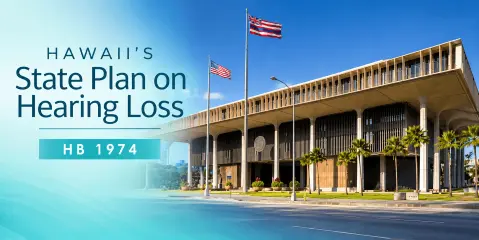
Hearing loss is frequently misunderstood as a minor communication barrier, yet its consequences reach far deeper into an individual’s daily life. Beyond the immediate challenge of conversing with family members or colleagues, untreated hearing loss profoundly impacts education, employment opportunities, healthy aging, social connection, cognitive health, and overall quality of life. Recognizing the far-reaching implications of this public health issue, the state of Hawaii has taken a meaningful and practical stride forward. On July 10, 2026, House Bill 1974 (C.D. 1) was officially signed into law, establishing a comprehensive framework designed to elevate hearing health care across the islands.
The newly enacted legislation was championed by passionate advocates, including members of the Hearing Loss Association of America (HLAA) and various other stakeholders within the state’s hearing loss community. At its core, the bill directs the Hawaii State Health Planning and Development Agency (SHPDA) to formulate a comprehensive State Plan on Hearing Loss. This initiative serves as a foundational blueprint to help policymakers, healthcare providers, and community organizations better understand and assess current needs, close persistent service gaps, and strengthen overall access to vital hearing care statewide.
Under the provisions of HB 1974, SHPDA is tasked with developing and publishing a statewide strategic plan focused on multiple critical fronts. These include improving the accessibility and affordability of hearing health care, increasing public awareness regarding hearing loss, expanding the specialized healthcare workforce capacity, and prioritizing early detection and intervention. Furthermore, the plan emphasizes optimizing treatment options and long-term outcomes for individuals of all ages living with hearing loss, ranging from infants to older adults. While the legislation does not instantly dismantle every existing barrier to care, the resulting Hawaii State Plan creates a shared, cohesive roadmap for future legislative and community initiatives, ultimately transforming how the state approaches hearing health services.
To ensure the planning process receives adequate support, the bill appropriates $100,000 in general funds for the 2026–2027 fiscal year. These financial resources are earmarked to empower SHPDA in executing its responsibilities effectively. Specifically, the funds may be utilized for project management, interagency collaboration, statewide stakeholder engagement, consulting with subject matter experts, and drafting, reviewing, and publishing the final plan.
What makes this legislative development particularly significant is that it establishes a permanent framework for ongoing planning, implementation, and governmental accountability. Moving forward, the state is required to provide regular progress updates and policy recommendations during every odd-numbered legislative session. This built-in reporting mechanism ensures that hearing health remains an active and prominent part of Hawaii’s long-term policy discussions, solidifying hearing health as a recognized and enduring public health priority.
For many years, adults and children residing in Hawaii with hearing loss have encountered a complex array of challenges. These obstacles have historically included delayed diagnoses, a lack of consistent medical follow-up, difficulty locating specialized services, prohibitive costs for hearing aids and assistive technology, limited public awareness, severe workforce shortages, and a healthcare system that can prove frustratingly difficult to navigate. Although numerous dedicated organizations, clinics, and individual providers have worked tirelessly to support residents over the years, the state has never before possessed a coordinated, statewide effort to systematically identify systemic gaps and formulate a unified, long-term strategy for improvement.
HB 1974 fundamentally changes this landscape. Spearheaded by SHPDA, the newly initiated planning process brings together a diverse coalition of healthcare providers, educators, government agencies, community organizations, and individuals possessing lived experience with hearing loss. Together, these stakeholders will work collaboratively to identify key priorities and recommend practical, impactful solutions. The resulting draft plan will subsequently guide these expert recommendations into meaningful action across the state.
The path toward this legislative milestone was paved by grassroots determination. Conversations began when members of the Hawaii hearing loss community reached out to key lawmakers to articulate the urgent need for a cohesive statewide hearing health strategy. Momentum grew substantially when the Hawaii Kupuna Caucus—a bipartisan group of legislators dedicated to addressing issues affecting older adults—selected HB 1974 as one of its official priority bills for the legislative session. This crucial endorsement elevated public awareness and generated vital bipartisan support for the measure within the state legislature.
Riding on this wave of momentum, the broader community united around a shared vision to propel the bill across the finish line. Members of the HLAA HOPE support group, alongside practicing audiologists, ear, nose, and throat (ENT) physicians, speech and hearing professionals, family caregivers, and numerous community advocacy organizations, submitted official testimony and actively engaged in advocacy throughout the rigorous House and Senate legislative process. The collaborative effort demonstrated the power of community organization in shaping public policy.
With the passage of this legislation, Hawaii proudly joins a select group of states that have already established similar statewide planning efforts. Nevada, Minnesota, Massachusetts, Vermont, and New York served as vital models and inspirations for the development of HB 1974, proving that comprehensive state-level planning can yield positive, lasting results for individuals with hearing impairments.
A cornerstone of this entire initiative is its commitment to placing people with lived experience firmly at the center of the conversation. Individuals and families who navigate the daily realities of hearing loss are uniquely positioned to offer insights that textbooks and administrative reports cannot capture. Their invaluable perspectives, combined with the expertise of community stakeholders—including healthcare providers, educators, government agencies, and local organizations—will directly shape the recommendations and priorities guiding Hawaii’s future.
The planning process is officially underway, with a comprehensive draft plan anticipated by the conclusion of 2026. Once the draft is finalized, the focus will shift decisively toward implementing actionable strategies designed to address the clearly identified needs and goals of the community. As stakeholders look ahead, this legislative achievement marks the beginning of a new chapter for hearing health accessibility and quality of life across the Hawaiian Islands.