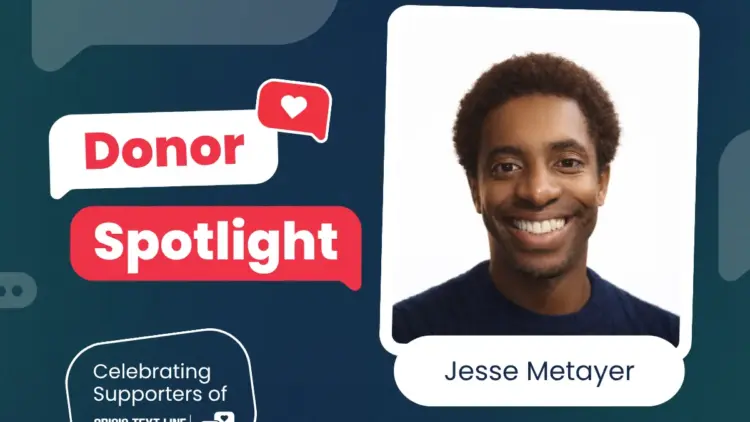
Every text message received by a crisis intervention service is answered because someone believed the work mattered enough to make it possible. For many organizations operating around the clock, that vital support relies on a dedicated network of donors, volunteers, and advocates whose generosity underpins the intensive training required for Crisis Counselors. In the mental health advocacy community, individuals who give both their time and financial resources play an indispensable role in keeping vital services free, accessible, and active twenty-four hours a day, seven days a week.
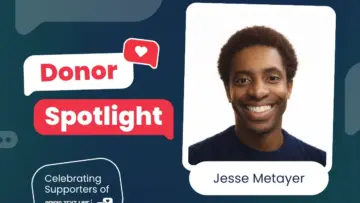
This month’s donor spotlight features Jesse Meyer, a passionate mental health advocate, volunteer, and financial supporter whose contributions directly help train the Crisis Counselors who show up for individuals in their most difficult moments. Meyer’s journey to becoming a pillar of support for others is rooted in his own lived experiences with learning challenges, isolation, and the transformative power of therapy. In a candid interview, Meyer discusses how his personal encounters with mental health services broke down long-held stigmas, the specific communication techniques he uses to guide texters from intense emotional crises to a place of calm, and the personal projects and routines that bring balance and tranquility to his everyday life.
Overcoming Stigma and Finding the Path to Healing
Reflecting on what initially inspired him to support crisis intervention initiatives, Meyer opens up about the hardships of his early years. Growing up, he spent a significant portion of his childhood feeling different from his peers, spending time in learning disability classes throughout school while trying to conceal how difficult everyday academic and social environments were for him. By the age of eighteen, those mounting pressures led him to drop out of college, after which he began to isolate himself from the world around him.
In what he describes as his darkest moment, Meyer felt as though all hope had vanished. Faced with overwhelming emotional distress, he made the critical decision to reach out for help, a turning point that fundamentally altered the trajectory of his life.
When he finally connected with a professional, his therapist listened with profound empathy, offering essential emotional support and practical resources that enabled him to gradually improve his mental health. That pivotal experience demonstrated to Meyer the absolute necessity of seeking professional assistance when personal struggles make it feel as though hope is entirely lost.
Reflecting on societal perceptions, Meyer notes that he previously held a common misconception about mental healthcare. He used to believe that therapy was exclusively intended for individuals suffering from severe mental illnesses—a stigma that he now recognizes as entirely untrue. Through his own journey, he came to understand that anyone, at any given moment, can encounter severe difficulties in life and benefit from professional guidance.
Turning "Hot Moments" into "Cool Moments" for Texters in Crisis
Meyer’s commitment to mental health advocacy extends far beyond financial contributions; he has also dedicated his time as an active Crisis Counselor, putting comprehensive training into direct practice. During his initial six-week training program with Crisis Text Line, he learned specialized emotional de-escalation techniques designed to support individuals in acute distress.
Those foundational methods have proven invaluable in his conversations with texters who reach out for help. By applying the emotional techniques acquired during his training, Meyer has successfully navigated initial conversations characterized by high emotional intensity—what volunteers refer to as "hot moments"—and guided texters toward a state of calm. Through active listening, patience, and nonjudgmental dialogue, he helps transition these intense exchanges into "cool moments," ultimately guiding texters to a place of empowerment by the end of their interactions. For Meyer, knowing that he has made a tangible difference in another person’s life provides a profound sense of satisfaction and validation.
The importance of supporting comprehensive mental health initiatives, particularly crisis intervention, is rooted in the reality of human suffering. Meyer points out that individuals experiencing acute emotional distress are often the people we encounter in our everyday lives, sometimes without realizing the internal battles they are fighting. Being trained to assist brave individuals during their most vulnerable hours enables counselors to guide them effectively from crisis states toward immediate professional support.
Through this work, Meyer has discovered that listening is a learned skill that cultivates patience and sharpens critical thinking. It allows individuals to truly comprehend another person’s words, underlying emotions, and specific needs, bridging the gap between isolation and connection.
The Mutual Benefit of Compassionate Service
For Meyer, the decision to prioritize crisis intervention in his philanthropic efforts stems from a deep conviction that everyone deserves immediate, barrier-free assistance. Crisis Text Line provides free, round-the-clock mental health support to anyone in need, ensuring that financial constraints never prevent a person from receiving help.
The impact of this service is reinforced by the feedback he receives directly from texters. On numerous occasions, individuals reaching out for support have expressed genuine gratitude at the conclusion of a conversation. For Meyer, these moments foster a powerful sense of self-worth and validation. By simply being present and extending compassion, he helps people navigate complex hardships, which serves as his primary motivation for continuing to volunteer and donate.
The supportive infrastructure surrounding volunteers also plays a significant role in his sustained dedication. Meyer highlights the availability of experienced coaches and supervisors who are consistently ready to answer questions and provide guidance. Through his involvement, he has continuously strengthened his listening skills and empathy, learning how to offer nonjudgmental support while operating within a well-structured team environment.
Giving back to a cause of such personal significance has also yielded profound professional and personal growth. When faced with psychological distress in others, Meyer experiences a deep sense of fulfillment in being able to help. Moreover, the emotional regulation techniques he practices while volunteering have influenced his personal life. He has learned the importance of pausing before making decisions during emotionally charged situations. Slowing down clears his mind, sharpens his critical thinking, and equips him to handle everyday stressors with greater patience and empathy.
This mindset has transformed how he interacts with friends and family. Volunteering has reinforced the principle that listening must always precede judgment, ensuring a fuller understanding of any situation and preventing unfair misunderstandings in interpersonal relationships.
Sustaining Hope and Protecting Personal Well-Being
When considering what to share with others who may be contemplating a donation to crisis intervention services, Meyer emphasizes the broad scope of human hardship. Financial contributions directly assist individuals dealing with a wide array of crises, ranging from natural disasters and systemic poverty to war and personal trauma. By keeping support services entirely free, donors act as the backbone that maintains active, 24/7 access for those who might otherwise lack the means to pay for emotional assistance.
For anyone currently struggling, Meyer offers a reassuring message rooted in his own experience: no one is ever truly alone, and reaching out is always the vital first step toward reclaiming hope.
To maintain his own mental health and sustain his advocacy work, Meyer relies on a balanced routine of community involvement, personal projects, and physical wellness. He actively participates in church activities, continues his volunteer work, and dedicates time to personal endeavors such as the StarTalk app, which brings him a deep sense of joy and tranquility. Additionally, he prioritizes physical health by visiting the gym and taking long, restorative walks through local parks, ensuring he remains grounded while continuing to show up for others in their time of need.