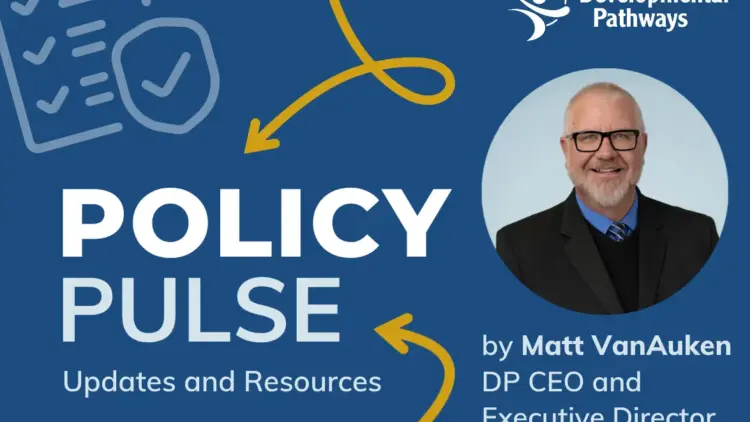
By Matt VanAuken, DP Chief Executive Officer & Executive Director
Earlier this year, the Colorado Legislature enacted a significant new piece of legislation known as Senate Bill 26-187. This legislative measure officially established a specialized bipartisan body designated as the Commission on Medicaid. This development marks a substantial step forward in how the state evaluates its public health insurance framework, and organizations across Colorado are working to ensure that program participants and their families fully understand what these proceedings mean for them and their households.
The creation of this new commission comes at a time when lawmakers are facing mounting questions regarding the long-term fiscal health, accessibility, and operational efficiency of public healthcare programs. By establishing a dedicated interim body, state officials are aiming to dive deeply into complex systemic challenges that typically receive only superficial attention during the fast-paced environment of a standard legislative session.
To understand the scope and potential impact of this new initiative, it is helpful to examine the structure, mandate, and specific focus areas of the Commission on Medicaid, as well as the proactive steps advocacy organizations like DP are taking to keep communities informed and engaged.
What is this Commission?
The newly formed Commission on Medicaid is a bipartisan group comprised of state lawmakers from both sides of the aisle, including both Republican and Democratic members of the Colorado General Assembly. Bringing together legislators from different political backgrounds, the Commission is tasked with addressing one overarching, critical question: How can Colorado make Medicaid work better and last longer for the residents who rely on it for their health and daily support?
Under the explicit guidelines established by Senate Bill 26-187, the Commission is legally mandated to hold a series of official meetings between the months of May and December. Specifically, the group must convene at least six times, but no more than twelve times, during this interim period. These gatherings provide lawmakers with the necessary time and platform to review fiscal data, hear expert testimony, evaluate policy options, and listen to feedback from the public and advocacy communities.
Once the scheduled interim meetings conclude, the Commission is required to compile its findings and submit a comprehensive report directly to the Colorado Legislature and the Governor. This final document will outline formal recommendations for legislative and administrative changes, setting the stage for potential policy reforms in future legislative sessions.
Why does this matter?
The implications of the Commission’s work extend far beyond routine administrative adjustments, touching upon vital services that thousands of Colorado residents depend on every single day. Medicaid is a vast program that pays for a wide array of medical and support services, but one of its most critical components is known as Long-Term Services and Supports, commonly referred to as LTSS.
Long-Term Services and Supports are designed to assist individuals with disabilities and older adults, enabling them to live with dignity and independence in their own homes and local communities rather than being forced into institutional settings. While the population of individuals who utilize LTSS represents a relatively small fraction of the total number of people enrolled in Colorado’s broader Medicaid program, the specialized care they receive accounts for a remarkably large share of the overall financial resources spent.
Because of this significant financial footprint, industry observers and participants alike expect that the Commission will dedicate a substantial portion of its time and deliberations to discussing program costs, the specific array of available services, and the reimbursement rates provided to care providers. In the healthcare and disability support sectors, provider reimbursement rates are a vital component of the system, directly influencing the availability of qualified direct support professionals and the overall quality of care.
The policy recommendations ultimately produced by the Commission are expected to serve as the direct blueprint for future bills and statutory changes introduced in the General Assembly. During a standard, fast-moving regular legislative session, state lawmakers simply do not have the luxury of time required to dig deeply into the intricate details of Medicaid funding structures, service delivery models, and long-term fiscal projections. By establishing this Commission, the Legislature has carved out a dedicated window between the 2026 and 2027 legislative sessions to perform this crucial foundational work.
To ensure clarity during these discussions, DP also emphasizes the importance of understanding the distinct differences between standard medical coverage and specialized long-term support. Health First Colorado, which functions as the state’s Medicaid State Plan and public health insurance program, primarily covers traditional medical necessities such as doctor visits, hospital care, and prescriptions. In contrast, LTSS operates differently by providing specialized, ongoing supports that extend far beyond basic medical care. These essential supports enable individuals to maintain their independence and remain integrated within their communities rather than transitioning into more costly institutional care facilities.
What is DP doing?
As the Commission on Medicaid moves forward with its interim schedule, DP is monitoring its progress very closely. Navigating complex shifts in public policy requires constant vigilance, and leadership is committed to ensuring that the perspectives of the people and families supported by the organization remain central to the dialogue.
To that end, DP plans to actively bring relevant information, operational insights, and concrete data directly to lawmakers and Commission members. By keeping channels of communication open with state officials, the organization aims to help ensure that any policy proposals or legislative recommendations emerging from the Commission reflect the real-world experiences and needs of individuals relying on Medicaid and LTSS services.
How can you follow along?
Transparency is a key component of the Commission’s mandate, and all official meetings held by the group are completely open to the public. Interested community members, advocates, and stakeholders have the opportunity to participate by listening to the proceedings live or by accessing archived recordings at a later time. The official schedule, along with meeting materials and location details, is publicly available and posted on the official Colorado General Assembly website through the designated Commission on Medicaid legislative page.
How can you share your story?
For individuals and families directly impacted by these programs, this legislative interim process represents a genuine, hands-on opportunity to make your voice heard by state decision-makers. Personal stories and firsthand accounts are often the most powerful tools lawmakers have when evaluating the real-world impact of public policy decisions. Throughout the process, public input opportunities and surveys are made available, allowing community members to submit their thoughts, experiences, and ideas directly to the Commission.
We’ll keep you posted
Major policy discussions and potential legislative changes of this magnitude can understandably raise a wide range of questions and concerns for participants and their families. DP remains firmly committed to monitoring this ongoing legislative process closely, analyzing developments as they unfold, and sharing vital updates with the community in a timely manner.
Navigating public benefits and support systems can sometimes feel overwhelming, but individuals do not have to manage it alone. Anyone seeking assistance with finding available supports, understanding resource options, or navigating the evolving healthcare landscape is encouraged to reach out to the organization through the online Contact Us page or by email. Community members can also stay informed by signing up for regular newsletters and following official organizational updates across major social media platforms, ensuring that no critical updates or public participation opportunities are missed.