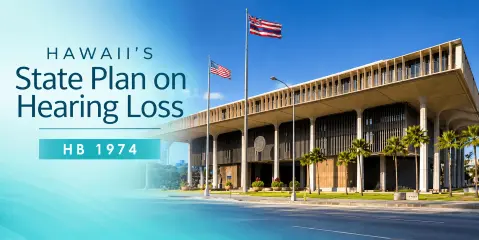
Hearing loss is frequently misunderstood as a simple matter of communication. In reality, its impacts stretch far across every aspect of an individual’s life, influencing educational achievement, employment opportunities, healthy aging, social connectivity, cognitive health, and overall quality of life. Recognizing the profound, far-reaching nature of these challenges, the State of Hawaii has taken a decisive step forward. On July 10, 2026, House Bill 1974 (C.D. 1) was officially signed into law, marking a meaningful and practical milestone for public health and accessibility across the islands.
The enactment of this new legislation is the culmination of dedicated advocacy led by members of the Hearing Loss Association of America (HLAA) alongside numerous other voices within the local hearing loss community. The law directs the Hawaii State Health Planning and Development Agency (SHPDA) to formulate and publish a comprehensive State Plan on Hearing Loss. This initiative is designed to serve as a foundational blueprint, equipping policymakers, healthcare providers, and community stakeholders with the insights necessary to better understand and evaluate community needs, close critical service gaps, and strengthen access to comprehensive hearing care statewide.
Under the provisions of HB 1974, SHPDA is mandated to develop a strategic roadmap focused heavily on improving the accessibility and affordability of hearing healthcare. The plan will also prioritize increasing public awareness, expanding the specialized healthcare workforce, and elevating the standards for early detection, timely intervention, diverse treatment options, and long-term health outcomes for residents of all ages, ranging from infants to older adults. While the legislation does not instantly dismantle every existing barrier to hearing care, the creation of the Hawaii State Plan establishes a unified, shared roadmap for future legislative and community initiatives, ultimately refining the state’s approach to hearing health services.
To support this critical undertaking, the bill appropriates $100,000 in general funds for the 2026–2027 fiscal year. These resources are allocated to facilitate SHPDA’s administrative and operational responsibilities in drafting and releasing the plan. Specifically, the funds may be utilized for dedicated project management, interagency collaboration, statewide stakeholder engagement sessions, consultations with specialized subject matter experts, and the comprehensive drafting, professional review, and publication of the final strategic document.
What makes this legislative measure particularly significant is that it establishes an enduring framework for ongoing planning, implementation, and governmental accountability. The state is legally required to provide regular progress updates and policy recommendations during every odd-numbered legislative session. This built-in reporting mechanism ensures that hearing health remains a permanent fixture in Hawaii’s long-term legislative and public policy discussions, successfully elevating hearing health into a formally recognized public health priority.
For many years, children and adults living with hearing loss in Hawaii have contended with a labyrinth of systemic challenges. Residents have frequently encountered delayed diagnoses, a distinct lack of coordinated medical follow-up, and persistent difficulties in locating specialized services. Furthermore, high out-of-pocket costs for hearing aids and assistive listening technologies, limited public awareness regarding auditory health, severe workforce shortages of qualified specialists, and a fragmented healthcare system have compounded these difficulties. Although various organizations, clinics, and individual providers have long performed vital work within their respective spheres, the state has historically lacked a coordinated, statewide effort to systematically identify gaps and forge a unified long-term strategy.
House Bill 1974 fundamentally alters this landscape. Guided by SHPDA, the newly established planning process is designed to bring together a diverse coalition of healthcare providers, educators, state and local government agencies, community organizations, and individuals possessing direct, lived experience with hearing loss. This collaborative environment will be instrumental in identifying critical priorities and formulating actionable, pragmatic recommendations. The resulting draft plan will serve as a guiding light to translate these high-level recommendations into tangible, meaningful actions that directly benefit the community.
The journey toward this legislative victory began when members of Hawaii’s hearing loss community initiated vital conversations with key lawmakers regarding the urgent necessity of a statewide hearing health strategy. Momentum accelerated significantly when the Hawaii Kupuna Caucus—a prominent bipartisan group of legislators dedicated to addressing issues affecting older adults—selected HB 1974 as one of its core priority bills for the legislative session. This high-profile endorsement played a crucial role in raising broader awareness and building robust legislative support for the measure.
Riding this wave of momentum, the community rallied around a shared vision to propel the bill through the legislative process. Members of the HLAA HOPE support group, alongside practicing audiologists, ear, nose, and throat (ENT) physicians, speech and hearing professionals, family caregivers, and numerous allied community organizations, mobilized effectively. They submitted written testimony, engaged in personal advocacy, and maintained a visible presence throughout the deliberations in both the Hawaii House of Representatives and the Senate. The collective effort culminated in widespread appreciation and gratitude for all who stepped forward to share their personal stories and technical expertise, making the historic achievement a reality.
By enacting this legislation, Hawaii joins a select group of five other states that have previously instituted similar statewide planning initiatives. Models from Nevada, Minnesota, Massachusetts, Vermont, and New York served as valuable benchmarks and references for the architects of HB 1974.
Crucially, the heart of this planning initiative remains anchored in the lived experiences of real people. By placing individuals and families who navigate the daily realities of hearing loss at the very center of the conversation, the state ensures that the resulting recommendations will be both authentic and deeply responsive to actual community needs. Alongside these individuals, community stakeholders spanning healthcare, education, government, and local non-profits will continue to shape the trajectory of the initiative.
With the formal planning process now officially underway, officials anticipate a comprehensive draft plan to be finalized and released by the end of 2026. Following that milestone, the focus will transition seamlessly into active implementation, turning identified goals into concrete solutions for the people of Hawaii.