A landmark study published in JAMA Neurology has delivered a stark projection regarding global health, warning that the number of new dementia cases is expected to double worldwide over the next quarter-century. The research paints a sobering picture of the societal and healthcare challenges ahead, emphasizing that the surging prevalence of cognitive decline will require coordinated international leadership, targeted medical interventions, and robust support systems for families and caregivers.
For family caregivers who are already navigating the complex realities of looking after a loved one with dementia, as well as for individuals thinking ahead about their own long-term cognitive health, projections of this scale can feel overwhelming. However, public health experts and researchers stress that understanding the underlying drivers of these numbers is the crucial first step toward effective prevention and better care planning.
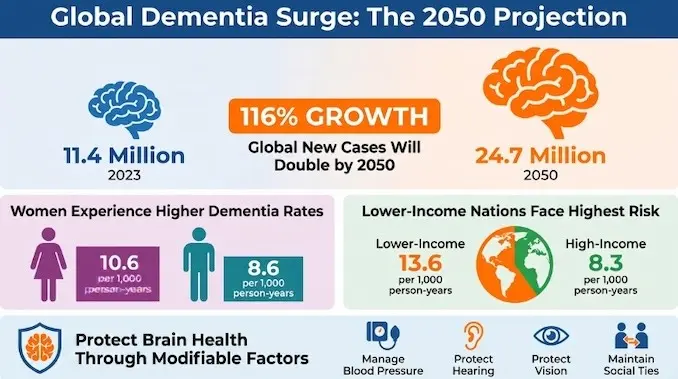
According to the data analyzed in the study, the global landscape of cognitive decline is shifting rapidly. In 2023, the world saw an estimated 11.4 million new dementia cases. By the year 2050, that figure is projected to skyrocket to 24.7 million new cases annually, representing a striking 116 percent increase.

Crucially, researchers point out that this dramatic surge is not primarily driven by the disease becoming inherently more aggressive or virulent. Instead, the primary catalyst is the rapid aging of the global population. Age remains the single most significant risk factor for developing dementia, and as medical advancements and public health improvements allow people to live longer than ever before, the sheer volume of older adults entering the peak risk window for cognitive decline is expanding.
Medical experts view these findings as a definitive wake-up call. Rather than treating the projected increase as an inevitable and unchangeable consequence of human longevity, specialists argue that global healthcare systems must accelerate efforts centered on early prevention, timely diagnosis, and innovative treatments.
A closer examination of the data also reveals significant disparities in who is most vulnerable to the condition. The study highlighted a notable gender gap, showing that the incidence rate of dementia for women sits higher at 10.6 new cases per 1,000 person-years, compared to 8.6 new cases per 1,000 person-years for men.
While women generally enjoy longer lifespans than men, researchers note that longevity alone does not fully account for the observed gap. Sex-specific biological factors—such as the physiological transitions experienced during menopause and lifetime exposure to estrogen—are believed to play a substantial role in shaping long-term brain health. This physiological distinction underscores the urgent need for women to prioritize cardiovascular and cognitive well-being well before entering their senior years.

Geographical disparities are equally pronounced, shedding light on the critical heart-brain connection. The research revealed that low- and middle-income countries face a markedly higher incidence of dementia, averaging 13.6 cases per 1,000 person-years, contrasted with 8.3 cases per 1,000 person-years in high-income nations.
This regional divide points directly to cardiovascular health as a primary determinant of neurological health. Over recent decades, high-income countries have made notable strides in reducing smoking rates, along with managing untreated high blood pressure and elevated cholesterol. Meanwhile, many low- and middle-income regions are seeing rising trends in obesity, stroke, and cardiovascular disease. For healthcare providers and families alike, the message is unmistakable: protecting the heart is fundamental to protecting the brain.
While the macro-level statistics present a formidable challenge, medical professionals emphasize that much of an individual’s cognitive trajectory remains influenced by modifiable risk factors. Experts recommend focusing on foundational health habits to support long-term brain resilience, noting that managing blood pressure, addressing metabolic health, and maintaining active social and sensory engagement can significantly alter personal risk profiles.
Public health advocates continue to stress that while personal lifestyle modifications are essential, mitigating the broader impact of the coming demographic shift will require systemic action. Global leaders, policymakers, and healthcare institutions must unite to address the structural inequalities in healthcare access and resource distribution that currently amplify the burden of cognitive decline in vulnerable regions.

As the medical community digests the implications of the JAMA Neurology report, the overarching consensus remains clear. The projection of nearly 25 million annual new cases by 2050 is a sobering milestone, but it is not a predetermined destiny. Through targeted preventative strategies, heightened awareness of cardiovascular-neurological links, and robust global advocacy, societies can work to alter the trajectory of dementia before the full weight of the crisis materializes.