A landmark study published in JAMA Neurology has delivered a sobering projection regarding the future of global health, forecasting that the number of new dementia cases will double worldwide by the middle of the century. For family caregivers supporting loved ones with cognitive decline, as well as for individuals navigating their own long-term health planning, these projections highlight profound societal and medical challenges ahead. Understanding the driving forces behind these rising numbers represents an essential first step toward better prevention and care coordination, though health experts emphasize that addressing the crisis will ultimately demand coordinated global leadership and systemic healthcare advocacy.

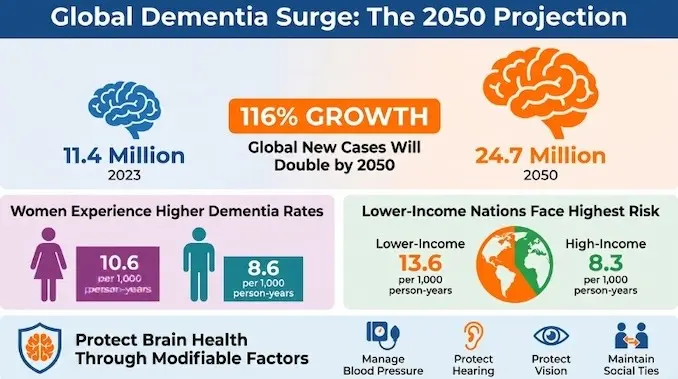
According to the data released in the study, an estimated 11.4 million new dementia cases were diagnosed globally in 2023. By the year 2050, that figure is projected to surge to 24.7 million new cases annually, representing a striking 116 percent increase. Researchers stress that this dramatic spike is not driven by an inherent shift in the aggressiveness of the disease itself, but rather by the rapid aging of the global population. Because age remains the single most significant risk factor for developing dementia, and because human life expectancy continues to rise worldwide, larger segments of the population are reaching the advanced ages where cognitive decline most frequently manifests.
Medical professionals view these projections not as an inevitable fate of human aging, but rather as an urgent call to action. Dr. Emer MacSweeney, a consultant neuroradiologist, characterizes the findings as a critical wake-up call to accelerate research into prevention, early diagnosis, and targeted treatment strategies. Without proactive interventions at both individual and public health levels, healthcare systems around the globe risk becoming overwhelmed by the sheer volume of individuals requiring specialized cognitive care.

The study also shed light on a pronounced gender gap in dementia incidence. Researchers found that the incidence rate for women stood at 10.6 new cases per 1,000 person-years, compared to 8.6 new cases per 1,000 person-years for men. While women generally enjoy longer overall lifespans, and age is a primary catalyst for the condition, investigators point out that longevity alone fails to account for the entire disparity. Sex-specific biological factors, including lifelong exposure to estrogen and the profound hormonal shifts associated with menopause, appear to play a substantial role in shaping long-term brain health. This physiological distinction underscores the importance of encouraging women to prioritize both cardiovascular and cognitive wellness well before reaching their senior years.
Geographic disparities further illuminate the complex roots of cognitive decline, particularly regarding the relationship between vascular health and neurological function. The research revealed that low- and middle-income countries face a markedly higher dementia incidence rate of 13.6 cases per 1,000 person-years, compared to just 8.3 cases per 1,000 person-years in high-income nations. This stark geographic divide points directly to the well-established heart-brain connection. Over recent decades, high-income countries have achieved notable progress in reducing smoking rates, managing high blood pressure, and controlling cholesterol levels. Conversely, many low- and middle-income regions are experiencing rising rates of obesity, stroke, and cardiovascular disease, reinforcing the medical consensus that maintaining robust cardiovascular health is foundational to preserving cognitive function.

While individuals cannot alter the natural progression of aging, medical experts emphasize that a significant portion of a person’s cognitive trajectory remains influenced by modifiable risk factors. Healthcare professionals consistently advise focusing on core health fundamentals to support long-term brain vitality. Effectively managing chronic conditions such as high blood pressure and diabetes, protecting sensory functions like hearing and vision, and maintaining active social connections are among the most powerful defenses against cognitive decline. Nevertheless, experts maintain that individual lifestyle modifications must be accompanied by broader public health initiatives and international cooperation to confront the rising tide of dementia worldwide.
The mounting projections underscore the urgent need for systemic preparedness as the global demographic landscape shifts. By recognizing the intricate ties between heart health and brain health, and by addressing the unique risk factors facing different populations, healthcare providers, caregivers, and policymakers can better navigate the challenges ahead. As the medical community continues to advocate for enhanced resources and preventative care, the focus remains on mitigating risk and improving the quality of life for millions of individuals worldwide.