As the federal landscape for public assistance undergoes a significant structural shift, states are preparing for a major policy transformation that will tie healthcare coverage to employment. Beginning January 1, 2027—or sooner at the option of individual states—44 jurisdictions across the United States will be required to condition Medicaid eligibility for adults in the Affordable Care Act expansion group, as well as enrollees in certain waiver programs, on meeting strict work requirements. This upcoming mandate mirrors long-standing policies in the Supplemental Nutrition Assistance Program, which has historically utilized work requirements as a fundamental condition for low-income households seeking food assistance.
However, both federal assistance programs incorporate mandatory exclusions designed to protect vulnerable populations, specifically individuals who are unable to work due to physical or mental limitations. Under the upcoming Medicaid rules, individuals classified as "medically frail" are exempt from work requirements, provided they possess a qualifying condition and can demonstrate that the condition directly impairs their ability to fulfill the mandated community engagement hours. Recently, the Centers for Medicare & Medicaid Services released guidance detailing an operational framework that states can utilize to verify these medical frailty exclusions. Despite this federal guidance, participation in this specific verification approach remains optional, leaving considerable ambiguity regarding the diverse procedures individual states will ultimately adopt.
This impending administrative challenge brings to the forefront the operational history of the Supplemental Nutrition Assistance Program, which has navigated similar hurdles for decades. Within SNAP, individuals deemed physically or mentally unfit for employment are likewise excused from general and time-limited work mandates. While the administrative frameworks of the two programs offer certain cross-program insights, fundamental differences in how eligibility is determined mean that Medicaid verification protocols will ultimately diverge from SNAP practices in several crucial ways. Examining how state agencies historically managed the intersection of work exemptions, client self-attestations, and provider documentation provides a valuable lens for understanding the complexities facing Medicaid administrators.
How Have States Historically Determined Ability to Work for the SNAP Program?
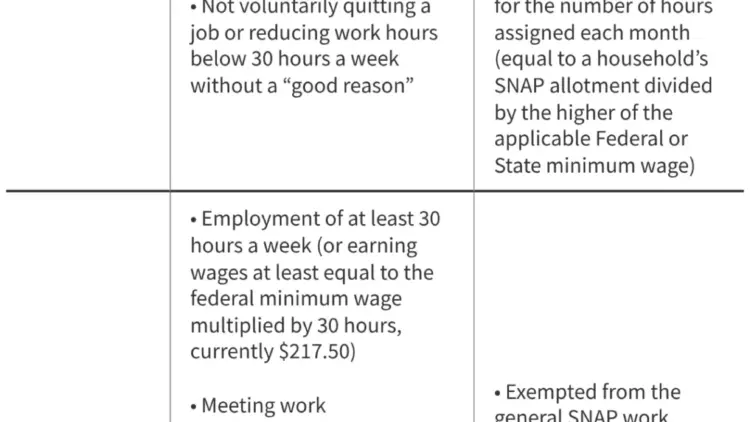
State administration of work exemptions within the Supplemental Nutrition Assistance Program has long been characterized by substantial state flexibility. Federal regulations task state agencies with defining what constitutes a physical or mental unfitness for employment and establishing the corresponding verification procedures. Generally, most adult SNAP recipients under the age of 65 must comply with baseline work requirements. These baseline rules typically involve registering for employment, accepting suitable job offers if tendered, participating in assigned employment and training programs or workfare, and refraining from voluntarily quitting a job or reducing work hours below 30 hours per week without a legally recognized good cause.
Furthermore, more restrictive time-limited work requirements apply to non-exempt able-bodied adults without dependents. These individuals must work, participate in a work program for at least 80 hours per month, or fulfill workfare obligations to maintain their benefit eligibility beyond three months within any 36-month period. Because federal regulations grant broad discretion in defining physical and mental fitness, definitions vary widely across state lines. Several states maintain expansive interpretations of physical or mental limitations, occasionally including chronic homelessness or the residual impacts of domestic violence when those circumstances severely impair an individual’s functional capacity. State regulations also mandate automatic exemptions for individuals receiving temporary or permanent disability benefits, such as Supplemental Security Income, Worker’s Compensation, Veterans Affairs support, Railroad Retirement, or developmental disability services, though the precise documentation required to prove these statuses can differ.
To operationalize these exemptions, a mandatory component of the SNAP application and recertification workflow involves a phone or in-person interview between the enrollee and an eligibility caseworker. According to recent programmatic data, the majority of states initiate screening for physical or mental limitations during the initial application phase, while others wait to explore these potential limitations during the formal interview required prior to certification. More than half of state agencies grant their eligibility staff discretionary authority regarding the types of limitations that may warrant an exemption. For instance, direct visual observations made by caseworkers during an interview—such as noticing that an applicant relies on an oxygen tank—can serve as an immediate justification for granting an exemption.
When an unfitness to work is deemed obvious, state practices diverge. Some jurisdictions consistently demand rigorous medical documentation for every individual seeking an exemption, whereas many others accept client statements as sufficient proof, reserving formal documentation requests for situations where the caseworker finds the circumstances questionable or unclear. Evaluations of these administrative processes suggest that mandatory documentation policies can sometimes reduce staff burden and eliminate subjective decision-making by caseworkers, thereby increasing consistency. At the same time, imposing universal documentation requirements significantly amplifies the administrative burden placed on enrollees, healthcare providers, and the caseworkers tasked with processing paperwork and requesting clarifications. SNAP recipients are routinely reevaluated for exemptions during standard recertifications every six to twelve months, though studies indicate that the information gathered at renewal rarely differs from the initial application data.
When a limitation is not visually obvious to eligibility workers, states are required to obtain a statement from a licensed medical professional to substantiate the exemption status. Nevertheless, the procedural mechanisms for collecting this provider attestation vary extensively. Some states utilize standardized medical forms, while others accept informal written statements or direct phone calls between providers and caseworkers. Because healthcare providers typically receive little to no detailed administrative guidance on how to assess functional fitness for employment under specific program rules, their individual determinations regarding who qualifies for an exemption inherently vary.
These state-level administrative balances may soon shift dramatically in response to new federal financial pressures. Under recent reconciliation legislation, states will be required beginning in October 2027 to cover a portion of SNAP benefit costs if their payment error rates exceed six percent. Because payment error rates primarily reflect administrative oversights rather than deliberate fraud, states are reevaluating their verification processes to mitigate financial risks. To protect against costly penalties, jurisdictions like Arizona have already begun altering long-standing policies by requiring robust documentation for eligibility criteria that previously relied entirely on client self-attestations.
How May the Medicaid Process Compare to SNAP?
The impending rollout of Medicaid work requirements and medical frailty exclusions will introduce verification mechanisms that differ fundamentally from the historic practices of the SNAP program. Most notably, Medicaid programs possess access to comprehensive healthcare claims and encounter data that food assistance programs do not utilize. An interim final rule released by federal regulators instructs state Medicaid agencies to leverage administrative claims data covering the preceding 12 months to automatically verify an enrollee’s medical frailty status prior to requesting documentation directly from the individual.
To facilitate this, federal authorities outlined a tiered verification framework. Under this model, states can identify individuals as medically frail using claims data alone in the first tier, combine claims with encounter or other administrative data in the second tier, or deploy an individualized manual process requiring additional documentation in the third tier where data is absent or insufficient. While this automated approach will successfully verify medical frailty for a substantial portion of the population, data limitations will inevitably remain. Obstacles such as missing records for newly enrolled applicants or instances where treating physicians fail to code conditions consistently using designated state criteria mean that manual documentation will still be necessary for many participants.
In scenarios where existing claims data prove inadequate, state Medicaid agencies will inevitably rely on healthcare providers to verify functional capacities and medical frailty statuses, echoing the provider dependence seen in SNAP. Because federal Medicaid rules prohibit mandatory interviews during the application process, eligibility caseworkers will play a far less direct role in uncovering these limitations. However, in states where SNAP and Medicaid operations are jointly administered or share integrated data systems, Medicaid agencies may be able to utilize relevant information gathered through SNAP interviews. When data is missing, states must rely on direct provider attestations. Because federal guidance on the precise information required from clinicians remains minimal, states are expected to develop divergent forms, though some—such as North Carolina—are exploring unified attestation forms that can simultaneously satisfy both Medicaid and SNAP exemption criteria.
Furthermore, state flexibility regarding client self-attestation will face stricter limitations in Medicaid compared to SNAP. While SNAP rules require states to seek secondary verification only when initial client statements appear questionable, federal Medicaid regulations will significantly tighten self-attestation policies. Throughout the initial implementation phase, states are permitted to accept self-attestation when reliable electronic data is unavailable. However, starting January 1, 2028, state Medicaid programs may only accept self-attestation of a medical frailty status a single time during an enrollee’s continuous enrollment period. For subsequent renewals, states will be mandated to rely on verifiable administrative data or demand formal documentation from individuals, initiating a more time-consuming verification cycle. This restriction marks a sharp departure from pre-implementation trends, where a majority of states had expressed a strong preference for utilizing self-attestation to verify medical frailty.
Ultimately, state Medicaid verification policies will vary widely, heavily influenced by the looming threat of strict federal audits and financial penalties. Federal rules establish that states will face noncompliance findings if federal audits reveal frequent approvals of medical frailty exemptions without sufficient empirical evidence demonstrating that the condition genuinely impedes an individual’s ability to work. Balancing the competing imperatives of protecting against severe fiscal penalties, minimizing administrative bloat, and preventing wrongful coverage terminations will present a formidable challenge for state administrators. These complex operational hurdles arrive as states concurrently prepare for upcoming adjustments to the Medicaid payment error rate measurement program, which will heighten the financial consequences of eligibility errors exceeding three percent and further complicate state efforts to balance administrative burdens against fiscal risk.