Every year on February 25, advocates for hearing health unite across the globe to observe International Cochlear Implant Day. This dedicated day serves as a powerful reminder of the remarkable medical advances, technological innovations, and surgical milestones that make cochlear implants life-changing for individuals living with severe or profound hearing loss. It is a time to celebrate restored connections to sound, language, and the wider world, while also highlighting the ongoing need for accessibility and support.
Behind the statistics and the medical breakthroughs are deeply personal journeys of resilience, adaptation, and triumph. Among those leading the charge is Qais Khan, whose story exemplifies the transformative potential of early intervention, unwavering family support, and the relentless pursuit of self-advocacy in a world primarily designed for hearing individuals.
Qais’s Story: A Journey Born in Silence
Born profoundly deaf into a hearing family, Qais faced a reality that immediately upended his family’s expectations and routine. The initial diagnosis came as a profound shock, casting his parents into an unfamiliar world filled with medical terminology, new communication strategies, and daunting uncertainties. However, rather than succumbing to the overwhelming nature of the diagnosis, his parents demonstrated immediate resolve. They were determined to learn, adapt, and secure every possible resource to ensure Qais received the comprehensive support he needed right from the beginning of his life.
A crucial turning point occurred when Qais was three and a half years old, the age at which he first had his cochlear implant switched on. That single medical event unlocked a new dimension of sensory experience, laying the foundational access to communication and educational opportunities that would shape his developmental years. Yet, navigating childhood and adolescence with a profound sensory difference was far from simple.
As Qais progressed through secondary school and college, the invisible barriers of his condition manifested in deeply personal struggles. He grappled with significant mental health challenges, battling low self-esteem and a debilitating lack of confidence. Communication—the vital bridge between individuals—remained an ongoing hurdle, leaving him feeling isolated and without real friends. Compounding these internal struggles were external low expectations. Some teachers and educational professionals exhibited skepticism regarding his academic capabilities. Prevailing attitudes suggested his prospects were limited, that academic success in examinations was out of reach, and that higher education or a professional career path simply wasn’t in the cards for someone with his background.
Overcoming the Obstacles Through Resilience and Determination
Refusing to accept the limiting predictions of others, Qais pressed forward, propelled by the steadfast encouragement of his parents, specialized charities, and dedicated hearing health professionals. Through years of diligent study and quiet determination, he systematically dismantled every low expectation placed upon him.
He prepared rigorously for his examinations, ultimately passing with excellent grades that paved the way for higher education. Transitioning smoothly through college, he went on to earn a university degree. Today, achieving that academic milestone stands as one of his proudest moments, transcending the classroom to serve as a deeply personal triumph. It represented years of perseverance, resilience, and an unshakeable inner drive to prove once and for all that deafness does not place a ceiling on human potential or personal ambition.
Stepping out of academia and into the professional world presented a new set of trials, amplified exponentially by the arrival of the COVID-19 pandemic. The global health crisis cast a shroud of uncertainty over the job market, freezing time and altering traditional work environments. Yet, out of this period of global disruption emerged an unexpected calling: advocacy.
Seeking to channel his lived experience into meaningful action, Qais connected with the Cochlear Implant International Community of Action (CIICA). This international engagement allowed him to collaborate directly with hearing health experts, industry professionals, and fellow advocates to develop practical solutions for individuals navigating hearing loss. Stepping into leadership roles as a board member and coordinator for young adults with cochlear implants, he began contributing to high-level strategic initiatives. He also helped organize and support online forums designed to address the unique challenges faced by individuals aged 18 to 35, a critical transition period marked by educational completion, career entry, and newfound independence.
Finding and Sharing My Voice on the Global Stage
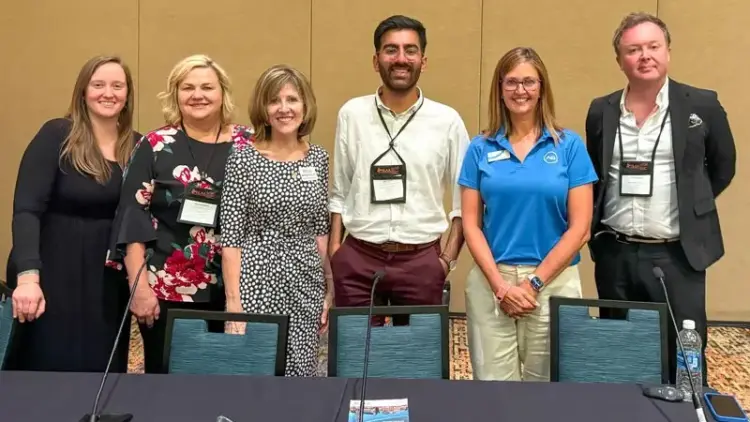
The evolution of Qais’s communication abilities mirrors the broader trajectory of his life. As a young child, his spoken voice was frequently difficult for others to understand. Fast forward to the present day, and he finds himself delivering addresses at prestigious global events sponsored by the United Nations, the World Health Organization, the United Kingdom Parliament, and other influential international entities.
Along this remarkable path, he has championed vital conversations, shared his personal narrative, and helped foster inclusive spaces where young adults with cochlear implants can finally feel seen, heard, and deeply understood.
Reflecting on the core enabler of his success, Qais acknowledges the profound role his cochlear implant has played throughout his journey. While the device did not magically erase every systemic barrier or social obstacle he encountered, it provided him with critical auditory access, personal independence, and the self-assurance required to stand tall within academic, professional, and advocacy arenas. Most importantly, it provided the physical and psychological foundation necessary to find his own voice.
Looking back at the obstacles he has successfully surmounted, Qais remains deeply proud of the distance he has traveled. His experiences have taught him a vital lesson: true progress is never about achieving flawlessness; rather, it is about showing up and persevering, even on the most difficult days. Disabilities do not define the core identity or capabilities of an individual. Equipped with the proper support systems, personal belief, and unrelenting determination, anyone possesses the capacity to turn their aspirations into reality. Through his ongoing advocacy and storytelling, Qais hopes to serve as a steadfast reminder of that truth to anyone facing similar challenges.