Cartagena, Colombia, is globally celebrated for its enchanting, UNESCO World Heritage-listed Old Town, where centuries-old stone walls, vibrant colonial architecture, and bustling plazas tell the story of a rich maritime past. While the historic district has long been the primary draw for international travelers, the city’s stunning Caribbean coastline has historically offered fewer options for visitors seeking a traditional sun-and-sand experience. That dynamic is beginning to shift following significant accessibility enhancements along a key stretch of beach in the bustling Bocagrande district, opening up the warm Caribbean waters to wheelchair users and travelers with reduced mobility.
The introduction of dedicated accessibility infrastructure marks a major milestone for inclusive tourism in the region. Barrier-free beaches remain a rare sight across much of South America, making the new developments in Cartagena a noteworthy step forward for municipal infrastructure and tourism equity. By transforming a popular urban beachfront into an accommodating environment for everyone, local authorities have established a progressive precedent that tourism advocates hope will inspire similar initiatives throughout Colombia and the wider region.
A Wheelchair Accessible Beach in Bocagrande
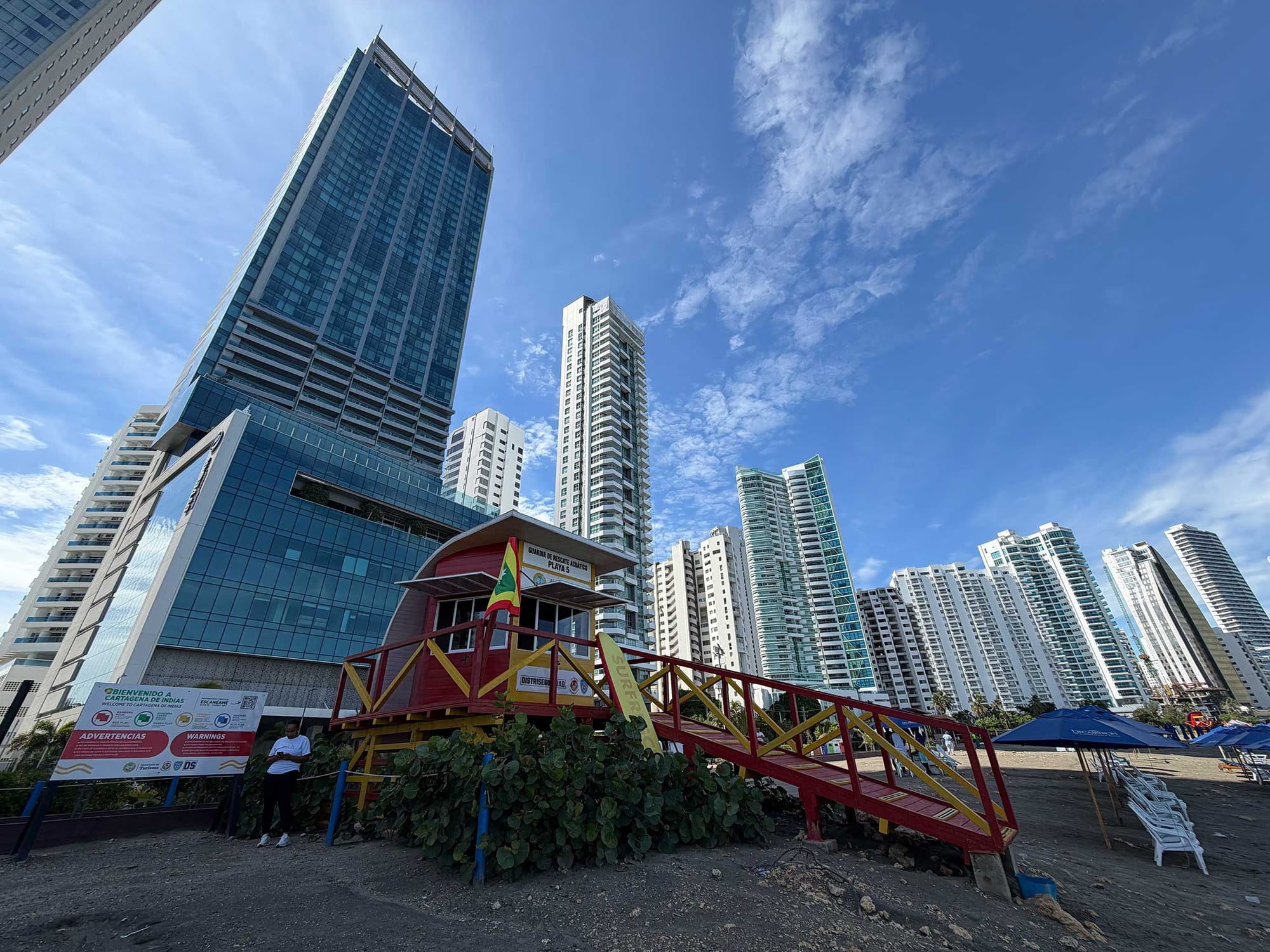
The city’s first fully adapted beach access point is situated at Playa 5 in the modern Bocagrande neighborhood. Centrally located directly across the street from prominent high-rise properties including the Hyatt Regency Cartagena and the ESTELAR Cartagena de Indias Hotel, the site is exceptionally convenient for travelers staying in the district’s primary hospitality corridor.
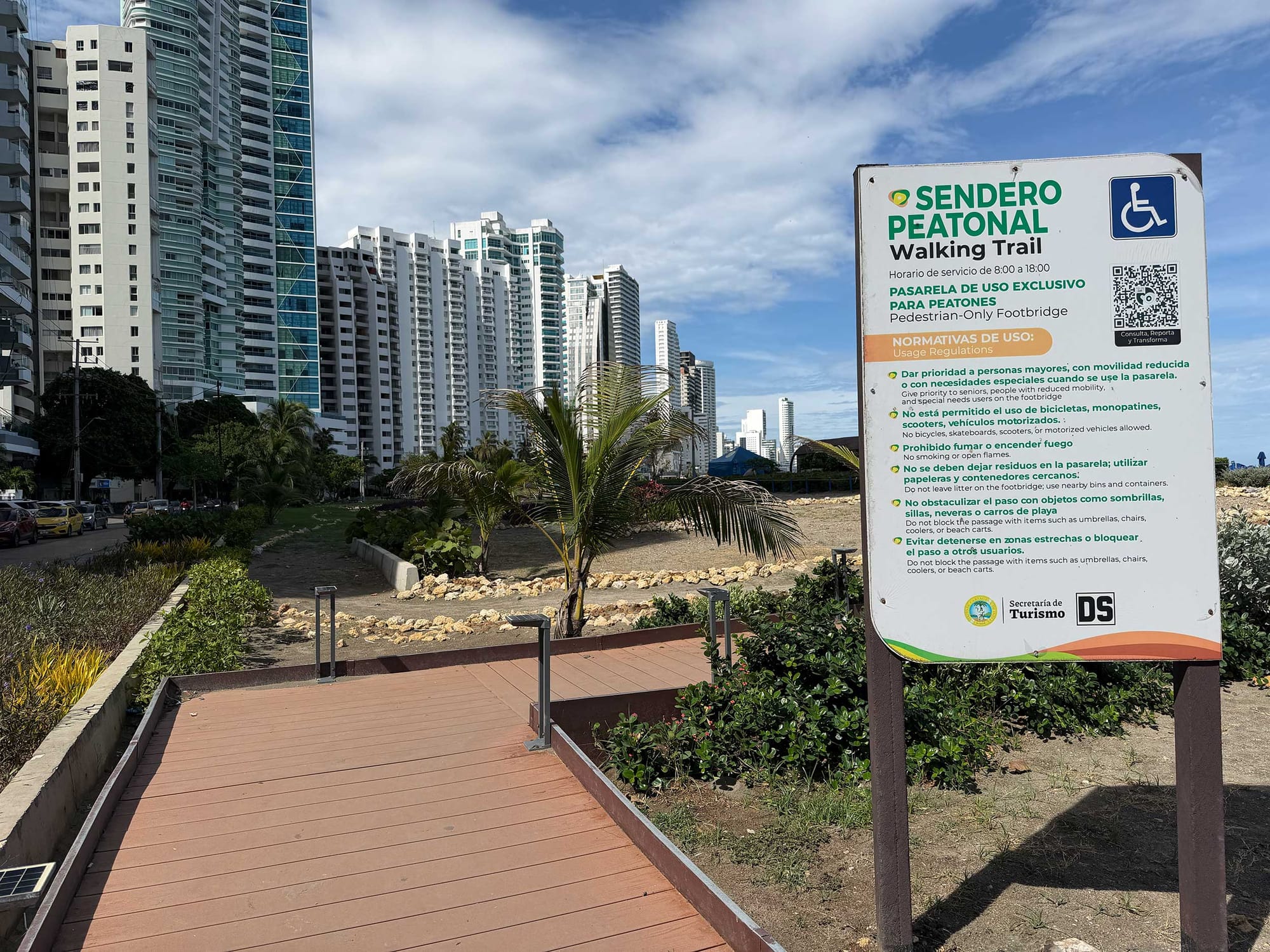
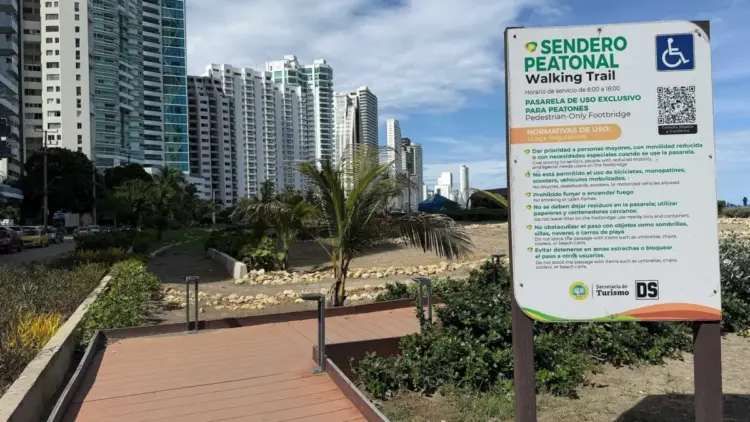
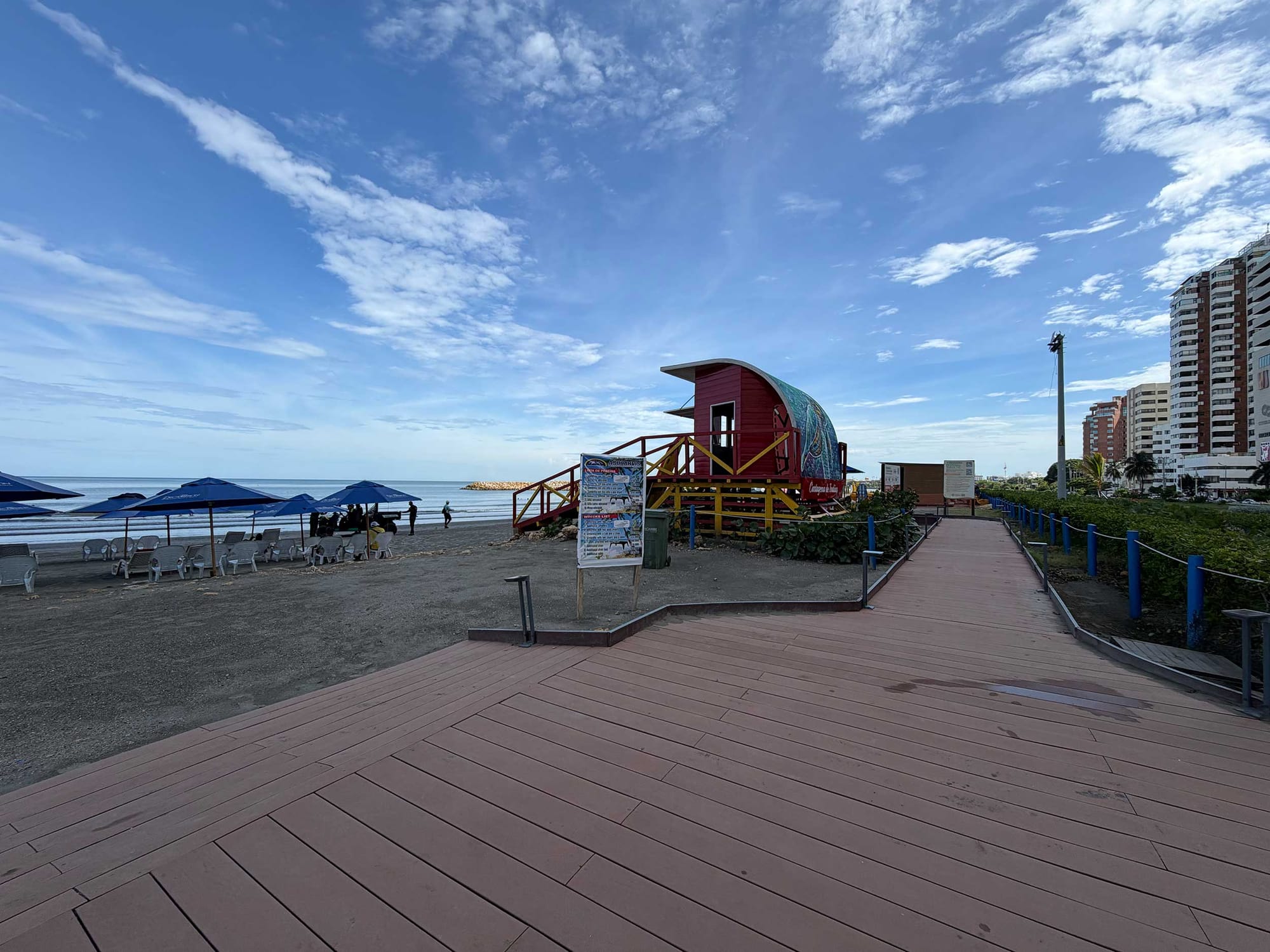
The journey to the shoreline begins at the intersection of Carrera 1 and Calle 12. At this junction, a smooth, engineered boardwalk extends from the urban streetscape directly toward the edge of the coastal sands. Officially designated as the "Sendero Peatonal" or Walking Trail, the boardwalk is reserved exclusively for pedestrians. Informational signage posted along the route clearly displays international wheelchair accessibility symbols alongside usage regulations printed in both Spanish and English, establishing a clear priority system that asks all users to give way to senior citizens and individuals with reduced mobility.
While the wooden boardwalk provides a seamless transition from the pavement to the upper ridge of the beach, navigating the remaining distance to the surf requires additional support. A ramp leads downward from the boardwalk platform onto the sand, though it terminates before reaching the waterline. The absence of a continuous beach mat stretching directly to the ocean’s edge means that wheelchair users must rely on specialized equipment to traverse the soft coastal sand and enter the Caribbean Sea.
Free WaterWheels Beach Wheelchair
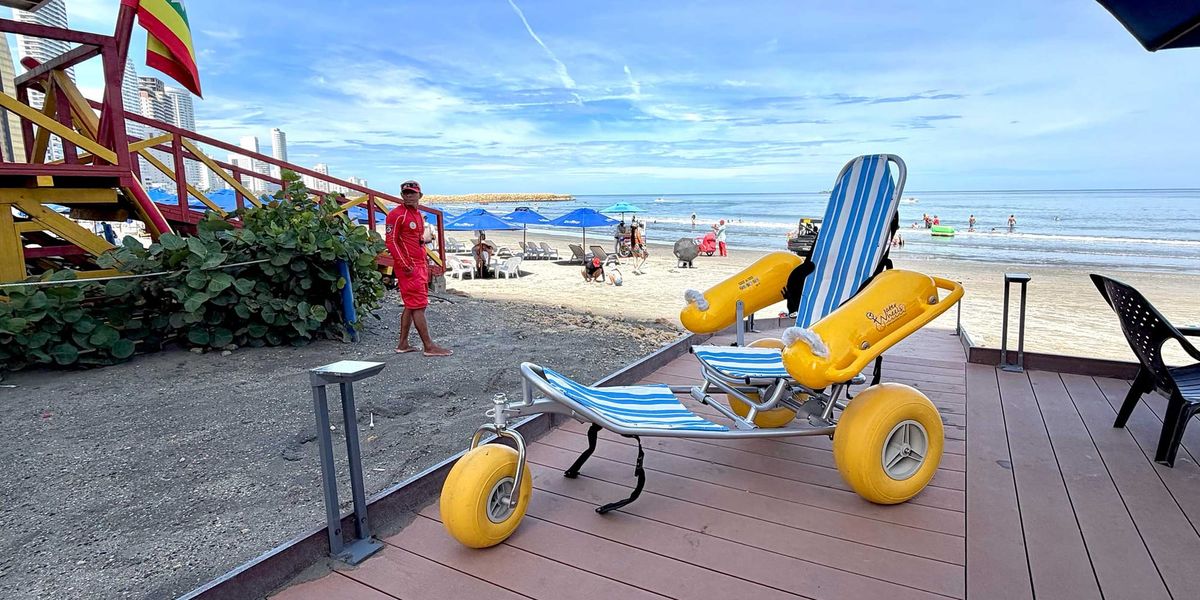
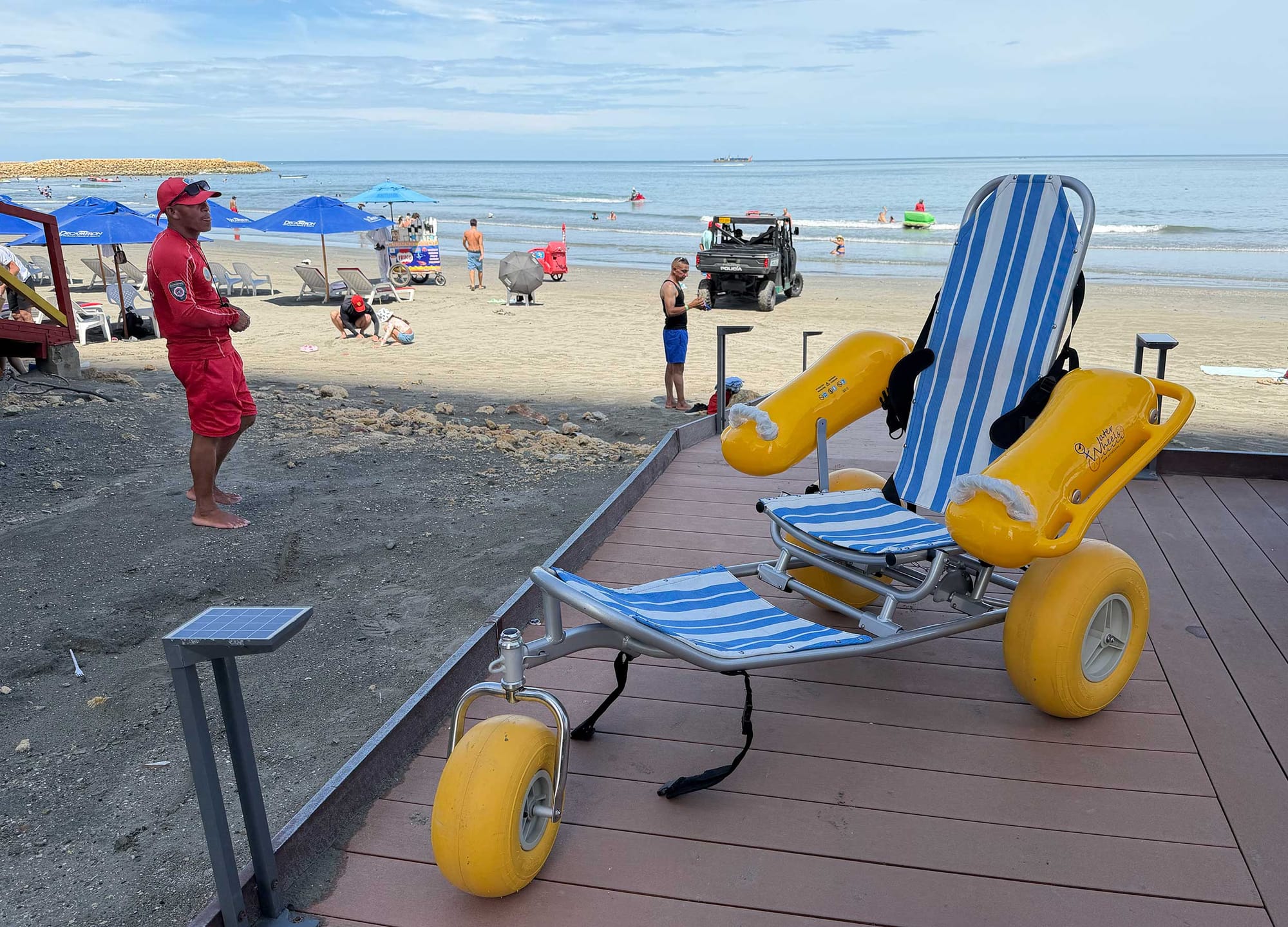
To bridge the gap between the end of the wooden path and the crashing waves, municipal authorities have introduced the WaterWheels Floating Beach Wheelchair, which is made available to the public completely free of charge. Visitors wishing to utilize the specialized chair can request it directly from the lifeguards on duty at the Playa 5 lifeguard station. Observers note that the on-site lifeguards are consistently approachable, attentive, and eager to assist visitors with the borrowing process.
The WaterWheels model is specifically engineered for coastal environments, featuring oversized, buoyant balloon tires that roll smoothly over loose, shifting sand without sinking. Additionally, the chair is equipped with distinctive flotation armrests designed to provide buoyancy and safety as users transition into the water. Because the WaterWheels apparatus is a manual beach wheelchair, its practical operation depends on the presence of a companion, family member, or friend who can push the user across the sandy expanse and into the surf. For travelers visiting with a support network, the service provides an invaluable, cost-free opportunity to experience the warmth of the Caribbean Sea firsthand.
Wheelchair Accessible Seating, Shade, and Facilities
Accessibility at Playa 5 extends beyond mobility equipment to encompass essential comfort and safety amenities. Directly adjacent to the red-and-yellow lifeguard station, visitors will find a designated accessible seating area situated on the boardwalk deck. This shaded zone features comfortable chairs and umbrellas arranged to accommodate guests on a first-come, first-served basis, providing a reliable retreat from the equatorial sun.
Down on the sand, independent beach vendors offer conventional chairs and umbrellas for daily rental, allowing families and groups to set up camp closer to the shoreline. Security and safety are prominent features of the Bocagrande location; stationed lifeguards maintain a constant visual on the swimming areas, while municipal police officers regularly patrol the stretch of sand, establishing one of the most secure coastal environments in the city.
Infrastructure for personal care has also been integrated into the Playa 5 site. A dedicated restroom and shower facility operates daily from 8:00 a.m. to 6:00 p.m., featuring an adapted stall designed for visitors with disabilities. The interior includes a functional toilet complemented by a securely mounted wall grab bar and tiled flooring. However, due to the compact footprint of the facility, users of larger power wheelchairs may find the maneuvering space restricted, potentially making a full 360-degree turn inside the stall challenging.
Final Thoughts
The integration of barrier-free infrastructure along the Caribbean coastline of Cartagena represents a progressive shift in regional tourism development. Wheelchair accessible public beaches remain uncommon throughout South America, highlighting the significance of Cartagena’s investment in inclusive public spaces for both residents and international travelers. The combination of a dedicated walking trail, complimentary floating beach chairs, shaded accessible seating, and adapted restroom facilities establishes a comprehensive framework for coastal accessibility. As municipal leaders continue to evaluate urban infrastructure, these thoughtful adaptations offer a promising blueprint for future accessibility projects across Colombia.