The landscape of healthcare coverage across the United States continues to be shaped by the Affordable Care Act, more than a decade after its landmark implementation. At the center of this ongoing evolution is the ACA’s Medicaid expansion, a pivotal policy mechanism designed to extend health insurance coverage to nearly all low-income adults. Under the federal guidelines, the program broadens eligibility to individuals with incomes up to 138 percent of the Federal Poverty Level, which translates to $21,597 for an individual in 2025. To incentivize states to join the initiative, the federal government provides participating states with an enhanced federal matching rate, commonly known as FMAP, covering a substantial majority of the costs associated with the newly eligible expansion populations.
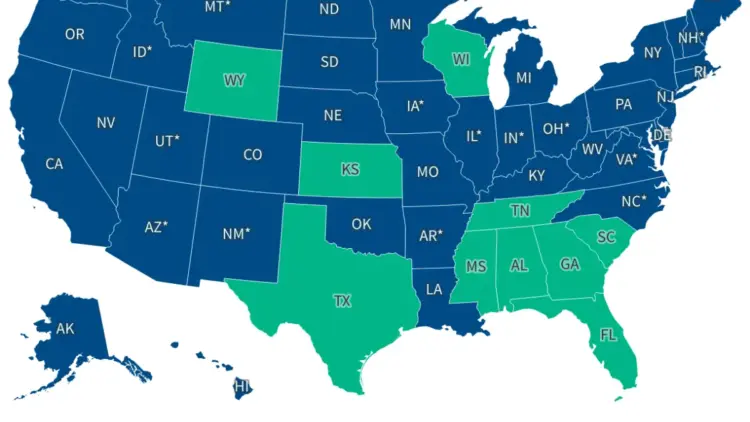
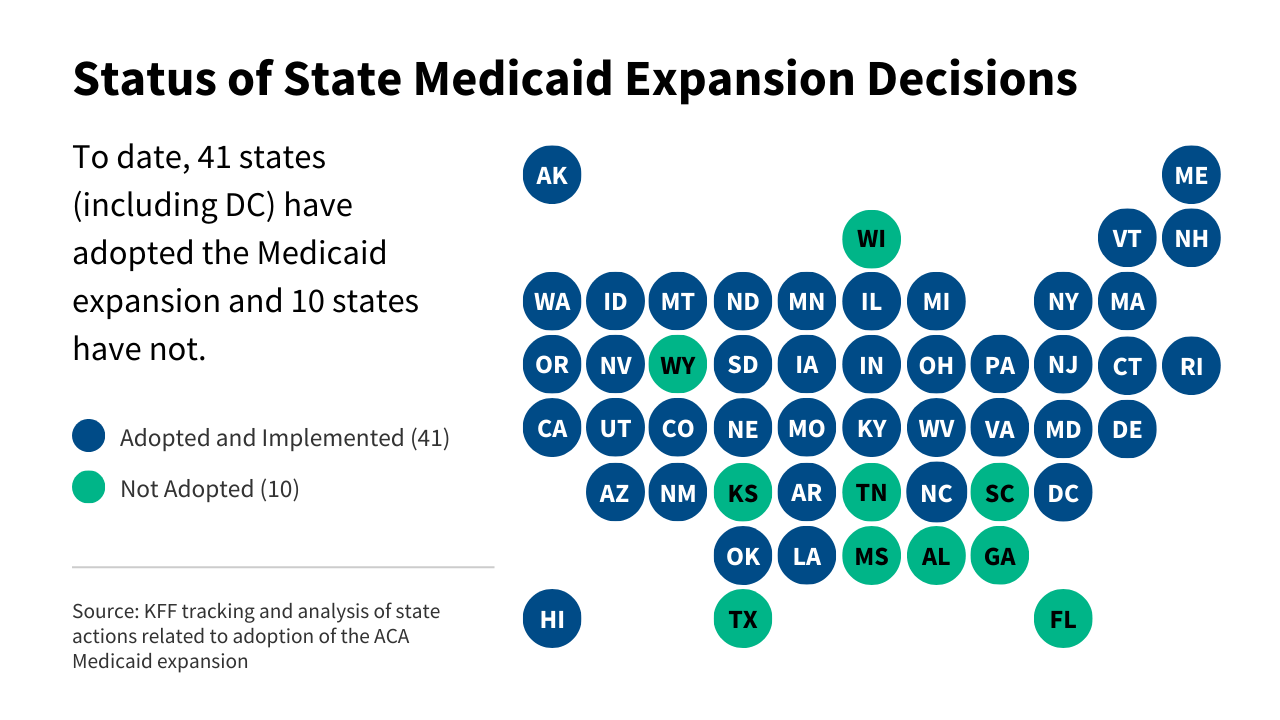
Despite the financial incentives and the broader public health goals of the legislation, the decision to adopt the expansion has remained a deeply contested political and policy choice at the state level. Tracking and analysis conducted by KFF, a prominent healthcare policy research organization, reveals that out of all fifty states and the District of Columbia, a total of 41 jurisdictions have officially adopted the Medicaid expansion. Conversely, 10 states continue to hold out, choosing not to implement the expansion within their borders. This geographic divide has created a patchwork of healthcare access across the country, where an individual’s ability to secure affordable coverage often depends entirely on the state in which they reside.
The data surrounding these state-level decisions are continuously monitored, updated, and made publicly available by KFF, providing policymakers, researchers, and the public with comprehensive insights into health reform. These tracking resources include detailed tables outlining state-by-state adoption statuses, as well as downloadable visual aids such as choropleth maps in presentation formats that illustrate the stark geographic lines dividing expansion and non-expansion states.
Beyond the binary choice of whether to adopt the ACA expansion, the national conversation has increasingly shifted toward nuanced policy actions, ongoing legislative debates, and administrative adjustments within both expansion and non-expansion states. KFF’s comprehensive tracking of state expansion activity highlights a diverse array of actions currently taking place across the country. These actions encompass legislative measures, such as bills advancing through at least one chamber of a state legislature or receiving committee approval, as well as executive actions driven by governors, including proposed state budgets, executive orders, and major policy announcements. In several instances, voter-led actions, such as progress toward ballot initiatives, have served as the primary vehicle for pushing expansion forward in resistant states.
Furthermore, the scope of state activity includes limited coverage expansions that fall outside the parameters of a full ACA Medicaid expansion. These localized efforts often address specific populations or health needs but crucially do not qualify for the enhanced federal matching funds that standard ACA expansion provides. Meanwhile, states that have long participated in the expansion are increasingly utilizing administrative mechanisms, particularly Section 1115 demonstration waivers, to introduce new requirements, work rules, or enrollment limits for their expansion populations. These waivers represent a concerted effort by certain state leaders to reshape the contours of the program within federal guidelines.
A particularly critical area of emerging state-level policy debate involves "trigger" laws tied directly to the share of federal funding. These legislative mechanisms are designed to automatically scale back or completely terminate a state’s Medicaid expansion if the federal government reduces its matching rate or if federal funding levels drop below a specified threshold. The existence of these trigger laws introduces a high degree of vulnerability for millions of low-income residents who rely on the program for their daily healthcare needs.
Recent developments in several states underscore the high stakes surrounding these funding-dependent clauses. In South Dakota and West Virginia, lawmakers have considered or are actively considering actions to put trigger laws in place, a move that alarms healthcare advocates who warn of sudden coverage losses. In Virginia, the legislative battlefield over these provisions played out during recent budget negotiations. A budget amendment was introduced that sought to remove the automatic termination of the expansion from the state’s existing trigger law. Instead of an abrupt cancellation of coverage in the event of federal funding cuts, the proposed amendment would have required a legislative committee to develop thoughtful recommendations on how the state might adjust to the loss of federal dollars. However, despite being introduced, the amendment was ultimately left out of the final budget, leaving the original automatic trigger mechanisms intact.
Similar pushes and pulls are occurring in other parts of the nation. Proposals aimed at either entirely removing or significantly scaling back trigger laws have been introduced by lawmakers in Illinois and North Carolina. These legislative battles reflect a growing awareness among state policymakers of the fiscal fragility inherent in relying heavily on federal matching funds, even as advocates warn that the mere presence of trigger laws threatens to destabilize healthcare markets and strip health coverage away from vulnerable populations without warning.
As tracking organizations like KFF and academic centers such as the Georgetown Center for Children and Families continue to monitor these rapid developments, the future of the ACA Medicaid expansion remains a dynamic and vital component of the American healthcare system. The intersection of legislative maneuvering, executive ambition, voter initiatives, and federal funding dependencies ensures that the debate over health coverage access will remain a central fixture of state politics for the foreseeable future.