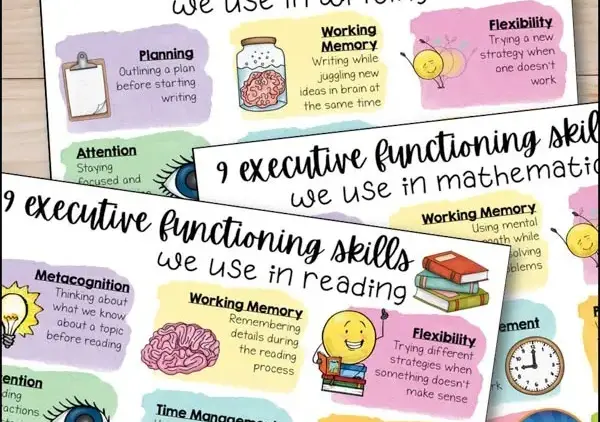
In modern education, a quiet shift is taking place in classrooms across the country as educators increasingly recognize a fundamental truth: every teacher is, by necessity, a teacher of executive functioning skills. Whether students are tackling a foundational mathematics assignment in the fourth grade, drafting an analytical English essay in middle school, or navigating a complex hands-on art project, the core cognitive processes that govern how they approach, manage, and complete tasks are constantly at play.
Executive functioning skills encompass the essential, brain-based abilities that allow individuals to accomplish everyday tasks and achieve long-term goals. These capabilities include planning, organizing, initiating tasks in a timely manner, managing time efficiently, maintaining focus, self-monitoring, exercising self-control, practicing flexible thinking, and persevering through challenging problem-solving scenarios. Far from being isolated abstract concepts, these skills form the underlying scaffolding of all academic and personal achievement. When educators intentionally nurture and support these abilities within the standard curriculum, they provide learners with the vital foundations required for sustained success both inside and outside the formal classroom environment.
Understanding the Value of Executive Functioning in the Classroom
To fully appreciate the impact of integrating these skills into daily instruction, it is helpful to look closely at what executive functioning entails. Every day, students are required to break down complex writing assignments into manageable steps, problem-solve through difficult scientific or mathematical questions, gauge how to allocate their time effectively during assessments, and maintain unwavering attention through lengthy instructional lessons.
When these foundational cognitive abilities are underdeveloped, students often struggle not because they lack academic intelligence or subject-matter comprehension, but because they lack the regulatory and organizational tools needed to execute their knowledge. By embedding strategies that target these skills directly into existing lessons and content areas, educators can bridge the gap between academic potential and actual performance. The approach relies not on adding entirely new subjects to an already crowded school day, but rather on refining and enriching the instructional methods teachers are already using.
Weaving Strategies into Existing Curriculums
Educators across various grade levels are discovering that intentional targeting of executive functioning skills does not require an overhaul of their teaching schedules. Instead, these competencies can be seamlessly blended into routine daily instruction across subjects.
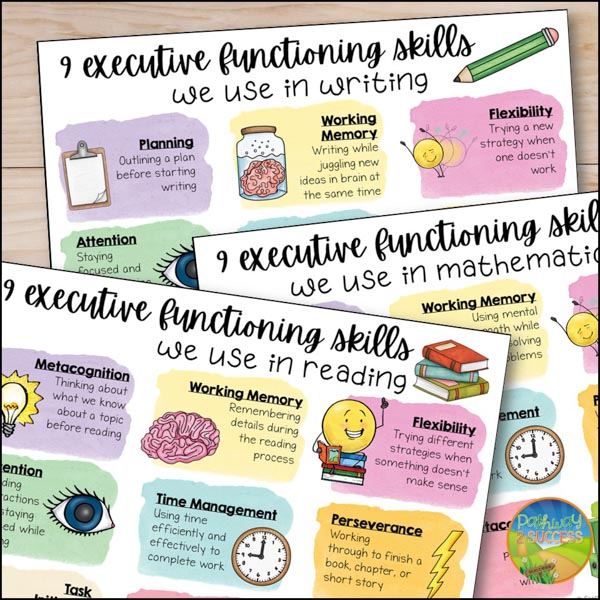
Planning—the ability to conceptualize what is needed to reach a goal and map out the sequential steps to get there—can be cultivated through collaborative mapping during assignments. Metacognition, or the practice of thinking about one’s own thinking, is naturally reinforced when students are prompted to evaluate their own learning processes and decision-making pathways.
Similarly, organization, which involves keeping materials and information orderly, can be supported through structured classroom routines. Task initiation—overcoming hesitation to get started on an assignment promptly—benefits from brief, clear prompts and modeling. Attention and focus are continually reinforced when teachers incorporate varied instructional pacing and active engagement techniques, helping students maintain concentration on tasks, peers, and overarching ideas.
Time management, another critical pillar of executive functioning, is addressed when learners practice estimating how long a task will take and monitoring their progress against a clock or visual timer. Self-monitoring enables students to check in on their own performance relative to their goals, ensuring they stay on track. Self-control, defined as the capacity to pause and reflect before making a choice, helps students navigate complex social and academic environments with greater intentionality.
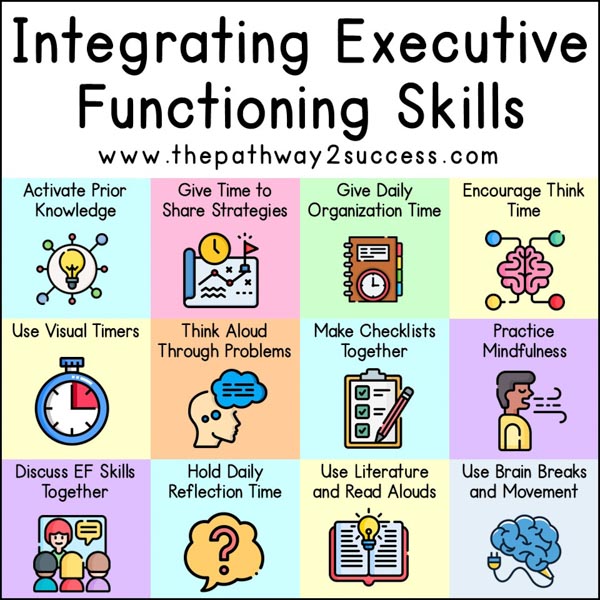
Furthermore, perseverance and problem-solving are tested and strengthened whenever students encounter academic roadblocks and are guided to work through challenges rather than abandoning them. Flexible thinking allows learners to pivot when circumstances change, consider alternative perspectives, and adapt to shifting academic demands with resilience.
Broadening the Scope: Direct Instruction and Daily Integration
While embedding executive functioning skills into regular content is highly effective, many educators also carve out brief, dedicated segments of time to explicitly teach, explore, and discuss these cognitive tools. These brief interventions do not require full instructional time blocks; rather, short mini-lessons often provide precisely the right framework for students to comprehend and internalize the concepts before applying them throughout the remainder of the school day.
Schools are increasingly utilizing dynamic, short-form activities to keep these skills at the forefront of students’ minds. For instance, incorporating an executive functioning word or phrase of the day introduces students to targeted vocabulary such as neuroplasticity, momentum, challenge, routine, adapt, and self-discipline. Accompanied by guided questions, these bell-ringers encourage students to reflect on how these concepts apply to their daily lives and academic routines.
Discussion questions focused on executive functioning offer another powerful avenue for engagement. By prompting students to consider how making a list aids prioritization, how self-control influences positive decision-making, or how flexible thinking aids in conflict resolution, teachers foster critical conversations around self-regulation and personal growth. Motivational quotes of the day serve a similar purpose, providing a brief moment each morning to read, analyze, and discuss themes of perseverance, focus, and organization.
Read-aloud stories also serve as a versatile vehicle for highlighting executive functioning in action. By pausing during a narrative to examine the choices characters make, the problems they encounter, and the ways they persevere through adversity, educators can bring abstract cognitive concepts to life through relatable examples.
Ultimately, the intentional integration of executive functioning skills transforms the educational experience. By reinforcing planning, attention, organization, and resilience within everyday lessons, educators empower students to develop into independent, adaptable, and self-reliant learners equipped to handle the demands of academic life and the broader world beyond the classroom.