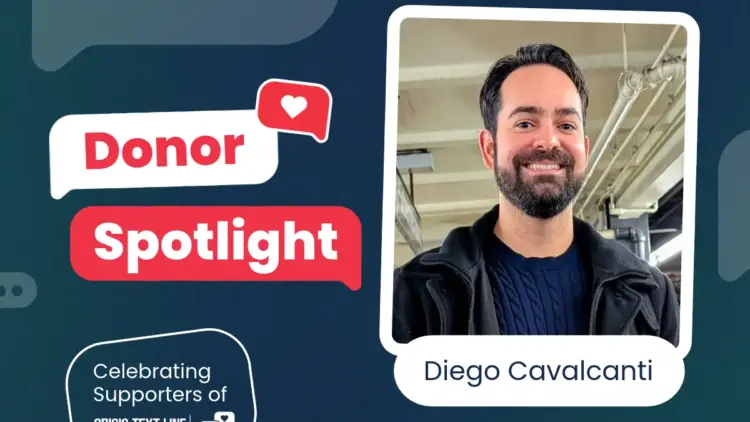
In an era where technology is frequently scrutinized for its impacts on human connection and societal well-being, stories highlighting innovation driven by empathy stand out. This month, Crisis Text Line is shining a spotlight on Diego Cavalcanti, a dedicated donor and advocate whose background as a software engineer intersects deeply with a personal passion for accessible mental health care. Through his financial contributions and advocacy, Cavalcanti supports the training of volunteer Crisis Counselors and the technological infrastructure that ensures help is available around the clock.
In a wide-ranging conversation, Cavalcanti discusses how a fascination with data-driven social impact, combined with personal experiences with mental health challenges, inspired him to support the organization. He shares his perspective on why text-based intervention serves as a vital lifeline for younger generations, how technology can be harnessed for genuine social good, and what he does to stay grounded in his daily life.
Q&A with Diego Cavalcanti
Q: What initially inspired you to support Crisis Text Line?
A: I first learned about Crisis Text Line at work during Mental Health Awareness Month. A few of my coworkers volunteered as Crisis Counselors, which caught my interest and prompted me to look deeper into the organization. As I researched their model, I became fascinated by how the organization leverages data and technology to scale human empathy and create a measurable societal impact. Seeing that powerful intersection of innovation and high-impact advocacy turned me into an immediate fan, and ultimately, a donor.
Q: Can you share a personal story or moment that reinforced your commitment to supporting individuals in crisis?
A: Mental health is a topic that is incredibly close to my heart. I have a history of mental health challenges within my family, including suicide, so I know firsthand how devastating these struggles can be when people feel isolated. Having that personal connection makes the work of crisis intervention deeply meaningful to me. I feel incredibly grateful that I am in a position where I can channel those experiences into meaningful financial support to help ensure others don’t have to face their darkest moments alone.
Q: Why is it important to you to support mental health initiatives, particularly crisis intervention?
A: As a software engineer, I am always thinking about how we can use the latest technology, including advancements in artificial intelligence, to solve complex problems and help people in need. Crisis Text Line’s text-based platform is a brilliant example of using technology for social good. Meeting people where they are is critical, especially for younger generations or individuals who might not have the privacy, safety, or freedom to speak out loud at home or seek in-person therapy. A text message is silent, accessible, and immediate, making it a vital lifeline in moments of acute crisis.
Q: How do you see your contributions making a difference in the lives of those reaching out for help?
A: I hope my donations help in two simple ways: keeping the system reliable, and making it smarter. First, funding ensures the texting platform stays up and running perfectly 24/7. When someone is in a dark place and finally builds up the courage to reach out, the technology absolutely has to work without a hitch. Second, it helps fund the smart tools behind the scenes that sort messages instantly, making sure the people in the most urgent danger get connected to a human counselor right away. Ultimately, it’s just about using technology to deliver human kindness to as many people as possible.
Q: What drives your philanthropic giving overall, and why do you prioritize Crisis Text Line in your charitable efforts?
A: When evaluating where to direct my donations, I look for organizations addressing critical social issues through innovative frameworks. Mental health is a cause deeply near and dear to me, but traditional intervention models, like waiting for someone to visit a mental health center or pick up a phone to call a hotline, often fail to cater to a younger population. What sets Crisis Text Line apart for me is its data-driven approach and its progressive communication method. By leveraging text messaging, they successfully reach young folks and vulnerable communities who might otherwise suffer in silence. It’s a unique, necessary solution to a growing crisis.
Q: How has giving back to a cause that is meaningful to you impacted you personally or professionally?
A: With my technology background, it is incredibly fulfilling to see a highly successful, real-world case study of technology being harnessed purely to help people and meet them exactly where they are. The tech industry is so often dominated by financial incentives and profit margins. Crisis Text Line is a powerful reminder of what is possible when innovation is directed toward human welfare. Supporting this work gives me renewed hope that we, as a society, can look past the bottom line and use cutting-edge technology as a force for genuine social good.
Q: What would you say to others who are considering donating to Crisis Text Line?
A: Please donate or volunteer your time if a financial donation isn’t feasible right now! Crisis Text Line does a wonderful job of supporting individuals in their most vulnerable moments, and every single bit of support, whether through funding or volunteer hours, is absolutely critical to keeping this lifeline free and accessible.
Q: How do you take care of your own mental health?
A: To stay grounded, I prioritize consistent workouts, going to therapy, and making a conscious effort to regularly step away from screens to spend quality, unplugged time with my loved ones.