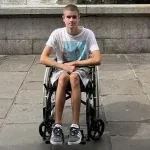
In 2016, Liam Virgo was a healthy 13-year-old living an active childhood when his life changed in an instant. Without warning, his nervous system experienced what he describes as a total crash—a severe onset of Functional Neurological Disorder (FND) that left him suddenly paralyzed, unable to speak, and confined to a hospital bed.
Today, Virgo has transformed that traumatic life transition into a powerful campaign for accessibility and independence. Having progressed from being completely bedbound to navigating more than 120 towns and cities across the United Kingdom, Virgo is sharing his experiences to highlight both the progress made in urban accessibility and the persistent structural obstacles that disabled travelers face every day.
A Sudden Diagnosis and the Lost Months
The onset of Functional Neurological Disorder was swift and overwhelming. Within days of his initial symptoms in 2016, Virgo went from full physical mobility to complete paralysis. FND is a complex condition affecting how the brain and nervous system receive and send signals, effectively interrupting the body’s control mechanisms even when the physical structure of the body remains intact.
For Virgo, the initial months following his diagnosis were marked by severe physical limitations and cognitive detachment. He found himself locked inside his own body, unable to speak or sit up without experiencing extreme pain. The early period of his illness became a blur, with a six-month stretch during which his awareness was severely diminished.
During this initial phase, hospital care was essential, but physical comfort was almost impossible to achieve. Virgo was unable to tolerate any specialized seating or adaptive equipment. His hospital bed remained the only environment where his pain was manageable, rendering standard wheelchairs entirely unsuitable for his condition at the time. The sudden loss of independence left him completely reliant on medical staff and caregivers, facing an uncertain future from a hospital room.
The ‘London Dream’ as Rehabilitation
Amid the isolation of being bedbound, Virgo developed a single focal point that would ultimately redefine his recovery: a desire to travel to London. What began as a distant hope gradually evolved into a central pillar of his physical and cognitive rehabilitation strategy.
He established a personal commitment that if he could regain enough physical tolerance to sit upright, he would travel to the UK capital. This objective transformed his rehabilitation from a set of daily medical exercises into a purposeful mission. Rather than focusing solely on physical therapy metrics, his recovery efforts were anchored to a concrete, real-world target.
The journey from total paralysis to functional mobility was long and deliberate. It took three years of physical therapy, pain management, and gradual adjustments before Virgo was well enough to sit in a specially fitted wheelchair for the first time. Stepping into adaptive mobility equipment marked a major turning point, opening up possibilities that had seemed unattainable during his years confined to a bed.
Navigating the Capital: Accessibility on the Ground
When Virgo finally achieved his goal of visiting London, he began documenting the reality of navigating one of the world’s major metropolitan areas as a wheelchair user. London presents a unique urban landscape where centuries-old historic architecture exists alongside modern infrastructure developments.
Through direct experience, Virgo evaluated how the capital accommodates travelers with physical disabilities. While London has made significant progress toward becoming one of the most accessible cities in the United Kingdom, the practical experience of navigating its streets reveals a mix of highly accommodating spaces and lingering historical barriers.
Modern infrastructure developments across London generally provide strong accessibility standards. Step-free access, wide thoroughfares, and updated public facilities make navigation manageable. However, the city’s historical elements continue to present challenges that require careful planning and adaptive strategies.
Hospitality, Dining, and Structural Barriers
Securing appropriate accommodation is often one of the most critical components of accessible travel. During his time in London, Virgo stayed at the Park Plaza County Hall, located near the South Bank and Waterloo.
The hotel served as a model for accessible hospitality, offering features essential for travelers with mobility impairments. The property provided spacious accessible rooms with sufficient turning clearance for wheelchairs, step-free access throughout the lobby and elevators, and roll-in wet rooms equipped with safety grab rails. Furthermore, accommodating hotel staff contributed to a stress-free environment, illustrating how physical design and service training intersect to create truly inclusive spaces.
Dining out presented a more varied landscape. Virgo found that finding accessible places to eat was generally straightforward in modern developments and key commercial districts. Areas such as the South Bank, Central London, Canary Wharf, and Stratford feature contemporary building designs where step-free entry and spacious interior layouts are standard. Chain restaurants and newer commercial venues consistently met basic accessibility requirements.
In contrast, independent establishments and historic buildings across London frequently present physical obstacles. A single doorstep step remains one of the most widespread barriers in older architecture, often rendering a venue inaccessible despite an otherwise welcoming environment. To navigate these challenges, Virgo developed practical protocols, such as calling venues in advance to confirm entry details or utilizing digital tools like Google Street View to inspect entrances prior to arrival.
Through these experiences, Virgo identified key areas where urban environments still fall short. While step-free routes are increasingly common, issues such as broken elevators at transit stations, poorly designed accessible restrooms, and unexpected physical steps in public spaces remain major obstacles to seamless travel.
Expanding Horizons: Over 120 Cities and Future Destinations
Reaching London was not the conclusion of Virgo’s journey; rather, it served as the baseline for broader exploration. Since regaining his voice and establishing his mobility routines, he has traveled to more than 120 towns and cities across the United Kingdom.
His travels have taken him to major urban centers and regional destinations, including Manchester, Leicester, Birmingham, Leeds, Liverpool, Edinburgh, Cardiff, and Brighton. Each city has offered distinct perspectives on UK accessibility standards, regional infrastructure, and local approaches to disability inclusion.
Having demonstrated that extensive domestic travel is achievable despite severe neurological illness, Virgo is now preparing for international travel. His next major objective is to journey to Cyprus, a trip intended to reconnect him with his family heritage and mark his expansion into international accessible travel.
Redefining Mobility and Advocating for Change
Through his ongoing travel endeavors, Virgo has adopted a clear philosophy regarding disability and urban space. He views his wheelchair not as an emblem of restriction, but as a vital tool that grants freedom, independence, and expanded horizons after years of confinement.
Virgo stresses that the true limitations faced by disabled individuals rarely stem from their medical conditions or mobility devices. Instead, barriers are created by external environments—specifically through steep steps, non-functional infrastructure such as out-of-order lifts, and architectural planning that neglects inclusive design principles.
By documenting his journeys and building a public platform on Instagram under the handle @liamloveslondon, Virgo works to increase awareness of Functional Neurological Disorder and promote universal design standards. His efforts aim to demonstrate how targeted motivation, adaptive infrastructure, and accurate accessibility information can enable individuals facing severe health disruptions to reclaim their independence and participate fully in public life.