Every modern classroom operates on a hidden curriculum of brain-based abilities. Long before students tackle complex mathematical equations, historical analysis, or literary essays, they must first engage a sophisticated suite of cognitive processes known as executive functioning. According to recent educational insights shared by pedagogical experts, these foundational skills—spanning planning, organization, sustained attention, and time management—are not isolated subjects taught in a vacuum. Instead, they form the invisible architecture of every daily learning experience.
Educational advocates emphasize that every teacher, regardless of grade level or subject area, is inherently a teacher of executive functioning. Whether a fourth-grade student is breaking down a multi-step word problem, an eighth-grade student is drafting a persuasive English essay, or a high schooler is navigating a complex collaborative art project, success hinges heavily on cognitive self-regulation. By intentionally recognizing and supporting these skills within existing lesson plans, educators can provide the structural foundation that all learners need to thrive academically and personally.
Understanding Executive Functioning in the Modern Classroom
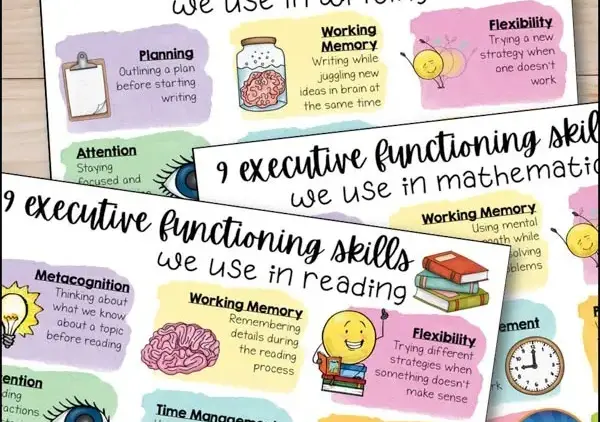
To appreciate the value of integrating these competencies into daily instruction, it is necessary to examine what executive functioning entails. These core, brain-based abilities enable individuals to accomplish everyday tasks, set long-term goals, and navigate unexpected obstacles. Key components include planning a sequence of actions, organizing physical and digital materials, initiating tasks without prolonged procrastination, managing time efficiently during assessments, maintaining focus amidst classroom distractions, and problem-solving through academic roadblocks.
Historically, these competencies were often expected to develop entirely on their own, leaving many students to struggle silently when their natural organizational or attentional capacities fell short of classroom demands. Contemporary educational strategies, however, advocate for a more proactive approach. When educators explicitly teach and gently reinforce these cognitive strategies using their current curriculum, they bridge the gap between abstract expectations and concrete student capability.
Crucially, implementing this approach does not require an entirely new subject or a massive overhaul of existing teaching materials. Educators already possess the framework needed to weave executive functioning development into everyday subjects. By making minor, intentional adjustments to standard lessons, teachers can target specific cognitive skills without sacrificing instructional time.
Weaving Cognitive Strategies into Everyday Lessons
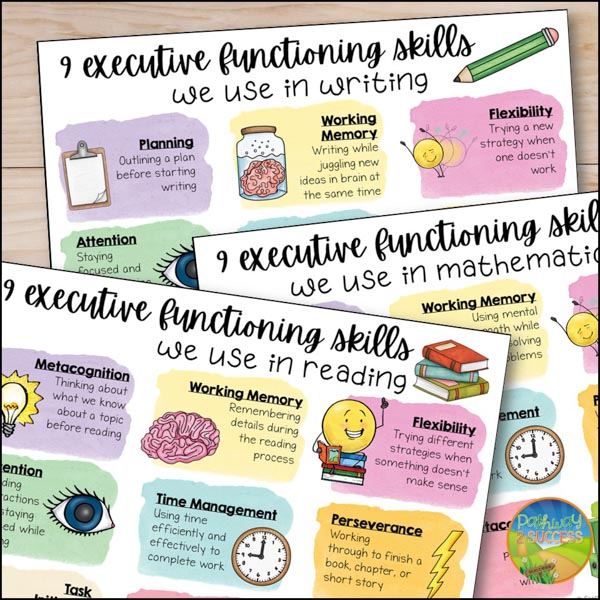
Integrating executive functioning into regular coursework involves anchoring cognitive habits to familiar academic tasks. For instance, planning—the ability to conceptualize a goal and map out the necessary steps to achieve it—can be addressed naturally during writing assignments or science experiments by having students outline their milestones before diving in. Similarly, metacognition, or the practice of thinking about one’s own thinking, can be embedded into homework reviews and test corrections, prompting students to analyze their problem-solving strategies rather than just focusing on the final answer.
Organization, which governs the arrangement of materials and information, is regularly practiced through notebook management, digital folder structuring, and lab station preparation. Task initiation—overcoming the initial inertia to begin an assignment—can be supported through structured bell-ringer activities or collaborative countdowns that help students transition smoothly into academic work. Attention and focus are continually cultivated through dynamic instructional pacing, purposeful brain breaks, and guided note-taking strategies that keep students actively engaged.
Time management naturally aligns with timed classroom activities, long-term project milestones, and pacing guides. Self-monitoring encourages students to pause and check their progress against a rubric or learning target, ensuring they remain on track to meet their objectives. Self-control is practiced during cooperative learning exercises and classroom discussions, where students learn to pause, regulate their impulses, and consider alternative viewpoints before reacting.
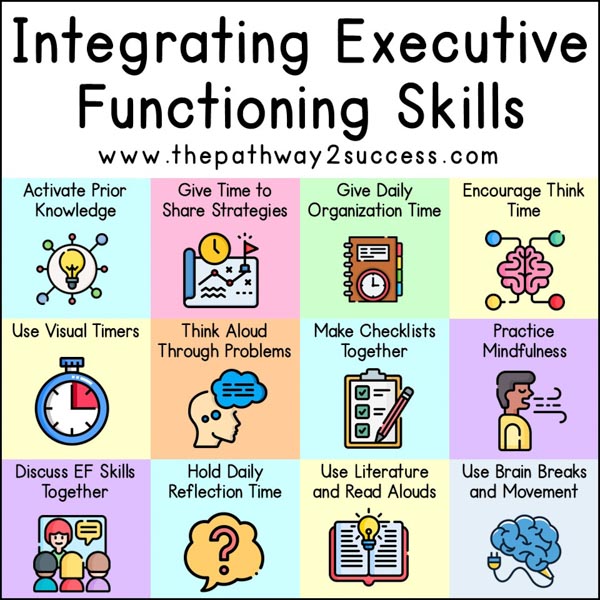
Furthermore, perseverance and problem-solving are tested and strengthened whenever students encounter challenging curriculum content. Rather than rescuing students immediately when they face academic friction, educators can guide them to break down obstacles, test different hypotheses, and learn from errors. Flexible thinking rounds out these cognitive abilities, enabling students to adapt to schedule changes, revise their working hypotheses, and appreciate multiple perspectives during social studies or literature debates.
Expanding Instruction Through Dedicated Mini-Lessons and Routines
Beyond embedding cognitive strategies directly into academic content, many classrooms benefit from dedicating short, purposeful pockets of time to explicit instruction. These do not need to consume entire class periods; brief mini-lessons can provide the exact scaffolding students require to comprehend and value their own cognitive development.
Educators have increasingly turned to structured routines, such as a daily executive functioning focus, to keep these concepts prominent. Word-of-the-day activities, for example, introduce vocabulary terms like neuroplasticity, momentum, routine, and self-discipline, complete with guided reflection questions that prompt students to connect the terms to their daily lives. Discussion cards and motivational bell-ringers serve a similar purpose, sparking conversations about why self-control influences decision-making or how organization reduces academic stress.
Read-aloud stories and literary texts also offer a natural entry point for exploring cognitive and behavioral strategies. By pausing during a narrative to analyze the choices, conflicts, and perseverance demonstrated by characters, teachers can help students internalize these concepts through relatable examples. Whether through a quick quote analysis at the start of a period or a structured reflection at the end of the school day, these micro-interventions reinforce the idea that cognitive skills can be practiced and improved over time.
Ultimately, integrating executive functioning into the daily educational rhythm transforms the classroom into an environment that fosters independence and resilience. By demystifying the cognitive processes behind learning, educators equip students with the lifelong tools necessary to navigate not only academic challenges, but the complexities of everyday life.