NHS England has recently unveiled its comprehensive 10-Year Health Plan, a detailed strategic report outlining the vision for healthcare provision and systemic transformation across the country through 2035. The ambitious blueprint promises sweeping changes designed to modernise services, tackle long-standing inefficiencies, and pivot the health service toward proactive, technology-driven care. For specialist patient communities, such as those affected by Tuberous Sclerosis Complex (TSC), the proposals carry significant implications. While the Tuberous Sclerosis Association (TSA) has cautiously welcomed the potential for improved access and integrated care, it has also raised serious concerns regarding the plan’s conspicuous lack of focus on rare diseases.
The sweeping strategy is built around several core pillars, ranging from a radical shift toward localized neighborhood care to heavy investments in digital infrastructure, artificial intelligence, and genomics. As healthcare leaders look to reshape the NHS for the coming decade, understanding how these structural shifts will translate into daily clinical reality is vital for patients, families, and advocacy groups.
More Integrated and Local Care
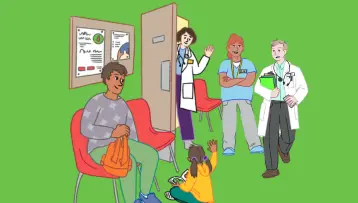
A foundational priority of the newly released plan is the decentralization of support, moving away from an over-reliance on traditional hospital settings and toward community-based facilities. NHS England refers to this proposed framework as the “Neighbourhood Health Service.” The overarching objective of this transformation is to deliver more personalized, accessible care that is physically closer to where patients live. Under the vision outlined for 2035, routine appointments and check-ups could increasingly take place in local health centres rather than acute hospitals. Furthermore, these community hubs are intended to offer extended accessibility, remaining open for at least 12 hours a day, six days a week.
Health officials hope that shifting the epicenter of routine care into the community will foster a more preventative culture, enabling clinicians to identify health issues before they escalate into major crises. By streamlining pathways, the health service also aims to chip away at stubbornly high waiting times.
For the TSC community, this localization could alleviate a significant logistical burden. Managing Tuberous Sclerosis Complex often involves navigating a complex web of regular check-ups, imaging scans, and multidisciplinary reviews. Under a truly integrated local model, patients may no longer have to juggle numerous appointments scattered across distant tertiary hospitals or travel excessive distances for routine monitoring. Moreover, a localized approach should theoretically foster closer collaboration among different healthcare professionals within the same community network, ensuring that multidisciplinary teams develop a more cohesive understanding of an individual’s multifaceted health needs.
A Greater Focus on the NHS App
Digital transformation is another cornerstone of the 10-year strategy, with the NHS App slated to undergo substantial enhancements over the coming years. The upgraded digital platform is intended to serve as a centralized hub where patients can seamlessly manage appointments, handle prescriptions, and view broader health information. Crucially, the plan promises secure, simplified access to individual medical records, paving the way for more straightforward communication between patients and healthcare providers.
For people living with TSC, the promise of a unified digital record holds considerable appeal. Because the condition can affect multiple organ systems—including the brain, kidneys, heart, skin, and lungs—patients frequently accumulate fragmented medical histories stored across various departments and hospital trusts. This fragmentation can complicate tracking symptoms and clinical progression for both patients and their treating clinicians. A comprehensive, easily accessible digital history could vastly improve the quality of care.
However, the TSA notes that this digital-first approach comes with important caveats. The success of the enhanced NHS App hinges entirely on its usability for every patient, raising distinct questions about accessibility for individuals who rely on family members or professional caregivers. Specifically, policy planners have yet to clarify whether caregivers will be granted proxy access to manage records and communications on behalf of those they look after, a feature that will be essential for many within the vulnerable or disabled sectors of the community.
Improved Access to Specialist Treatments
Innovation forms a vital pillar of the 10-Year Health Plan, with a particular emphasis on harnessing advanced genomics and artificial intelligence to personalize treatments and predict health risks with greater accuracy. NHS England has set its sights on positioning the UK as a global leader in genomics, aiming to introduce universal newborn genomic testing by the year 2030. Alongside genomics, artificial intelligence is envisioned as a "trusted assistant" for clinicians, designed to streamline workloads and maximize the clinical impact of interventions.
While the theoretical benefits of these technologies are vast, the practical execution remains to be seen. For the TSC community, the integration of advanced genomics and AI offers a beacon of hope regarding earlier diagnoses and subsequent interventions. For instance, universal newborn screening could theoretically confirm a TSC diagnosis much earlier in life, allowing care pathways to be established before severe symptoms manifest. For adults living with the condition, predictive technologies and AI algorithms could potentially recognize subtle patterns or disease trajectories that current diagnostic methods miss, leading to better ongoing symptom management and more tailored therapeutic strategies.
A Stronger Focus on Prevention and Early Intervention
For decades, the operational framework of NHS England has remained largely reactive—focusing heavily on treating conditions only after they have manifested and caused clinical complications. A prime example within the TSC context is the management of renal angiomyolipomas, benign kidney growths associated with the condition, which are often only targeted therapeutically after growing large enough to cause pain, bleeding, or other acute problems.
The 10-Year Health Plan aims to upend this reactive model in favor of proactive prevention. By increasing the deployment of predictive healthcare tools, wearable technology, and continuous monitoring systems, the health service hopes to catch physiological changes at their earliest stages. Applied to Tuberous Sclerosis Complex, where clinical manifestations can evolve unpredictably over a person’s lifetime—such as the sudden appearance of new growths in organs where no issues had previously been detected—early monitoring could prove transformative. Spotting and addressing renal or cerebral changes while they are still in their infancy could make interventions significantly more impactful, potentially halting or slowing disease progression before irreversible damage occurs.
Better Mental Health Support
Mental health provision receives a substantial financial and structural commitment within the new strategy. The plan pledges expanded emergency mental health services, round-the-clock virtual access to therapists for individuals experiencing mild to moderate psychological distress, and simplified routes for self-referral. Furthermore, the expansion of mental health support teams embedded within schools aims to address psychological needs during childhood and adolescence, ensuring young people receive rapid intervention while alleviating severe strain on hospital Accident and Emergency departments.
These proposed enhancements are of profound relevance to the TSC community. It is well established that Tuberous Sclerosis-Associated Neuropsychiatric Conditions (TAND)—which encompass a wide spectrum of behavioral, psychiatric, intellectual, and psychosocial difficulties—represent one of the most significant challenges for individuals and families living with the condition. Despite the high prevalence and impact of TAND, accessing specialist psychological and psychiatric support has historically been notoriously difficult. The promise of expanded, more equitable mental health resources across England offers encouragement that individuals affected by TAND may finally find more accessible and impactful support.
The TSA’s View on the 10-Year Health Plan
Evaluating the overarching strategy, the Tuberous Sclerosis Association observes that the current healthcare landscape in England frequently fails to provide adequate support for the TSC community. In light of these systemic shortcomings, the ambitious 10-Year Health Plan represents a substantial opportunity to improve healthcare access, management, and long-term outcomes for individuals and families navigating the complexities of Tuberous Sclerosis Complex. In particular, the drive toward integrated local care—free from the traditional information silos where different clinicians lack access to vital pieces of patient data—could trigger a positive domino effect of improved lifelong health management.
At the same time, the charity maintains a pragmatic and scrutinizing perspective regarding the transition from strategic vision to operational reality. Writing ambitious plans on paper is a straightforward exercise, the TSA cautions, whereas the true challenge lies in ensuring those ideas are translated into tangible, permanent improvements rather than being diluted or abandoned over time.
Of primary concern to the charity is the plan’s glaring omission of adequate attention toward rare diseases. Despite representing a significant collective patient population across the UK, the specific challenges associated with rare conditions are given minimal visibility in the overarching strategy, with the word "rare" appearing a mere eight times throughout the entirety of the exhaustive report. For an organization representing individuals with a complex rare disease, this lack of targeted focus is considered unacceptable. As NHS England moves forward with implementing its agreed commitments, the TSA has made clear that it will leverage its platform to hold health authorities strictly to account, demanding that the promise of the 10-Year Health Plan delivers genuine, equitable progress for the rare disease community.