Managing an older adult’s prescription medications has long been a persistent financial drain for families and caregivers alike. Historically, families were forced to navigate convoluted coverage phases that made budgeting for healthcare nearly impossible from one month to the next. However, sweeping changes to Medicare Part D are taking effect for the 2026 plan year, eliminating much of that volatility and bringing a new era of financial predictability to the prescription drug market.
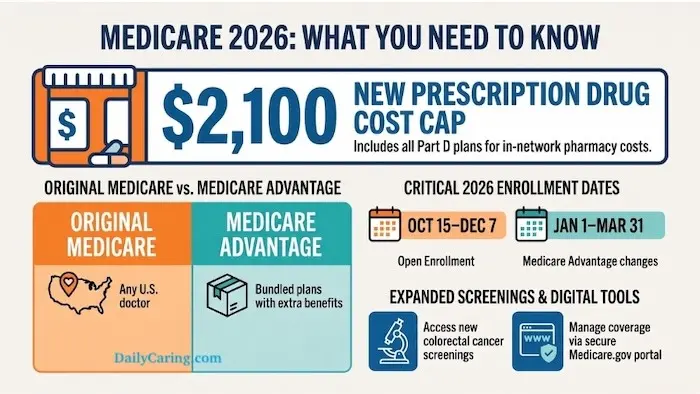
Thanks to the final implementation phases of the landmark Inflation Reduction Act, out-of-pocket costs for covered prescription drugs are now strictly capped at $2,100 annually. Alongside this hard ceiling, the maximum standard deductible for beneficiaries has been legally set at $615. These structural shifts fundamentally alter how seniors and their caregivers plan for medical expenses, removing years of financial anxiety surrounding unpredictable pharmaceutical costs.
Medicare Part D Changes 2026: The End of the Donut Hole
For over a decade, perhaps the most destructive and widely criticized element of Medicare Part D for seniors was the infamous coverage gap, commonly known as the donut hole. During this frustrating phase, enrollees who reached a specific cumulative spending threshold suddenly became responsible for a massive percentage of their out-of-pocket drug costs. They were forced to shoulder these exorbitant prices until their spending finally pushed them into catastrophic coverage.
As of the 2026 plan year, the donut hole is permanently gone. It no longer exists in the federal healthcare landscape.
Understanding these sweeping Medicare Part D changes and the associated prescription caps has quickly become a mandatory component of comprehensive eldercare financial planning. Under the updated system, once an enrollee spends exactly $2,100 out of pocket in a single calendar year, their Part D plan or Medicare Advantage plan steps in to cover 100% of the cost for all covered medications for the remainder of that year.

There are no exceptions to this rule, and the previous catastrophic phase where patients were still on the hook for a remaining percentage of coinsurance has been entirely erased. Once the threshold is met, the patient’s out-of-pocket cost for covered drugs drops straight to zero.
The Real Threat: Formulary Manipulation
While the new federal caps offer unprecedented financial relief, healthcare advocates warn that families should not assume their current insurance coverage is completely safe without careful review. Insurance companies and private plan providers are not absorbing these new financial mandates out of the goodness of their hearts. To offset the newly enforced spending caps, many providers are aggressively manipulating their covered drug lists, known as formularies, and shifting vital medications into higher pricing tiers.
A prescription drug that was fully covered or cheaply accessible in previous years may be altered, restricted, or dropped entirely from a plan’s formulary. Because of this corporate strategy, caregivers and seniors must meticulously verify that their specific medications remain on their chosen plan’s approved list during the Annual Enrollment Period. Healthcare experts emphasize a critical rule under the updated guidelines: if a drug is not explicitly on the plan’s formulary, any money spent out of pocket on that medication will not count toward the annual $2,100 spending cap.
How the Medicare Prescription Payment Plan Works
To prevent seniors from facing immediate, large financial hits from the standard $615 deductible early in January, the 2026 policies mandate the continued operation of the Medicare Prescription Payment Plan. This specialized opt-in program was designed specifically to help enrollees smooth their out-of-pocket prescription costs evenly across the entire calendar year rather than absorbing massive expenses all at once.
Instead of paying a large lump sum at the pharmacy counter whenever a costly new prescription is filled, a caregiver can opt their loved one into this structured payment program. Under this system, the pharmacy bills the insurance plan directly, and the insurance provider then sends the enrollee a manageable monthly bill to distribute the financial impact over time.

Another critical component of the federal legislative update is the premium stabilization program. To prevent private insurers from simply jacking up monthly baseline premiums to compensate for the mandated out-of-pocket caps, the law limits base premium increases to a maximum of 6% per year.
However, industry analysts note that this stabilization rule applies strictly to the base premium. Individual plan premiums across different regions and providers will still fluctuate, making annual comparison shopping and proactive plan selection absolutely vital for families trying to keep fixed healthcare budgets intact.
Reviewing available coverage options early in the enrollment window gives families a distinct financial advantage. Industry professionals continue to urge caregivers to audit their loved ones’ medical portfolios carefully, utilizing official federal health portals to cross-reference drug tiers, verify formulary inclusions, and explore payment smoothing options before locking in their annual plans.
What the New $2,100 Limit Means for You
Understanding these updated Medicare prescription caps is vital for anyone navigating the complexities of modern eldercare financial planning. The days of the dreaded coverage gap are officially over, offering a much-needed sigh of relief for millions of households. Once a beneficiary spends $2,100 out of pocket within the calendar year, their insurance plan assumes complete financial responsibility, paying 100% of the cost of covered medications for the rest of the year.
At the same time, families must remain vigilant. Insurance companies frequently alter their covered drug lists and formularies to offset these new federal caps, making it essential to verify that every specific medication a senior relies on remains protected under their chosen plan.

Healthcare policy updates for the year establish clear financial boundaries for enrollees. The annual out-of-pocket maximum is strictly capped at $2,100, while the standard deductible is set at $615 for the duration of the plan year.
While these caps provide robust protection, they apply exclusively to medications explicitly listed on a plan’s approved formulary. Unlisted drugs purchased outside of plan approvals do not contribute toward the annual maximum. Furthermore, the Medicare Prescription Payment Plan remains available as an optional tool for families looking to smooth their monthly expenses, and base premium hikes are federally restricted to protect consumers from runaway insurance rate increases.
As these policies reshape the pharmaceutical market, healthcare advocates remind the public that staying informed is the best defense against unexpected medical expenses. Consulting with qualified professionals and utilizing official federal resources remains essential for safeguarding the health and financial stability of older adults.