Lois Curtis and Elaine Wilson changed the course of American history and altered the lives of tens of millions of people living with disabilities. Both women had psychiatric, intellectual, and developmental disabilities and were forced to reside inside a Georgia psychiatric institution, the Georgia Regional Hospital. Even though medical professionals repeatedly agreed that Curtis and Wilson could successfully live within their local communities, the state kept them institutionalized against their will. Rather than accepting the empty promise of freedom "someday," the two women took matters into their own hands, filing a landmark lawsuit against the institution and the state of Georgia.
On June 22, 1999, the U.S. Supreme Court ruled decisively in the women’s favor in the historic decision Olmstead v. L.C. The court found that unjustified institutionalization constitutes a severe violation of the Americans with Disabilities Act (ADA). Because of Olmstead, generations of Americans grew up believing that requiring significant disability support services would not dictate where they could live, whether they could pursue higher education, build a career, or construct an ordinary adult life integrated within their local community.
Decades of relentless advocacy preceded and followed that ruling. Pioneering leaders like Bob Kafka dedicated their lives to building the grassroots movements that made Olmstead possible. Kafka, who also founded the American Association of People with Disabilities’ (AAPD) nonpartisan voting program, REV UP, spent decades ensuring that the disabled community retained political power and a public voice.
In the years since the Supreme Court handed down the Olmstead decision, hundreds of thousands of Americans with disabilities have successfully moved out of restrictive institutions and into independent community life. To protect this monumental shift, Offices for Civil Rights across the federal government, alongside equivalent entities in numerous state governments, were formed with the sole purpose of enforcing and upholding the Olmstead mandate. However, the civil rights infrastructure supporting these individuals has faced severe threats. When the federal government recently began dismantling OCR offices across all federal agencies and closing pending complaints, one of the most essential civil rights enforcement entities for community integration abruptly disappeared.
The erosion of institutional protections continued as legal challenges mounted. Just four days before the 27th anniversary of the Supreme Court ruling, the U.S. Department of Justice’s Office of Legal Counsel released an opinion memo declaring that neither the Rehabilitation Act nor the ADA requires states to support individuals with disabilities or mental illnesses in the most integrated setting available.
Re-litigating the battles of 1999 will not preserve the legacy of Olmstead. Nostalgia for the original mandates of the 1990s cannot shield the disability community from modern policy rollbacks. The recent Department of Justice memo should not merely force advocates to desperately defend rights that Olmstead already secured decades ago. Instead, it must push the community toward a clearer North Star by confronting a critical systemic failure that Olmstead never anticipated—a problem experienced firsthand by a new generation of Americans with disabilities.
During the summer of 2026, Lilly Grossman, Founder and CEO of Beyond The Box Advocacy, traveled from California to Washington, D.C., to participate in a ten-week, nationally competitive disability policy internship. Months before boarding her flight, Grossman began planning her out-of-state daily living support services, working closely with the California state system that oversees her care.
Despite meticulous planning, disaster struck less than 14 hours before her scheduled flight. An official denial arrived via email, bearing a subject line that entirely failed to communicate its urgent nature. Neither Grossman nor her support network saw the email before she boarded the plane. Within three days of her arrival in Washington, D.C., the agency providing her essential care was instructed to halt all services immediately. She found herself more than 2,000 miles away from home simply because her vital support services had not been officially approved for use outside of the state of California.
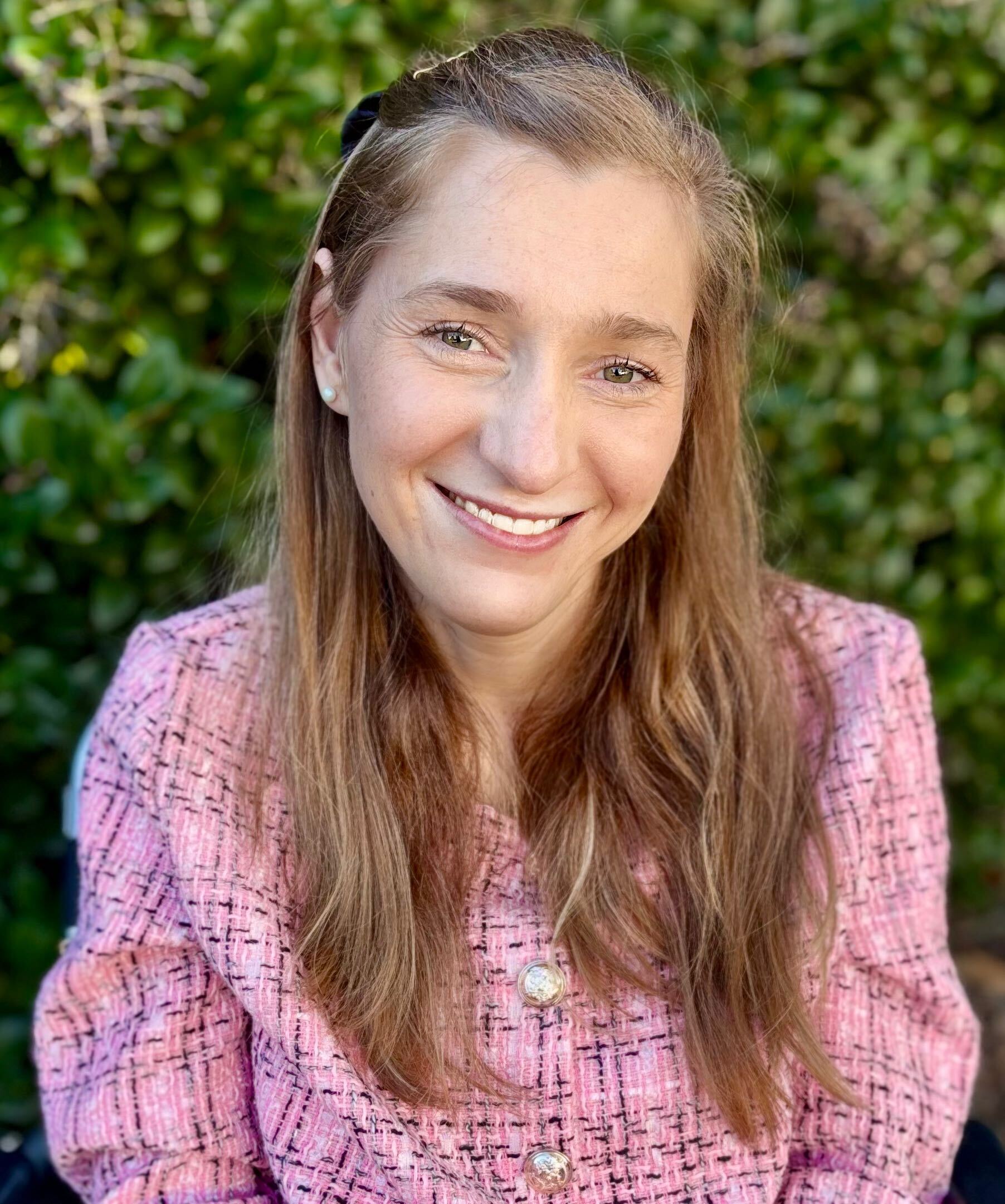
Forced to intervene, Grossman’s father booked a next-day cross-country flight and spent the following weeks providing round-the-clock care. Grossman was 29 years old at the time. Her aging father was forced to help her shower, get dressed, transfer in and out of bed, and navigate the daily physical demands of life so that she could complete her competitive internship and launch the next phase of her professional career.
While in Washington, Grossman found herself actively balancing high-level professional opportunities with a grueling second job of care coverage appeals, legal filings, and frantic phone calls regarding her own disability support services. She had traveled to the nation’s capital to spend the summer working in disability policy, only to be systematically failed by disability policy itself.
Nothing about her disability or her daily support needs had changed. The only variable was her geographic location. While Olmstead successfully guaranteed the fundamental civil right to live in the community, it left a dangerous vacuum regarding what happens when an individual’s community changes across state lines.
Disability support service portability is the absolute next frontier of disability civil rights. Any individual pursuing employment, higher education, or personal opportunities in another state should have access to clear, reliable, and standardized processes for maintaining their essential disability supports across geographic boundaries.
Rigid geographic restrictions on disability support services create entirely unnecessary administrative, logistical, and financial burdens for people with disabilities who are simply trying to pursue professional and educational opportunities. Resolving this crisis requires immediate, coordinated action at the state level to dramatically improve eligibility verification and service continuity during geographic transitions. Interstate partnerships can build upon these efforts, with the ultimate long-term goal of establishing enforceable federal standards for disability support service portability.
Congress and the Centers for Medicare & Medicaid Services must begin to treat disability support service portability as unfinished business stemming directly from the Olmstead decision. Advocates must demand service portability using the exact same fierce terms that Bob Kafka once used to demand deinstitutionalization: as an absolute civil right. The broader public and policymakers must stop accepting arbitrary geography as a legitimate reason to restrict the educational, professional, and personal opportunities available to people with disabilities.
Bob Kafka passed away in December 2025 after spending his entire life insisting that the disability community deserves access to real, uncompromised choices. The next generation of Americans with disabilities deserves a definition of community integration that is expansive and flexible enough to support their actual, lived realities.
For those wishing to continue the fight for Olmstead and community integration, advocacy organizations like the AAPD provide immediate action tools, such as campaigns enabling citizens to contact state governors and attorneys general to demand they commit to upholding the integration mandate and signing the Commitment to Community Integration for People with Disabilities.