Every year on February 25, advocates, medical professionals, and communities around the world observe International Cochlear Implant Day. This annual observance serves as a vital platform to celebrate the remarkable medical advances, cutting-edge technology, and life-changing impact that cochlear implants (CIs) provide for individuals living with severe or profound hearing loss. Beyond celebrating the hardware and the science, the day highlights the human stories behind the technology—stories of resilience, adaptation, and the profound determination required to navigate a world built primarily for hearing individuals.
For many, a cochlear implant is much more than a medical device; it is a bridge connecting isolated individuals to the rich tapestry of spoken communication, education, and professional opportunity. While the technology itself has evolved by leaps and bounds since its inception, the lived experiences of those who wear them remain the most powerful testament to their efficacy. Among these voices is Qais Khan, whose personal journey from a profoundly deaf child facing low expectations to a global advocate speaking before the United Nations and the World Health Organization exemplifies the transformative power of early intervention, unwavering family support, and personal perseverance.
A Diagnosis That Changed Everything
Qais Khan was born profoundly deaf into a hearing family, an unexpected reality that immediately turned his family’s world upside down. Entering a realm completely unfamiliar to them, his parents faced a steep learning curve. Everything from basic communication methods to future educational planning required entirely new approaches. Rather than retreating from the challenge, his parents demonstrated fierce dedication, determined to learn, adapt, and secure every possible resource to ensure Qais received the comprehensive support he needed right from the very beginning of his life.
A pivotal milestone in this early journey occurred when Qais was three and a half years old, the age at which he first switched on his cochlear implant. That initial activation marked a foundational turning point, proving essential to his ability to communicate, access education, and interact with the surrounding world as he grew into childhood and adolescence. Yet, while the implant provided the vital technological access to sound, growing up with profound hearing loss introduced a complex series of hurdles that extended far beyond physical hearing capabilities.
During his secondary school and college years, Qais experienced significant struggles with his mental health. The emotional toll of trying to navigate mainstream academic environments while grappling with low self-esteem and very little confidence weighed heavily on him. His early communication skills remained poor, compounding feelings of isolation, and he struggled to form meaningful, lasting friendships with his peers. Furthermore, the external environment offered little reassurance. Some teachers and educational professionals held low expectations regarding what he could realistically achieve. The prevailing sentiment among certain educators was that his prospects were limited and that he would inevitably struggle or fail in his academic examinations. Consequently, pursuing a university education or carving out a chosen career path seemed like an entirely unrealistic aspiration.
Overcoming Deeply Entrenched Obstacles
Despite the discouraging forecasts from some educators and the internal battles with mental health and self-doubt, Qais refused to let external limitations define his future. Propelled by the unwavering support and steadfast encouragement of his parents, charitable organizations, and dedicated hearing health professionals, he set out to systematically dismantle the low expectations that had been placed upon him.
Through hard work and resilience, Qais passed his exams with excellent grades, defying the pessimistic predictions of his earlier school years. He successfully progressed through college and ultimately achieved a milestone that once felt completely out of reach: graduating with a university degree. Earning that degree stands today as one of his proudest moments, resonating deeply on both an academic and a personal level. It represented years of relentless perseverance, quiet determination, and an unshakeable belief that deafness does not place an absolute ceiling on human potential or personal ambition.
Stepping out of the academic bubble and into the professional world presented an entirely new set of obstacles, particularly as the global landscape shifted dramatically during the COVID-19 pandemic. That unprecedented era brought widespread uncertainty, altering daily rhythms and making the future feel suspended and precarious. Yet, in a twist that he never could have anticipated, the challenges of that isolated period ultimately served as a catalyst, steering Qais directly toward the path of advocacy.
Seeking connection and purpose during a turbulent time, he became actively involved with the Cochlear Implant International Community of Action (CIICA). This involvement allowed him to merge his personal, lived experiences with creative and meaningful work. He began collaborating closely with hearing health experts, researchers, and industry professionals to develop practical solutions and supportive frameworks for individuals navigating hearing loss. As a board member and coordinator specifically focused on young adults with cochlear implants, Qais has played a direct role in shaping strategic initiatives. He has helped facilitate online events and discussions addressing the unique, often overlooked challenges that individuals between the ages of 18 and 35 face as they transition into independence, higher education, and the workforce.
Finding and Sharing a Global Voice
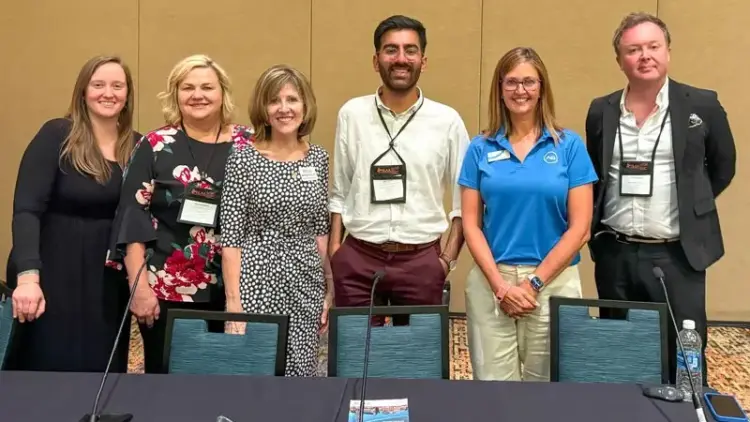
As a child, Qais faced significant hurdles with his expressive speech, noting that his spoken voice was often not easy for others to understand. Overcoming those early phonetic and auditory barriers required immense patience and consistent speech therapy supported by his cochlear implant. Today, that once-hesitant voice commands international attention. Qais now regularly speaks at high-profile global events sponsored by major international entities, including the United Nations, the World Health Organization, and the United Kingdom Parliament.
Along this remarkable trajectory, he has championed vital conversations, shared compelling personal stories, and actively helped create inclusive spaces where young adults with cochlear implants can finally feel seen, heard, and deeply understood. These platforms not only amplify individual narratives but also educate the broader public and policymakers about the ongoing needs of the hard-of-hearing community.
Reflecting on his journey, Qais acknowledges that his cochlear implant has played an indispensable role every step of the way. While the technology has not magically erased every systemic barrier or social challenge he has encountered, it has consistently provided him with essential auditory access, personal independence, and the self-assurance required to stand tall in complex educational, professional, and advocacy spaces. Above all, it has given him the instrument he needed to find and project his own unique voice.
Despite all the obstacles, systemic doubts, and personal hardships he has faced throughout his life, Qais looks back with profound pride on how far he has traveled. His experiences have taught him a vital overarching lesson: true progress is never about achieving an impossible standard of perfection; rather, it is about consistently showing up, putting in the effort, and persevering even on the most difficult days. Disabilities do not define the core identity or the ultimate destiny of an individual. With the right combination of emotional support, self-belief, and sheer determination, anyone possesses the capacity to turn their aspirations into reality. Through his ongoing advocacy and his powerful personal story, Qais continues to serve as a beacon of hope, reminding others around the world of that enduring truth.