In classrooms, living rooms, and athletic fields across the country, mindfulness has long been championed as a reliable antidote to stress—a quiet moment of deep breathing designed to lower shoulders, steady racing hearts, and restore calm. However, a growing body of educational and developmental insights suggests that the benefits of tuning inward extend far beyond mere relaxation. Educators and specialists are increasingly recognizing that mindfulness serves as a powerful catalyst for sharpening executive functioning skills, offering vital cognitive support to children and teenagers who need extra assistance with core abilities like attention, self-control, and working memory.
Executive functioning skills represent the complex, brain-based command center that human beings rely on to plan tasks, initiate projects, manage time effectively, and work through inevitable challenges. People utilize these cognitive tools every single day, frequently without conscious effort. When executive functioning is strong, individuals navigate daily hurdles and reach their long-term goals seamlessly. Yet, for many youth, these pathways require intentional cultivation and support. Emerging strategies indicate that incorporating evidence-based mindfulness into daily routines can significantly fortify these essential brain functions, unlocking a child’s full potential for academic and personal success.
The Link Between Mindfulness and Executive Functioning
The intersection of mindfulness and cognitive development rests upon a fundamental neurological shift. When an individual experiences overwhelming stress or impulsivity, the brain’s survival mechanisms take over. Conversely, when a person is calm and centered, the "thinking brain"—primarily associated with the prefrontal cortex—is fully activated. This activation enables better decision-making, sustained focus, and methodical problem-solving. Because mindfulness is inherently simple, engaging, and adaptable for young people of all ages, it has emerged as a practical strategy for educators and parents seeking to enhance cognitive development without adding undue pressure.
Examining the core components of executive functioning reveals precisely how mindfulness makes a profound difference in daily life. Attention, for instance, is the foundational ability to focus on a person, task, or abstract idea for a sustained period. Children and teens deploy attention skills constantly, whether they are engaging in a thoughtful dialogue with a peer or maintaining concentration through a complex math assignment. Mindfulness exercises directly train this muscle. By directing awareness solely to the act of breathing, individuals practice anchoring their minds to the present moment. When attention inevitably drifts—as it naturally does—the core practice of noticing that drift and gently returning focus to the breath reinforces both attention span and self-awareness over time.
Self-control is similarly intertwined with this mental training. Defined as the capacity to stop and think before making a decision, self-control relies on neurological inhibition to pause impulsive reactions. Mindfulness provides a structured environment for practicing this crucial pause. For example, a teenager walking down a school hallway and encountering a playful birthday decoration might experience an immediate, impulsive urge to disrupt it. Regular mindfulness practice equips that same student with the internal quiet needed to pause, acknowledge the impulse, breathe, and ultimately let it pass without reacting. Over the short and long term, this cultivated restraint paves the way for healthier social interactions and smarter choices.
Emotional Regulation and Working Memory in Daily Life
Beyond attention and impulse control, emotional regulation stands as a cornerstone of mental well-being. It is the vital ability to understand and manage daily emotions, setting the emotional baseline for how a young person feels, thinks, and acts throughout the day. Mindfulness fosters emotional regulation by teaching individuals to observe their feelings with non-judgmental awareness rather than becoming overwhelmed by them. When a student feels rejected because a peer declines to partner with them on a project, the immediate physiological response might involve crying, anger, or emotional withdrawal. A foundation of mindful deep breaths allows that student to recenter, regulate their nervous system, and pivot toward constructive problem-solving.
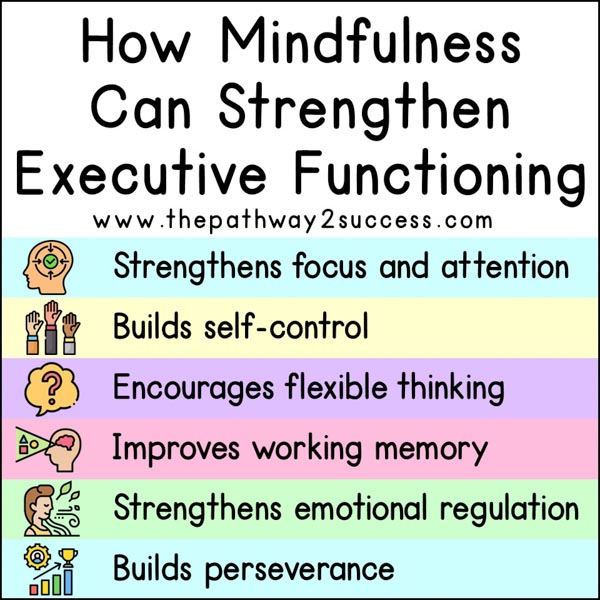
Working memory—the cognitive capacity to hold and manipulate information simultaneously—also benefits significantly from regular mindfulness routines. People rely on working memory to process multi-step instructions, recall narrative details, and execute complex problem-solving tasks. Chronic stress and mental clutter can easily overload this cognitive workspace. By clearing out extraneous thoughts and worries, mindfulness creates a mental "clean slate." A student who practices mindfulness in the morning enters the classroom unburdened by overwhelming cognitive clutter, leaving ample mental bandwidth to absorb and execute a teacher’s detailed morning instructions.
Complementing working memory are the advanced cognitive capacities of flexible thinking and perseverance. Flexible thinking allows individuals to view situations from multiple perspectives, consider alternative viewpoints, and adapt their mindsets when faced with unexpected hurdles. Because mindfulness encourages the non-judgmental acceptance of thoughts and experiences, it helps young people accept difficult realities rather than digging in their heels. When a young adult receives rigorous critical feedback on an essay, flexible thinking rooted in mindfulness prevents them from taking the critique as a personal attack, transforming a potential conflict into an open pathway for growth. Similarly, perseverance—the gritty determination to stick with a challenging task—is mirrored in the very act of mindfulness itself. Sitting quietly to focus on the breath when the mind desperately wants to wander requires endurance. Over time, enduring through the mental discomfort of a mindfulness exercise directly translates into the persistence required to conquer difficult academic and personal goals.
Implementing Mindfulness Strategies for Kids and Teens
Successfully introducing mindfulness to children and adolescents begins with a transparent conversation about its tangible benefits. Rather than presenting the practice as a chore, educators and parents can frame mindfulness as a versatile performance tool. Young people can be shown how a few moments of intentional breathing can calm pre-speech anxiety before a classroom presentation or sharpen focus and alertness before a competitive athletic event. Emphasizing that these techniques apply to virtually every aspect of life helps secure buy-in from skeptical learners.
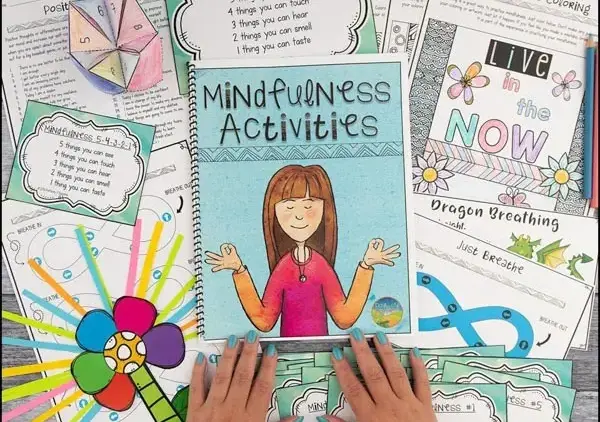
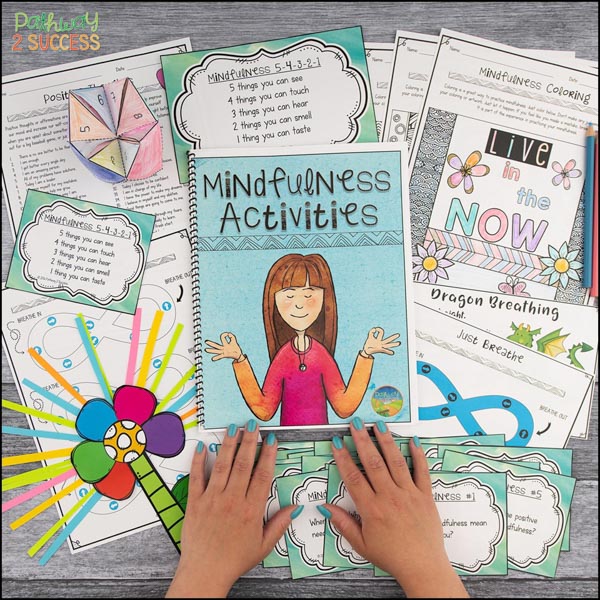
To make implementation seamless, adults often turn to structured mindfulness lessons and SEL (Social-Emotional Learning) activities designed specifically for youth. These comprehensive resources frequently include hands-on exercises, creative crafts, discussion cards, and visual posters that can be integrated into daily routines and repeated throughout the school year. Literature also serves as an invaluable bridge to these concepts, with numerous picture books and narrative texts offering older children and teenagers relatable avenues for discussing and exploring mindfulness themes.

At the heart of any mindfulness regimen is mindful breathing, which functions as a portable, universal anchor. By sitting comfortably, observing the tactile sensations of air entering and leaving the body, and gently guiding a wandering mind back to the breath, learners build a lifelong self-regulation tool. Educators frequently enhance basic breathing with imaginative variations such as shape breathing or cooling-down exercises, which double as effective cognitive breaks between demanding academic tasks.
Other expressive outlets further reinforce these neural pathways. Mindful coloring encourages complete immersion in the present moment without the pressure of artistic perfection. Gentle yoga and stretching integrate physical movement with synchronized breath control. Mindful journaling provides a reflective space for students to respond to guided prompts or process their internal thoughts at the start of the day. Outdoor mindfulness leverages natural settings—such as nature walks, gardening, cloud-watching, or observing wildlife—to provide an endless array of external focal points. Additionally, incorporating morning affirmations and mindful object observance helps young people build durable concentration habits, utilizing everyday items like a pen or a water bottle to anchor their attention. Through these varied, evidence-based approaches, mindfulness continues to prove itself as a transformative foundation for youth development, strengthening the very executive functioning skills that shape a successful life.