Cartagena, Colombia, is globally celebrated for its enchanting, UNESCO World Heritage-listed Old Town, where centuries-old stone walls, vibrant colonial balconies, and bustling plazas captivate millions of international visitors each year. Traditionally, the historic port city has been viewed through the lens of architectural heritage rather than as a coastal beach getaway. However, a significant infrastructural upgrade along the city’s modern Caribbean shoreline is shifting that narrative. Recent accessibility improvements completed along a prime stretch of beach in the bustling Bocagrande district mean that wheelchair users and travelers with reduced mobility finally have a dedicated, barrier-free coastal space to enjoy the sun, sand, and surf.
A Wheelchair Accessible Beach in Bocagrande
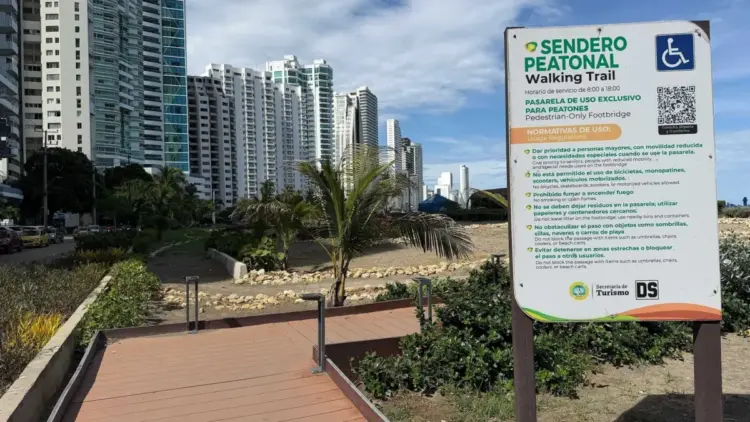
The milestone initiative establishes Cartagena’s very first wheelchair-accessible beach at Playa 5, situated in the heart of the Bocagrande neighborhood. Strategically located directly across the street from prominent hospitality landmarks—including the Hyatt Regency Cartagena and the ESTELAR Cartagena de Indias Hotel—the access point is anchored at the intersection of Carrera 1 and Calle 12. At this junction, a smooth, engineered boardwalk begins, extending from the urban streetscape directly toward the edge of the shoreline.
Locally designated as the "Sendero Peatonal" or Walking Trail, the boardwalk is strictly reserved for pedestrian use. Official regulatory signs posted along the entrance ramp clearly outline the rules of the pathway, instructing all visitors to yield priority and maintain courtesy toward senior citizens and individuals experiencing reduced mobility. While the boardwalk provides an effortless transit corridor parallel to the sea, transitioning from the raised wooden deck down to the sand requires navigating a dedicated ramp.
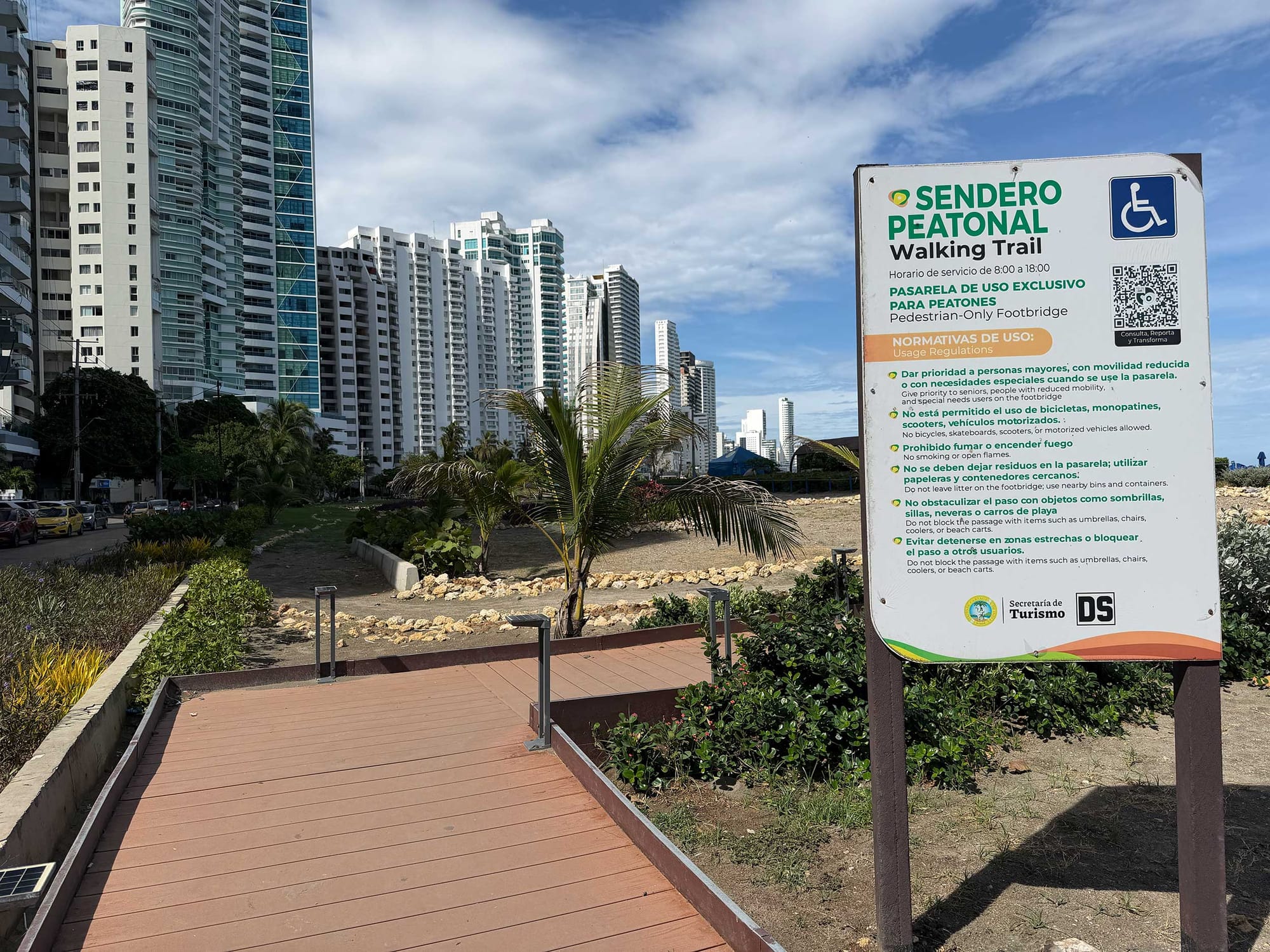
However, a noticeable gap currently exists in the final approach to the ocean. While the ramp successfully bridges the elevation change from the boardwalk to the sand, it does not extend all the way to the water’s edge. The absence of a continuous rubber or fabric beach mat running across the loose sand means that wheelchair users must rely on specialized equipment to bridge the final gap between dry sand and the crashing waves of the Caribbean Sea.
Free WaterWheels Beach Wheelchair
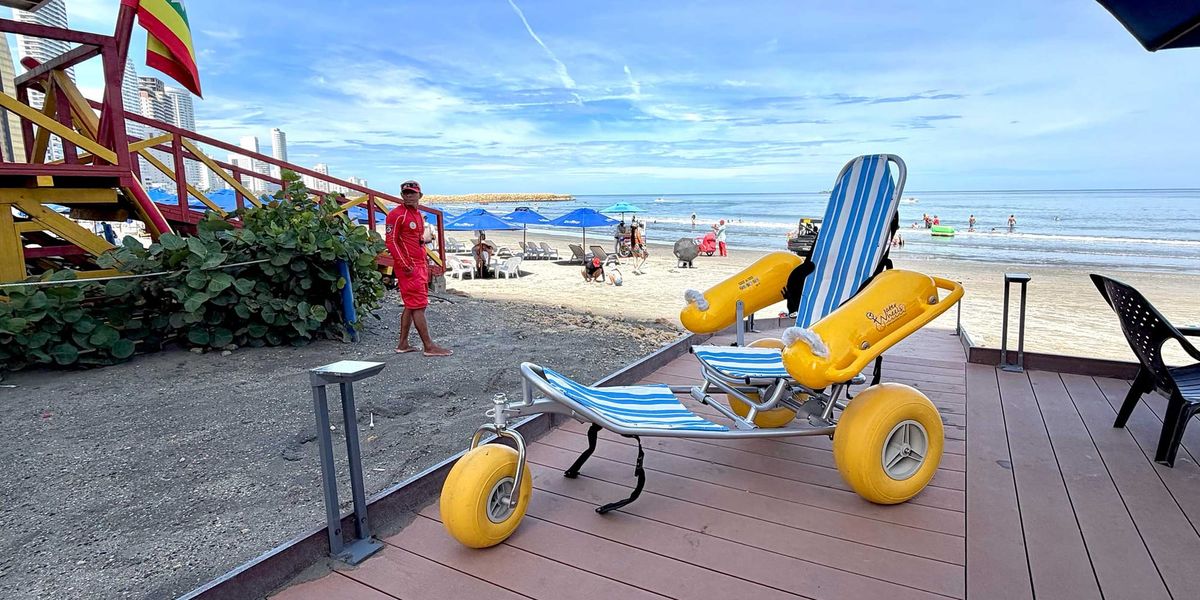
To overcome the natural barrier of soft, shifting sand, the initiative incorporates specialized mobility hardware designed specifically for coastal environments. Beach access is facilitated through the provision of the WaterWheels Floating Beach Wheelchair, which is made available to the public completely free of charge.
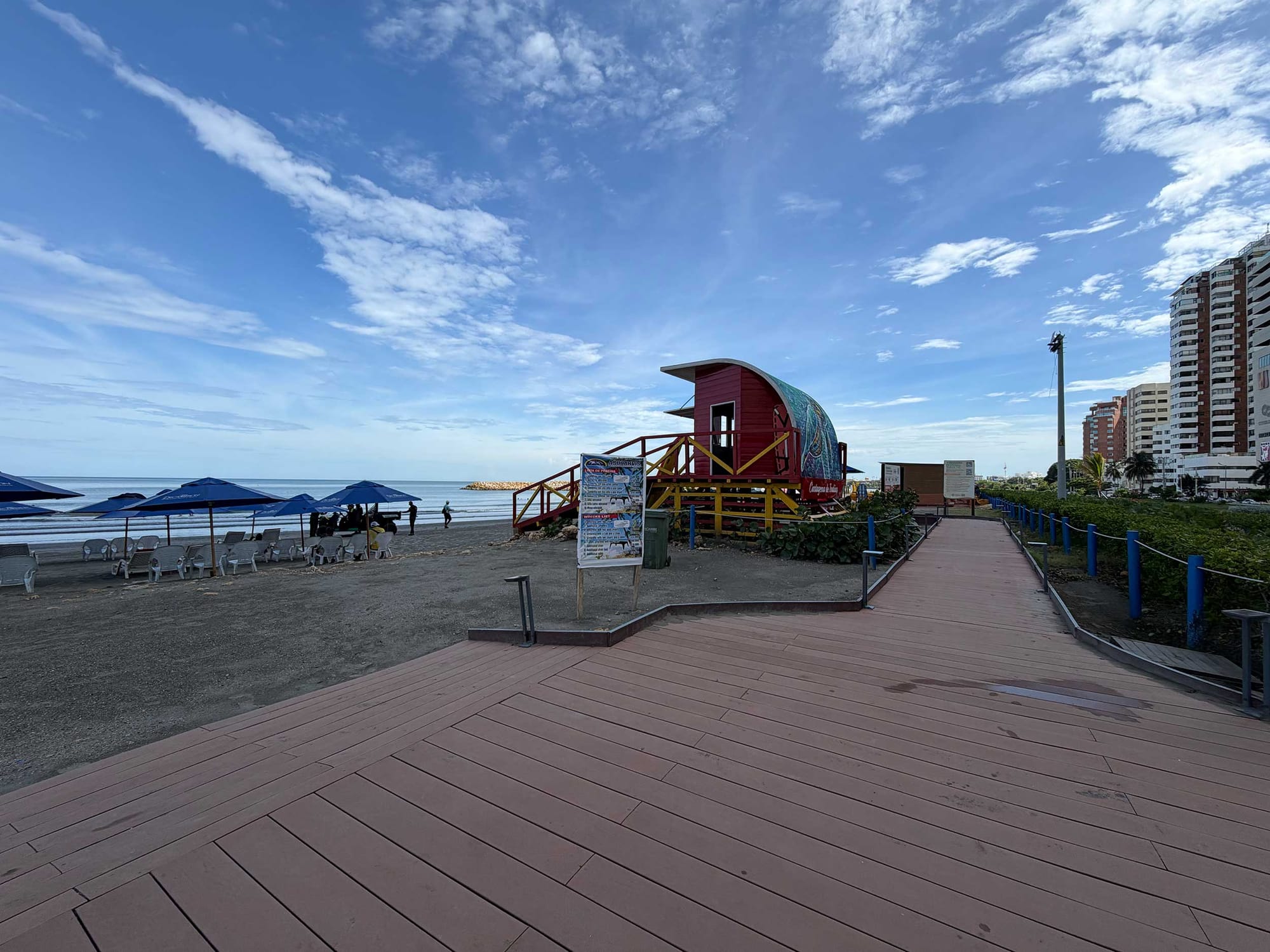
Travelers wishing to utilize the specialized floating chair need only approach the on-duty lifeguards stationed at the Playa 5 lifeguard post. Observers note that the municipal lifeguards assigned to the area are approachable, welcoming, and eager to assist visitors with the borrowing process, ensuring that administrative hurdles are kept to an absolute minimum.
The WaterWheels chair is engineered with specific nautical and all-terrain adaptations. It features oversized, buoyant balloon tires that distribute weight evenly, allowing the chair to roll smoothly and effortlessly over soft coastal sand without sinking. Furthermore, the mobility device is equipped with integrated flotation armrests, designed to provide stability and safety as users transition directly into the water.
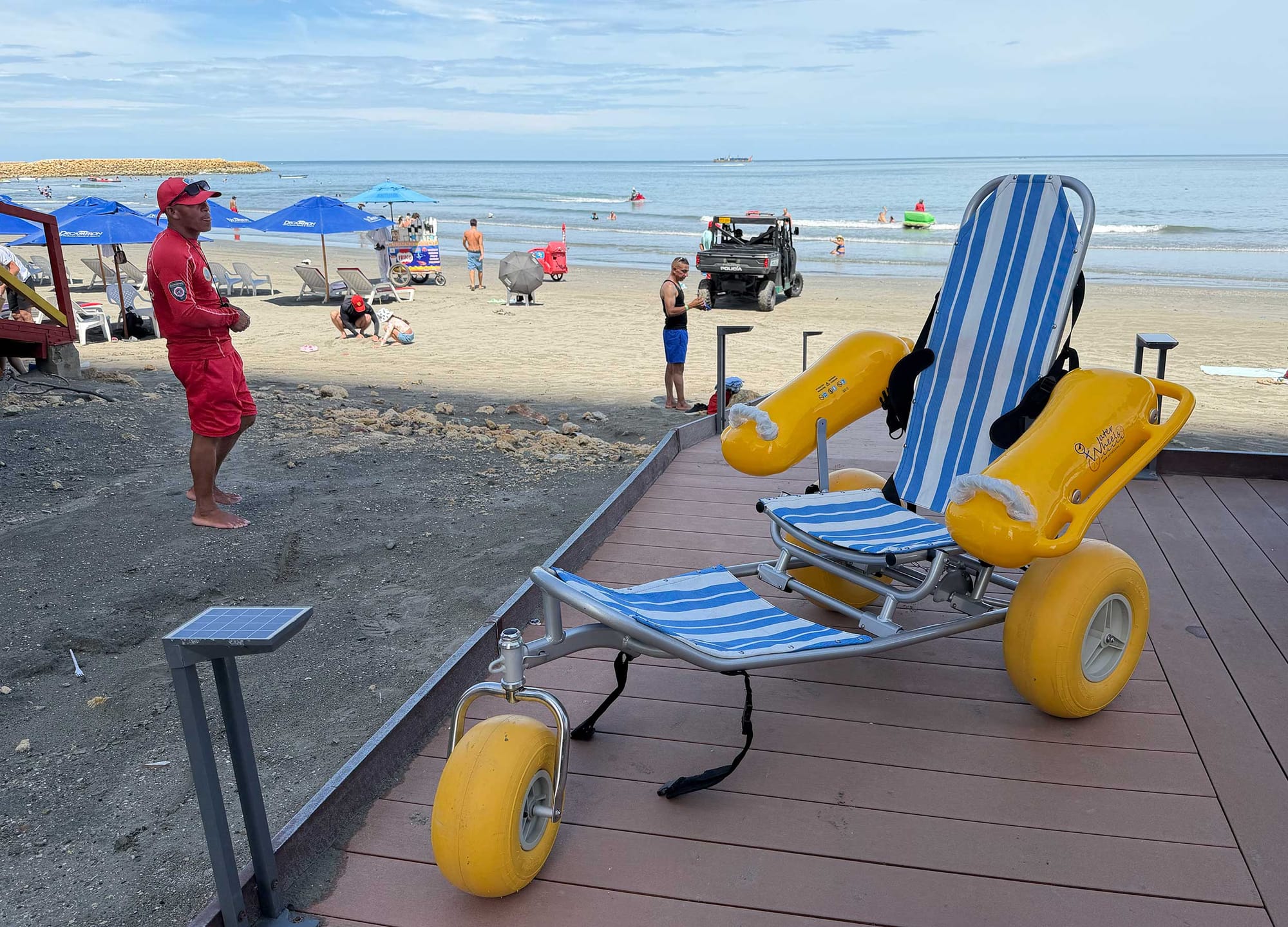
Because the WaterWheels model is a manual beach wheelchair, its practical utility depends on the presence of a travel companion, family member, or friend who can actively push the chair across the sand and navigate the shoreline surf. For travelers arriving with a supportive network, the availability of this equipment offers a transformative, cost-free opportunity to experience the therapeutic waters of the Caribbean Sea firsthand—an experience that was previously closed off to many disabled visitors.
Wheelchair Accessible Seating, Shade & Facilities
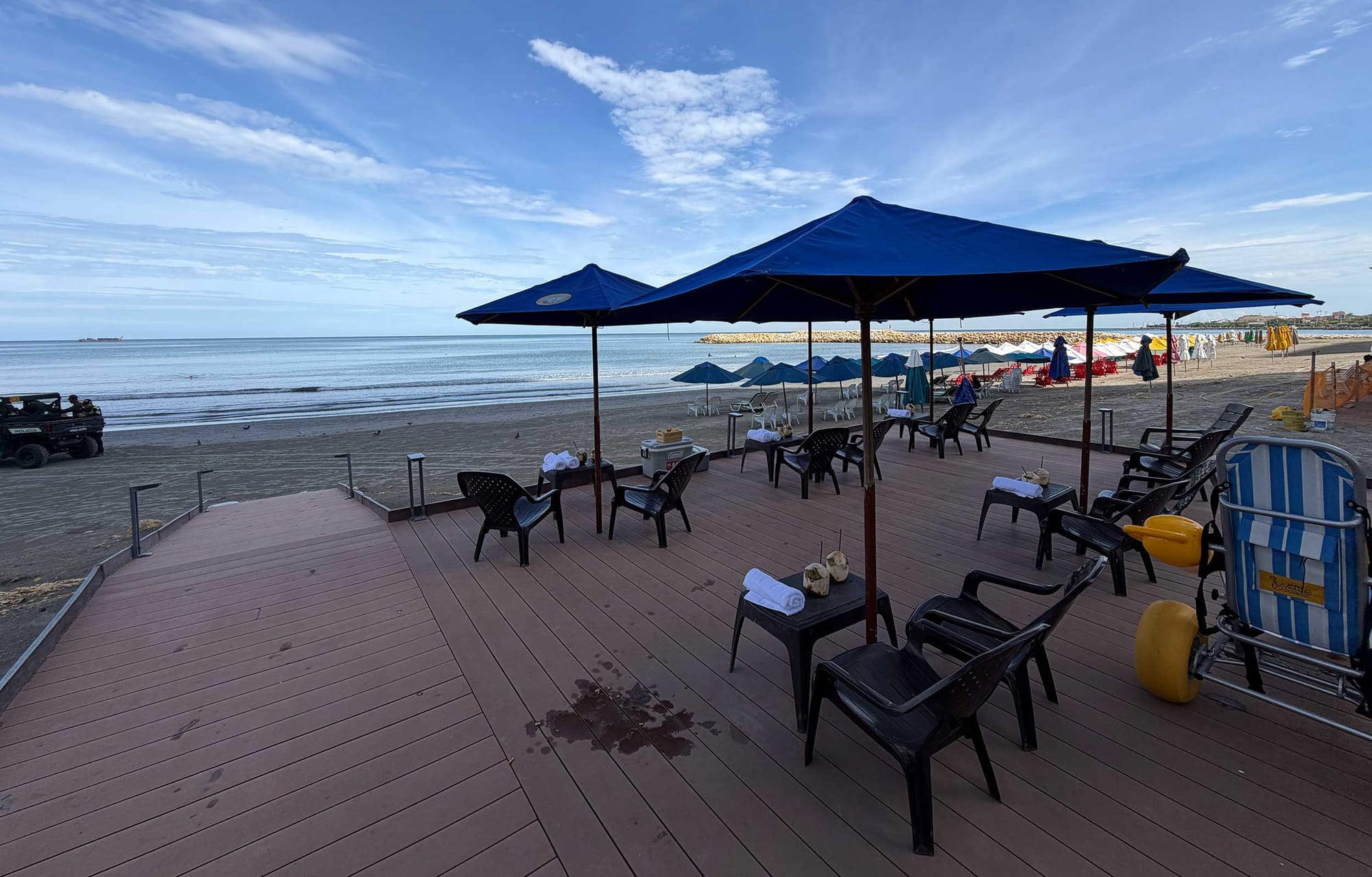
Complementing the physical pathways and mobility equipment, municipal planners have incorporated dedicated infrastructure along the beachfront to ensure comfort and safety for visitors with accessibility needs. Positioned immediately adjacent to the Playa 5 lifeguard station, an accessible seating zone has been established on the boardwalk deck. This area provides visitors with chairs and protective umbrellas, arranged on a first-come, first-served basis to offer respite from the intense tropical sun.
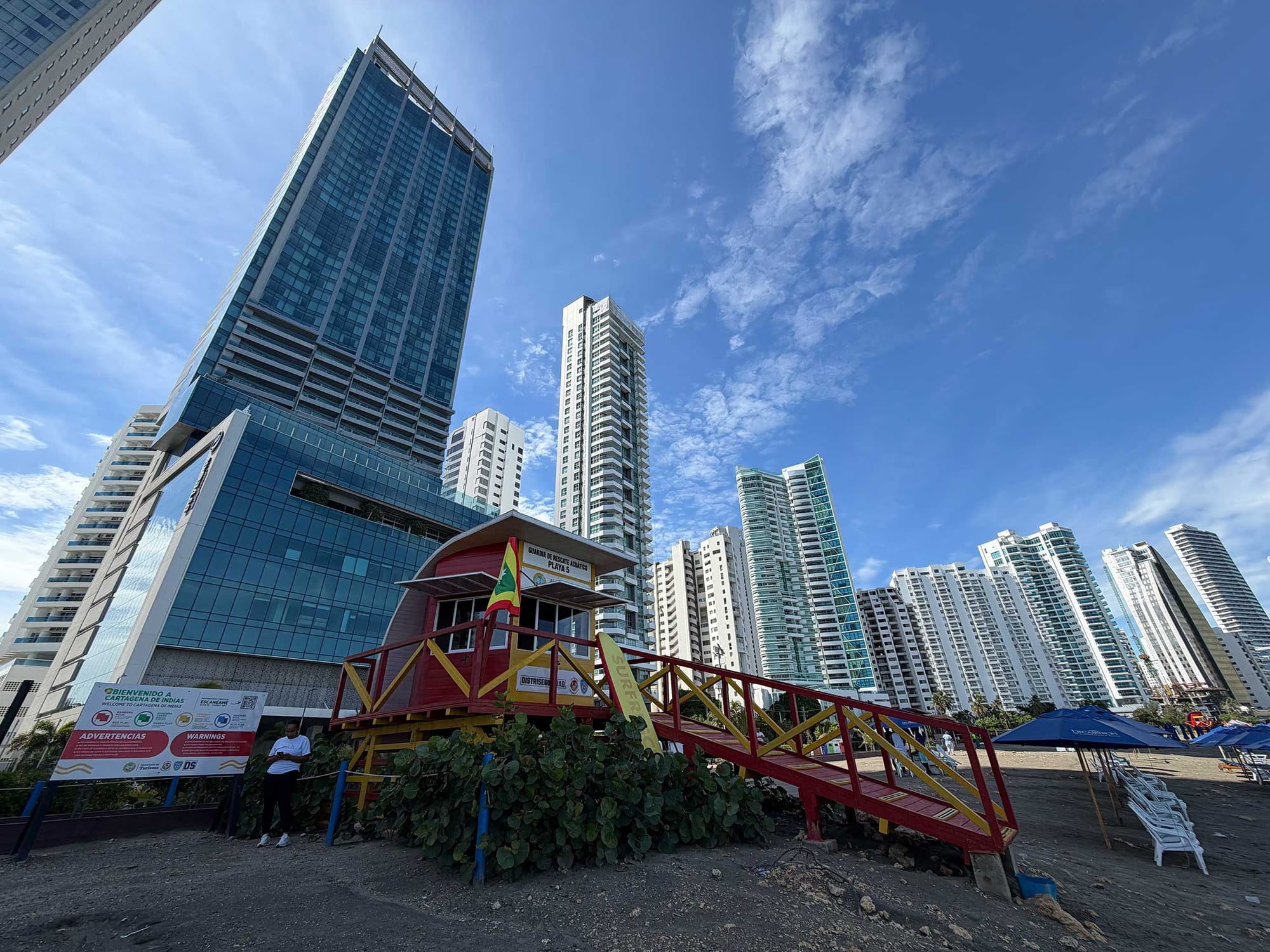
Beyond the designated accessible zone on the boardwalk, a wider array of traditional beach chairs and sun umbrellas can be rented directly on the sand from local commercial vendors. The presence of municipal lifeguards stationed on the beach, combined with regular, visible patrols by local law enforcement officers, contributes to making Playa 5 one of the most secure and well-monitored stretches of coastline in the entire city.
Sanitary facilities have also been upgraded to support the new accessibility standards. A dedicated public restroom and shower facility operates directly on the beach property daily between the hours of 8:00 a.m. and 6:00 p.m. Within this facility, a small but functional wheelchair-accessible bathroom stall has been installed, complete with a structural grab bar mounted securely alongside the toilet.
Despite its functional design, users and accessibility advocates note spatial limitations. Due to the compact dimensions of the stall, travelers utilizing larger power wheelchairs may encounter spatial constraints that prevent them from executing a full 360-degree turn inside the restroom enclosure.
Final Thoughts
The integration of barrier-free infrastructure along the Caribbean coastline marks a notable development in a region where fully wheelchair-accessible public beaches remain an infrequent sight. For Cartagena, the proactive investment in inclusive tourism reflects a growing commitment to ensuring that the city’s natural coastal assets can be enjoyed equally by local residents and international visitors alike. By combining specialized floating beach equipment, designated accessible pathways, shaded seating, and adapted sanitary facilities, the Bocagrande project establishes a practical baseline for coastal accessibility—an evolution that advocates hope will serve as a model for future municipal developments across Colombia.