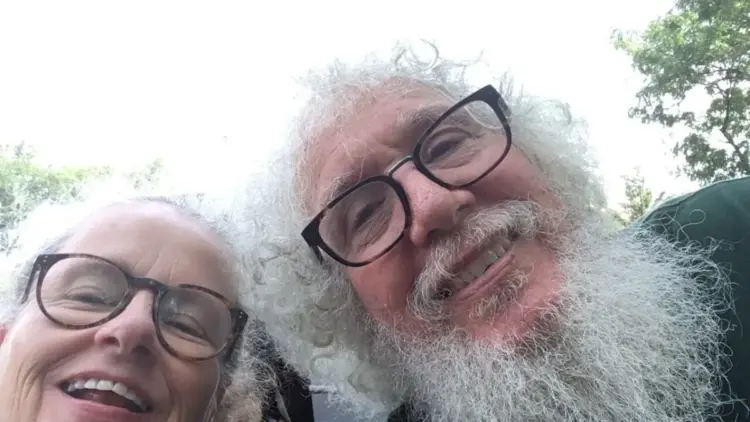
As the national disability vote movement marks its tenth anniversary, advocates and organizers across the country are reflecting on the origins of a coalition that has fundamentally transformed political participation for Americans with disabilities. Founded in 2016 by grassroots activists in Texas, REV UP—an acronym standing for "Register, Educate, Vote, Use your Power!"—has grown from a local initiative into a powerhouse national movement. To celebrate a decade of profound impact, community leaders are highlighting the pioneers whose lifelong dedication laid the bedrock for this modern era of political advocacy. Among the most influential figures in this history are the late Bob Kafka and his wife, longtime collaborator, and fellow activist, Stephanie Thomas.
Before There Was a Movement
Long before REV UP expanded into the national landscape recognized today, Bob Kafka and Stephanie Thomas were fierce grassroots organizers operating across Texas, united by an unshakeable belief in the political power of people with disabilities and the absolute necessity of an accessible democracy. For years, the pair dedicated their lives to organizing, building community, and demanding equity for disabled individuals throughout the state.
Kafka ultimately founded and co-led the very first REV UP coalition in Texas before partnering with the American Association of People with Disabilities (AAPD) to bring the movement to a national scale. Thomas stood right alongside him every step of the way, serving as a powerful collaborator, activist, and visionary in her own right. Together, they did not merely demand institutional change; they actively engaged voters at the ballot box, transforming how political systems viewed and interacted with the disability community.
Thomas’s personal journey into the realm of advocacy began during her college years. Alongside other disabled students, she organized to push for critical accessibility improvements on her university campus. Reflecting on those formative years, Thomas recalled how a palpable demand for societal change was sweeping across the nation.
"I felt that the time for change was now," she recalled, noting the cultural backdrop of the era. "It was during and after the anti-war movement… the women’s rights movement, and, of course, the civil rights movement… Everybody was talking about change."
When Thomas and Kafka eventually crossed paths in Texas, they were living on opposite sides of a remarkably vast state. Describing the logistical reality of their early relationship, Thomas noted, "If you’ve ever looked at [the size of] Texas, that’s pretty far away. So we both decided to meet in the middle." They ultimately chose to move to El Paso together, a milestone that inextricably intertwined their personal lives and their lifelong advocacy journeys.
While residing in El Paso, Thomas received a promotional brochure from ADAPT, a prominent national grassroots disability rights organization. The publication featured a striking, satirical image of a city bus being flushed down a toilet bowl, accompanied by the bold slogan, "Don’t flush, organize!" and a direct question: "Are you sick of not being able to ride the bus?"
This clever use of satirical political art as a vehicle for direct action deeply resonated with both Thomas and Kafka. Inspired by the approach, they eagerly immersed themselves in the fierce community of ADAPT changemakers, finding a renewed sense of purpose and camaraderie.
"It was just magical to me that people were a community. They were very interested in making change, very serious about it. Ideas were flying left and right, and it was so thrilling. I immediately fell in love with the organization, and Bob and I worked with them," Thomas shared.
REVing UP from Local to National
For years, Kafka and Thomas engaged in ongoing discussions about how to broaden the scope and impact of their advocacy work. As Kafka continually explored innovative ways to pressure and influence elected officials, voting emerged as a uniquely powerful catalyst for systemic change.
"People with disabilities were not seen as voters," Thomas explained. "They weren’t seen as really much of anything, and so that’s why [Bob] started REV UP Texas. But he also felt like this was a problem across the whole country."
In Austin, Texas, Kafka focused his early organizing efforts on helping individuals with disabilities recognize both the intrinsic power of their individual votes and the collective strength they could wield by working together in solidarity. To operationalize this vision, Kafka and Thomas joined forces with Bill Emery, a longtime friend and fellow activist, to launch an exceptionally ambitious voter outreach campaign.
Seeking a direct way to reach constituents, the organizers requested a list from the Texas Attorney General’s office detailing individuals with disabilities who utilized paratransit services. By meticulously cross-referencing that list with official voter registration records, they successfully compiled phone numbers and initiated a statewide robocall campaign urging disabled Texans to cast their ballots in an upcoming election.
"I hate robocalls, and I couldn’t believe Bob was doing that, but he did, and it was really good. It called people all over the state who had disabilities and said to vote in the upcoming elections," Thomas recalled with a mix of amusement and lingering disbelief.
As is frequently the case in high-impact grassroots activism, the campaign immediately generated unexpected logistical challenges and a wave of public friction. Because the robocall was legally required to provide a contact number for inquiries or complaints, Kafka listed his own personal phone number as the point of contact.
"One weekend it was just solid calls of angry people," Thomas shared. "We talked to them, and then they realized this wasn’t for a candidate; it was just to get them to vote, and most of them really calmed down."
Rather than shutting down the communications, the dialogues Kafka and Thomas maintained with these callers opened up vital opportunities for disabled voters to share their personal experiences, voice their frustrations, and ultimately become more civically engaged.
"When they realized that we wanted to hear things from them too, that was something that really got people more excited, and I think it really did help to get some folks out to vote," Thomas noted.
Determined to scale these grassroots successes beyond state lines, Kafka sought strategic avenues to expand the coalition-building model nationwide. He began collaborating closely with AAPD to assist communities across the United States in establishing their own local REV UP coalitions, systematically constructing a unified national movement dedicated to amplifying the disability vote.
"He was really proud that so many people took this issue on, and decided to run with it," Thomas recalled.
Pitchfork Approach to Advocacy
To conceptualize and execute comprehensive social change, Kafka developed a multi-pronged strategic framework that he referred to as the "pitchfork approach" to advocacy. This dynamic model encompassed five distinct pillars: media and education, legal action, direct action, political engagement, and system or administrative reform.
Kafka seamlessly integrated this rigorous strategic thinking into the foundation of REV UP. He maintained that the movement’s mission extended far beyond simply registering, educating, and empowering disabled voters; it demanded that elected officials be held strictly accountable to the specific legislative and social issues impacting the disability community.
"[Bob] felt that people should be informed and involved so that they could put pressure on candidates to show that there was a disability community that was caring about our issues and was going to vote according to our issues," Thomas explained.
At the core of Kafka’s philosophy was an unwavering faith in the collective efficacy of disabled people. He consistently maintained that organized communities could fundamentally alter the political landscape.
"[He] felt that the voice of disabled people could be much louder and much stronger than it is now," Thomas said.
Organizers Working Together – Thomas and Kafka
Collaboration remained a defining hallmark of Kafka and Thomas’s professional and personal approach to advocacy. Grounded in his foundational experiences with the Coalition for Barrier-Free Living, Kafka deeply understood the tangible differences disabled individuals could achieve by uniting their efforts. Similarly, Thomas consistently emphasized the vital importance of robust local coalitions, pointing out that the vast majority of government elections and policy decisions that directly shape daily life occur at the local municipal level.
Reflecting on the legacy of their labor, Thomas and Kafka took immense pride in watching local REV UP coalitions flourish and seeing grassroots organizers maintain active engagement within their respective communities.
"AAPD embracing REV UP, and giving it legs to speak at the national level, is something that meant a great deal to Bob," Thomas shared.
As the movement looks ahead to its next decade of nationwide impact, Thomas expresses confidence that Kafka would urge the coalition to continue expanding its reach and ambition. She encourages emerging leaders to celebrate incremental victories, experiment boldly with innovative organizing tactics, and accept that setbacks and failures are natural components of sustainable activism. Building a resilient movement, she suggests, requires an ongoing cycle of mutual teaching and learning.
Offering direct counsel to the next generation of disability rights advocates, Thomas leaves them with a straightforward mandate: "Don’t be shy."