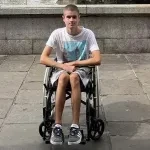
In 2016, Liam Virgo was a healthy 13-year-old whose life changed in an instant when a sudden neurological breakdown caused his body to stop functioning. Diagnosed with a severe case of Functional Neurological Disorder (FND)—a complex condition often described as a disruption in how the brain sends and receives signals—Virgo went from walking unassisted to experiencing full paralysis and the loss of his speech within a matter of days. Bedbound, locked in his own body, and enduring extreme physical pain, the prospect of ever traveling or leading an independent life appeared entirely beyond reach.
Nearly a decade later, Virgo has turned his arduous recovery into a journey of mobility, international perspective, and disability advocacy. Driven by a personal commitment to visit London during his darkest days in the hospital, Virgo not only achieved his dream of exploring the UK capital but went on to travel across more than 120 towns and cities throughout the United Kingdom. Today, by sharing his travel observations and advocating for broader awareness of Functional Neurological Disorder, Virgo is actively working to reframe public perceptions of disability, emphasizing that true limitations stem not from wheelchairs or diagnoses, but from inaccessible environments and structural barriers.
Sudden Onset and the Fight Against FND
For Virgo, the transition from active adolescence to complete physical reliance occurred without warning. In 2016, his neurological system experienced what he describes as a sudden software crash in the brain. Within days of the initial onset, his physical abilities were stripped away. He lost the ability to walk, stand, or speak, becoming severely disabled in an extraordinarily short timeframe.
The early phase of the condition required months of intensive hospitalization, a period Virgo recalls as largely blurred by cognitive fatigue and disorientation. For approximately six months following the diagnosis, his mind effectively switched off, leaving him unable to recognize people, objects, or his surroundings. The physical impact was equally severe; Virgo became completely bedbound and locked inside his body, unable to sit up without suffering from extreme, unmanageable pain.
During this initial period, standard adaptive equipment offered no relief. Virgo was unable to tolerate sitting in any form of medical or mobility equipment, leaving his hospital bed as the only environment capable of supporting his physical condition. No conventional wheelchair was suitable for his needs at the time, leaving him entirely confined to a lying position and isolated from the outside world.
The ‘London Dream’ as a Catalyst for Recovery
Amid the confinement of his long hospital stay, Virgo found a critical source of psychological resilience by setting a clear, long-term goal: visiting London. What began as a distant hope quickly evolved into a core anchor for his rehabilitation strategy. Virgo made a personal pledge that if he could find a way to manage his condition and regain physical tolerance, he would make the trip to the UK capital.
This objective, which he dubbed the "London Dream," transformed his daily rehabilitation routine. Rather than viewing physical therapy and recovery exercises as endless medical obligations, the goal of reaching London gave each milestone a concrete purpose. Having a specific, meaningful destination served as a vital motivator on the most challenging days of managing FND.
The road to physical readiness, however, was long. It took three full years of steady effort and medical management before Virgo was healthy enough to sit upright in a newly customized wheelchair. Stepping into a wheelchair for the first time after three years bedridden represented a monumental turning point, opening up possibilities that had once seemed impossible and laying the groundwork for his journey into travel and accessibility advocacy.
Navigating the Capital: Urban Infrastructure and Accessibility Insights
When Virgo finally realized his goal of visiting London, the experience provided both personal validation and valuable insights into urban accessibility. As one of the world’s ancient historic capitals, London presents a unique mix of modern inclusive architecture and older, less accessible structures. Despite these historical challenges, Virgo noted that the city is steadily evolving into one of the most accessible major urban centers in the United Kingdom.
During his time exploring the capital, accommodation played a vital role in ensuring a manageable experience. Virgo stayed at the Park Plaza County Hall, located near the South Bank and Waterloo station. The hotel provided fully step-free access throughout its main lobby and elevator systems, allowing for smooth navigation. The venue’s accessible guest rooms were specifically designed with ample space for wheelchair maneuvering, featuring roll-in wet rooms equipped with secure grab rails. Supportive hotel staff further contributed to a seamless, low-stress environment for a traveler relying on full-time mobility equipment.
Virgo’s exploration of London’s dining and cultural scene highlighted a clear contrast between contemporary developments and historic architecture. Modern commercial and cultural districts—such as the South Bank near his hotel, Central London, Canary Wharf, and Stratford—generally offered comprehensive step-free access, wide thoroughfares, and fully accessible facilities.
In contrast, older independent venues and historic buildings across London frequently feature small single-step entrances that pose immediate physical barriers for wheelchair users. To navigate these legacy obstacles, Virgo learned to implement practical planning strategies, such as calling venues directly ahead of time or utilizing digital tools like Google Street View to inspect entrances and sidewalk conditions before visiting.
A Travel Journey Spanning More Than 120 Cities
Reaching London was not the end of Virgo’s travels, but rather the starting point for a much broader exploration of the United Kingdom. After regaining his speech and building up his physical endurance in his wheelchair, Virgo launched an ambitious series of trips across the country. To date, he has visited more than 120 towns and cities nationwide.
While London remains his primary reference point and personal favorite destination, Virgo has extensively documented his travels in major regional centers across England, Scotland, and Wales. His journey has taken him through diverse urban environments, including Manchester, Leicester, Birmingham, Leeds, Liverpool, Edinburgh, Cardiff, and Brighton, among many others. Each destination has offered distinct perspectives on regional transit, municipal accessibility standards, and public infrastructure.
Having transitioned from years of total bed rest to active travel, Virgo’s ambitions have expanded beyond national borders. His next major travel objective is an international trip to Cyprus, aimed at connecting directly with his family heritage and evaluating international travel accommodations as a wheelchair user.
Advocating for Structural Change and FND Awareness
Through his extensive travel experience and ongoing advocacy, Virgo has developed a clear perspective on disability, independence, and society’s role in accessibility. He views a wheelchair not as a restricting medical device, but as an essential instrument of personal freedom and mobility—a tool that effectively reopened the world after years of extreme isolation.
Virgo emphasizes that the primary obstacles faced by individuals with disabilities do not originate from their physical diagnoses or mobility equipment, but rather from built environments that fail to incorporate inclusive design. Broken public elevators, steep unramped entrances, inadequate restroom facilities, and a general lack of spatial awareness present unnecessary daily barriers to community participation and independent travel.
To promote broader understanding of these challenges, Virgo actively documents his journeys and accessibility findings on Instagram under the handle @liamloveslondon. By sharing direct accounts of his travel experiences, hotel stays, and urban navigation techniques, he aims to raise awareness about Functional Neurological Disorder while offering practical insights for other disabled travelers. Through his ongoing work, Virgo seeks to demonstrate how targeted advocacy, inclusive architecture, and increased public awareness can dismantle physical barriers, allowing individuals recovering from severe illness to re-engage with the world and pursue their independent goals.