For many years, ongoing polling data from KFF has documented how the high cost of medical care serves as a persistent burden on families across the United States. These costs routinely factor into critical household decisions regarding insurance coverage and whether to seek necessary medical attention. As financial pressures continue to evolve, medical expenses consistently rank as the leading financial worry for adults and their families, overshadowing numerous other household expenditures.
Recent polling data compiled and updated by KFF offers a comprehensive look at the public’s ongoing struggles with health care affordability, illuminating the widespread nature of these economic anxieties. While the data highlights particular vulnerabilities among uninsured individuals, low-income households, and marginalized communities, it also demonstrates that the rising cost of care affects Americans across diverse demographics, income brackets, and insurance types.
Worries and Difficulty Affording Medical Costs
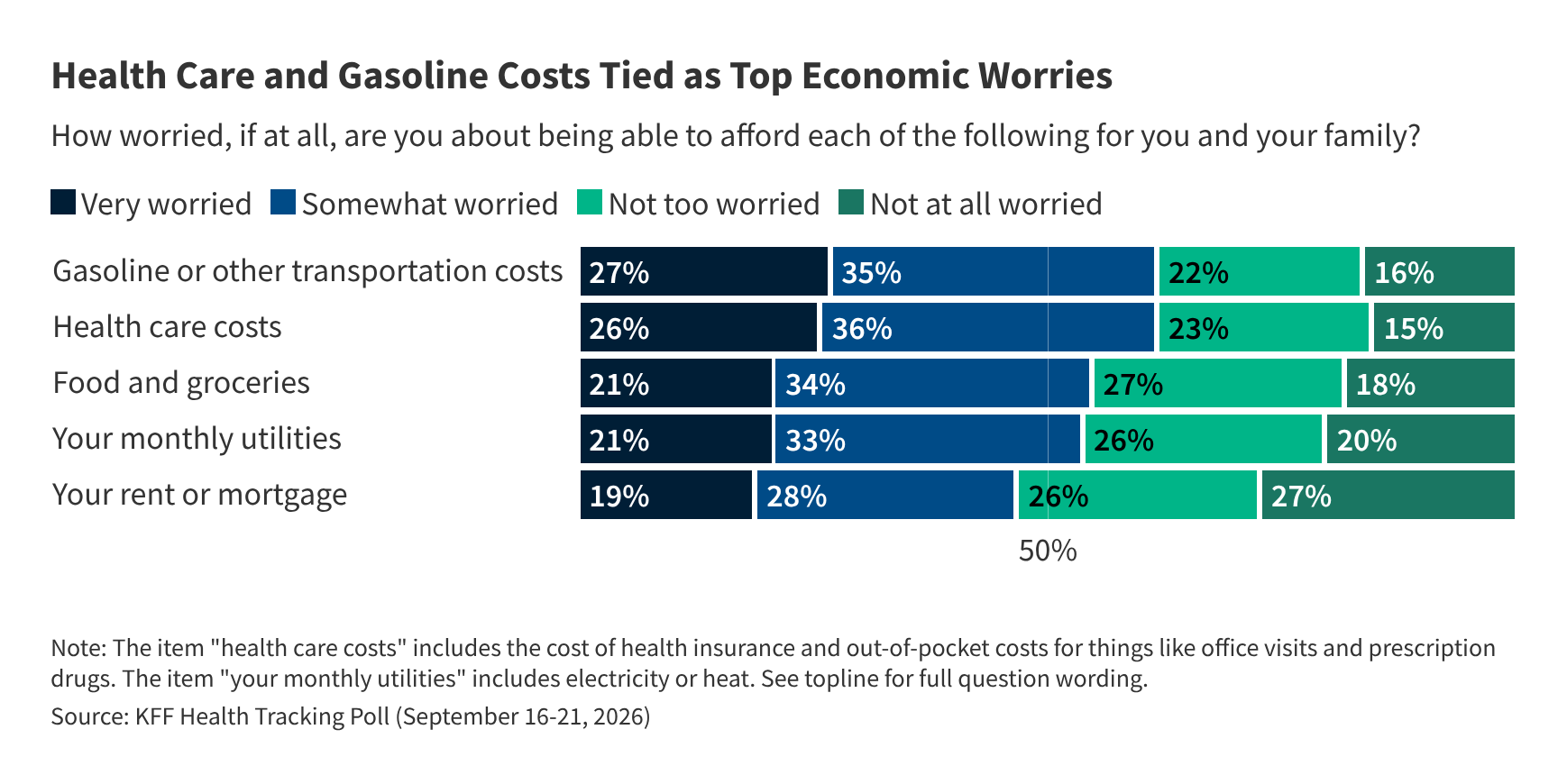
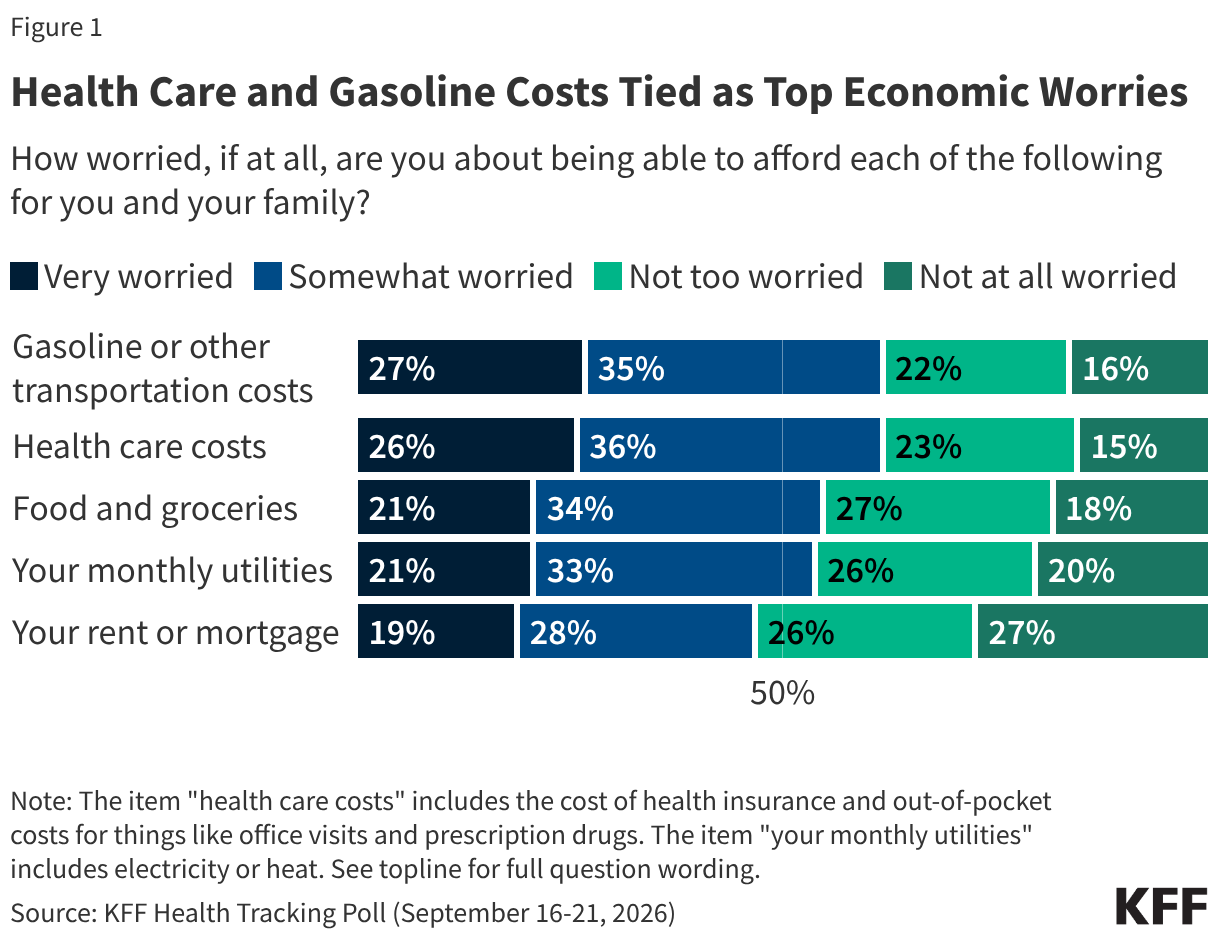
Throughout recent months, health care expenses have remained firmly anchored at or near the top of the list of financial worries for the American public. In the period leading up to the midterm elections, approximately six in ten adults reported being either very worried or somewhat worried about affording health care costs for themselves and their families. This broad category of concern encompasses the cost of health insurance premiums as well as out-of-pocket expenses for routine office visits and prescription medications.
To put this level of anxiety into perspective, a comparable share of adults expressed similar worries about affording gas and transportation costs. Meanwhile, concerns regarding other fundamental household expenses—such as monthly utility bills, food and groceries, or rent and mortgage payments—were cited by a smaller fraction of the population, underscoring just how heavily medical costs weigh on the public consciousness.
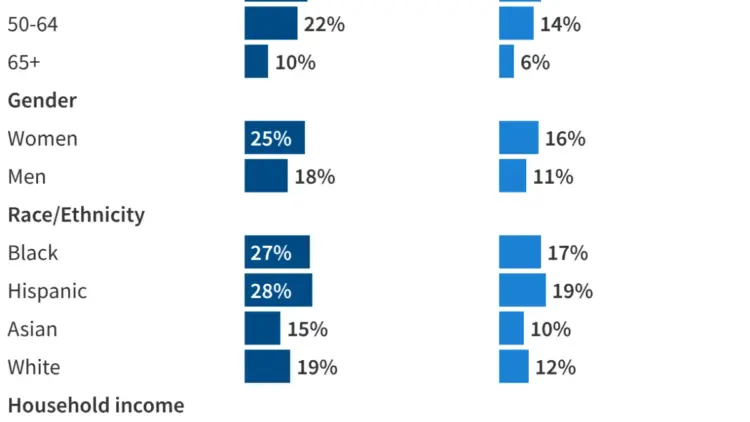
The burden of these worries is particularly stark among those who lack health coverage. Roughly eight in ten uninsured adults under the age of 65 report feeling very or somewhat worried about affording health care. However, having insurance does not eliminate these fears, as a substantial majority of insured adults under 65 share similar concerns. These anxieties transcend partisan lines and insurance types, establishing health care affordability as a universal domestic concern.
Echoing these pervasive worries, a significant portion of U.S. adults finds actual medical costs difficult to afford. Just under half of all adults state that meeting their health care expenses is very or somewhat difficult. While lower-income and uninsured individuals are disproportionately affected, individuals with health insurance and higher household incomes are far from immune.
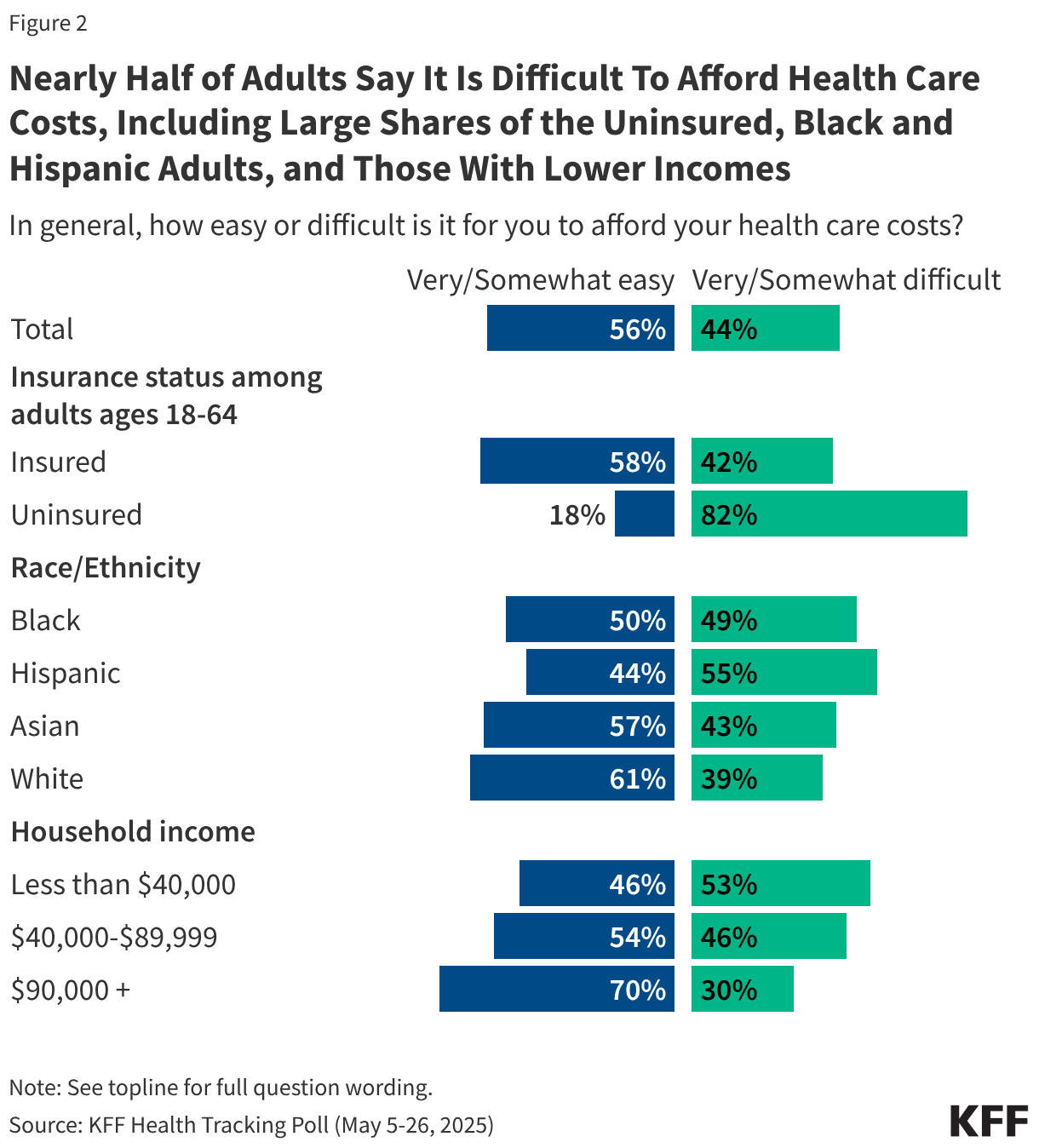
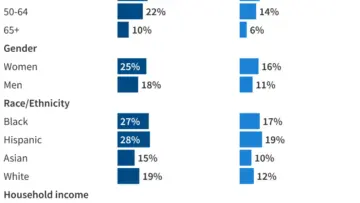
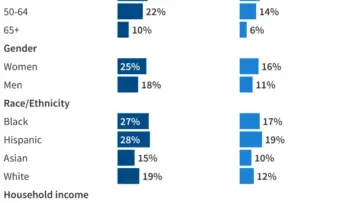
Disparities also emerge along racial, ethnic, and economic lines. A slight majority of Hispanic adults and nearly half of Black adults report difficulties affording health care costs, compared to a smaller share of White adults. Furthermore, adults residing in households with annual incomes under forty thousand dollars report affordability struggles at much higher rates than those in higher-income brackets, reinforcing the link between overall economic stability and access to care.
Postponing Care and the Toll on Health
The high cost of medical treatment frequently forces individuals to make difficult compromises with their health. Approximately three in ten adults report that they have skipped or postponed getting needed health care within the past twelve months solely because of the cost.
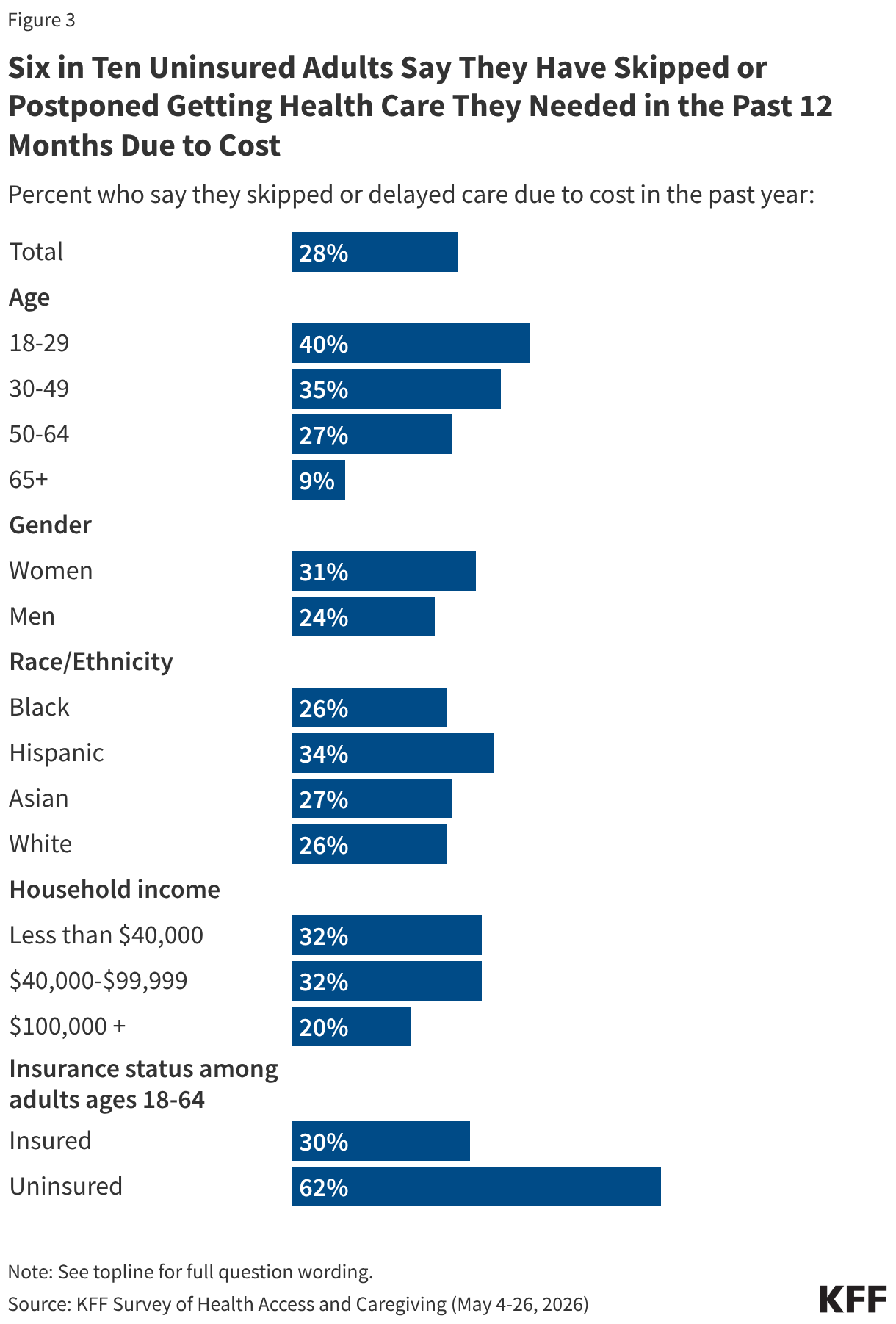
This behavior is more pronounced among specific demographic groups, including women, younger adults, Hispanic individuals, and lower-income households. Among the uninsured, the situation is even more critical, with roughly six in ten reporting that they have foregone necessary care due to financial barriers. Crucially, holding health insurance is not an absolute safeguard against these compromises, as three in ten insured adults aged 18 to 64 still report avoiding required medical services over cost concerns.
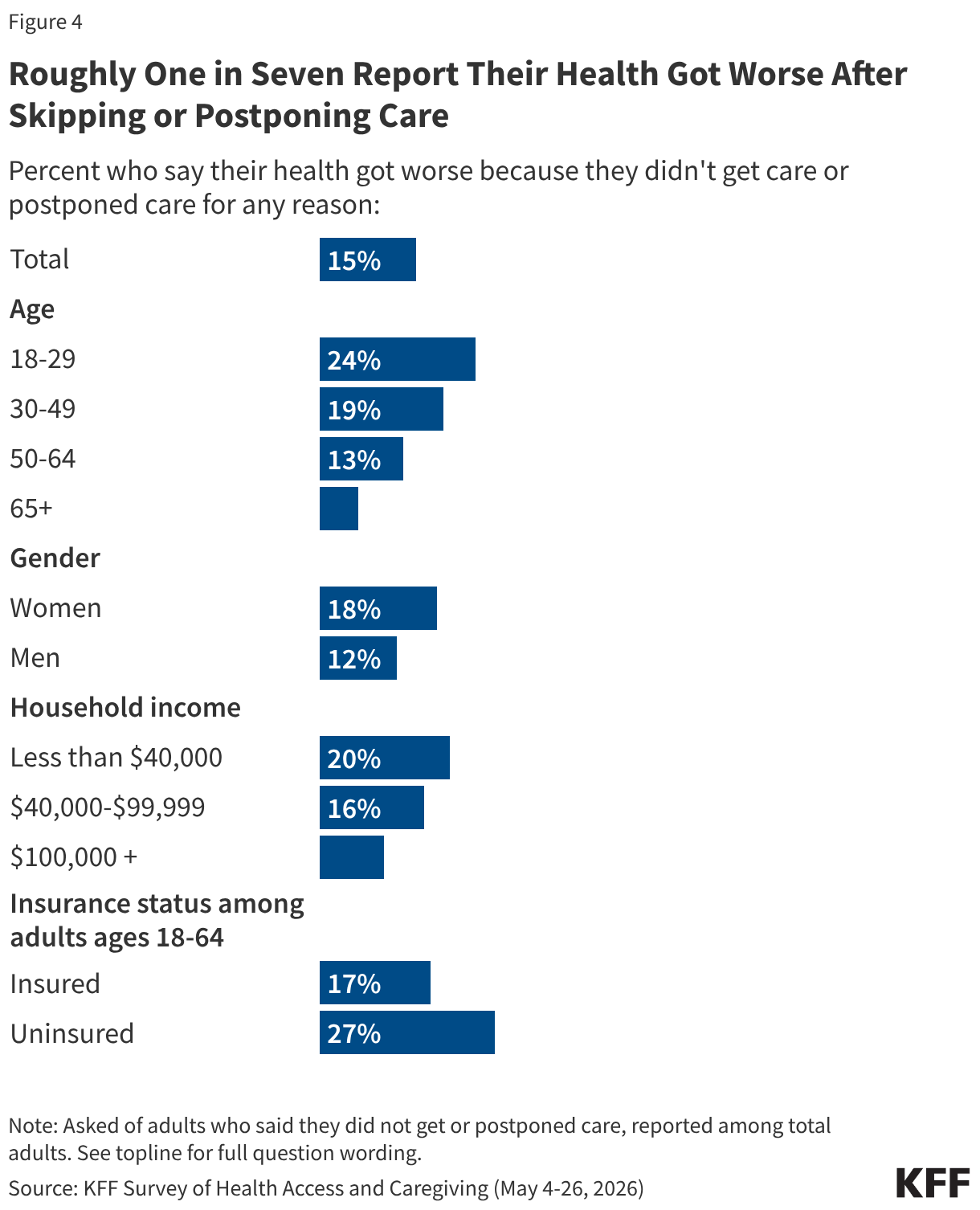
Delaying or skipping medical care carries tangible and often severe health consequences. Approximately one in seven adults report that their overall health deteriorated because they skipped or delayed treatment for any reason. Among adults under 65, the uninsured are significantly more likely than the insured to suffer subsequent health declines. Age also plays a distinct role, with younger adults under 30 being four times as likely as adults aged 65 and older—most of whom benefit from Medicare coverage—to report that their health worsened after postponing care.
Problems Paying Medical Bills
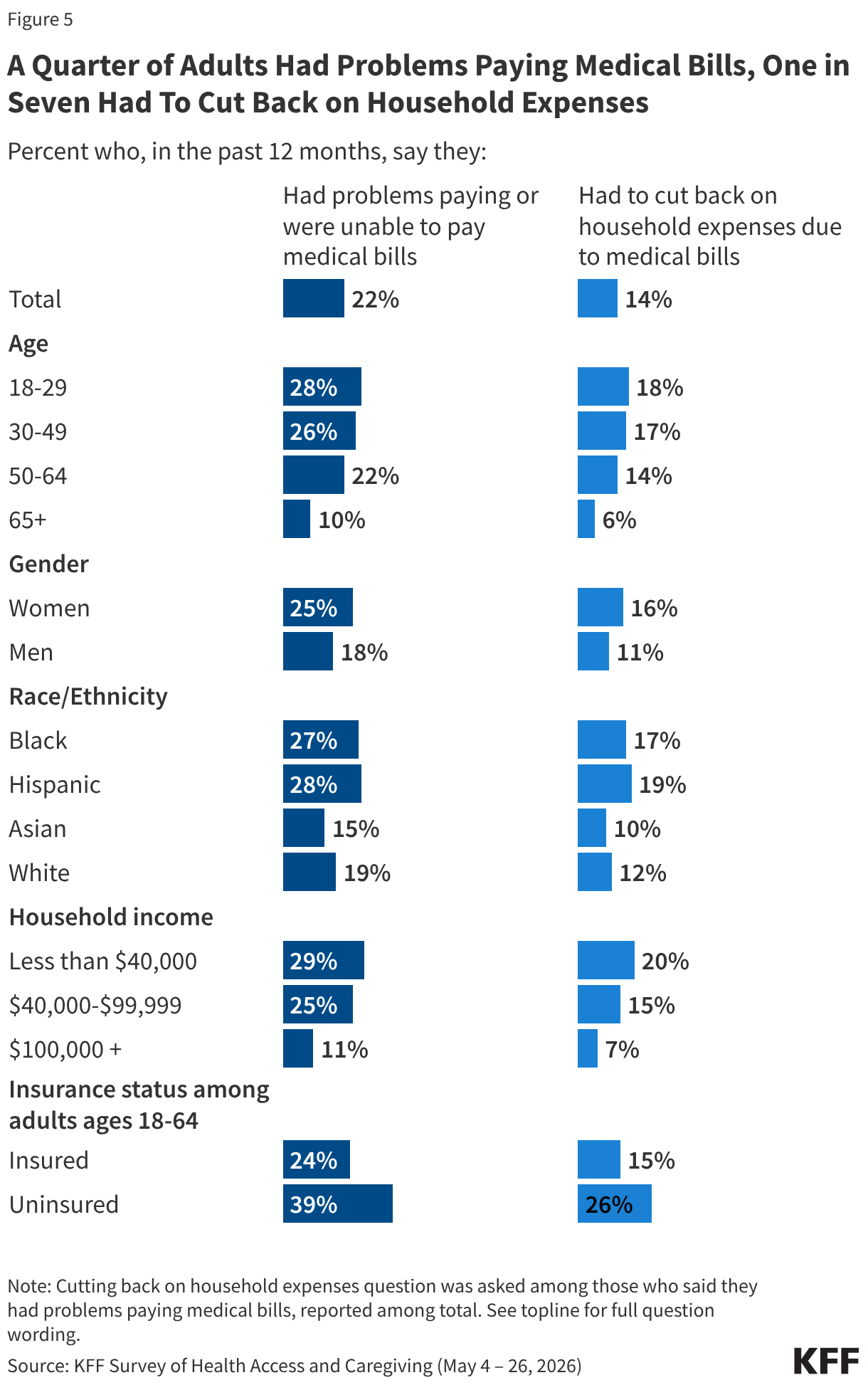
Financial strain manifests not only in the avoidance of care but also in the accumulation of unpaid debt. About one in five adults overall report experiencing problems paying or finding themselves entirely unable to pay medical bills over the past year. These bills encompass charges from physicians, diagnostic tests, laboratory work, and medications. Younger adults, women, Hispanic and Black adults, lower-income earners, and uninsured individuals under 65 bear the brunt of these financial hurdles.
The inability to meet medical expenses triggers broader economic repercussions for households. One in seven adults report having to cut back on essential household expenditures—such as food, clothing, and other basic necessities—specifically to cover health care costs. This coping mechanism is particularly prevalent among lower-income earners and uninsured adults under 65, who must frequently sacrifice basic living standards to address medical obligations.
Disproportionate Challenges for LGBTQ+ Populations and Chronically Ill Patients
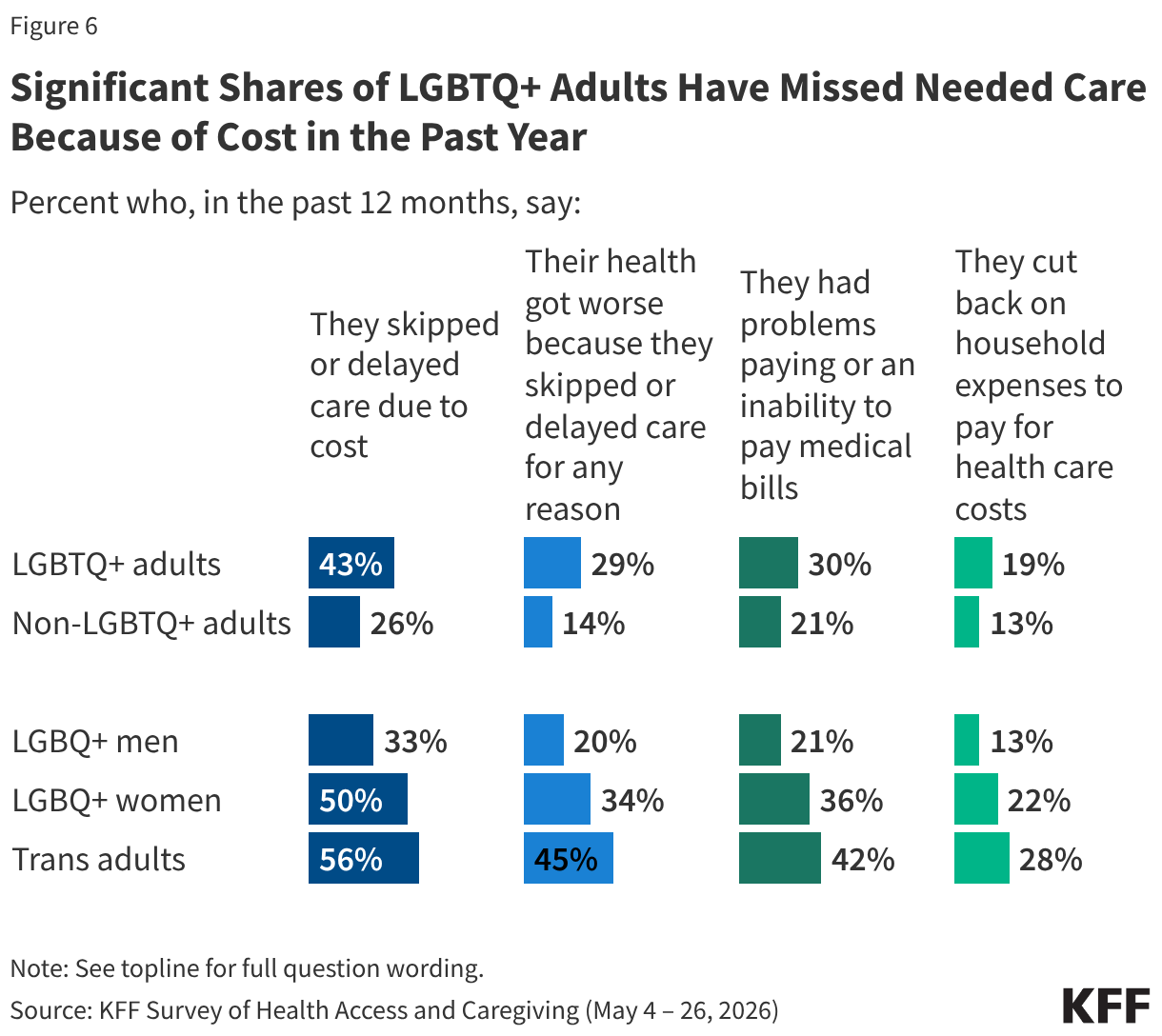
Certain segments of the population face magnified challenges when navigating health care affordability and access. LGBTQ+ adults, who tend to be younger and possess lower average incomes than their non-LGBTQ+ peers, report disproportionately high rates of financial distress regarding medical care.
More than four in ten LGBTQ+ adults report skipping or delaying care due to cost within the past year, compared to about a quarter of non-LGBTQ+ adults. Additionally, roughly three in ten report problems paying medical bills, and nearly two in ten have cut back on basic household expenses to meet those costs. Transgender adults report even higher vulnerability, with over half delaying care due to cost and a significant portion noting subsequent declines in their overall health.
Patients managing multiple or complex health conditions encounter similarly acute difficulties. Roughly one-third of working-age adults with three or more active health conditions report forgoing necessary care due to cost, and a quarter state that their health declined as a result. These patients also face steep medical bills, with over a third reporting payment problems and nearly a quarter cutting back on household essentials to manage their treatment expenses.
Prescription Drug Costs and Coping Mechanisms
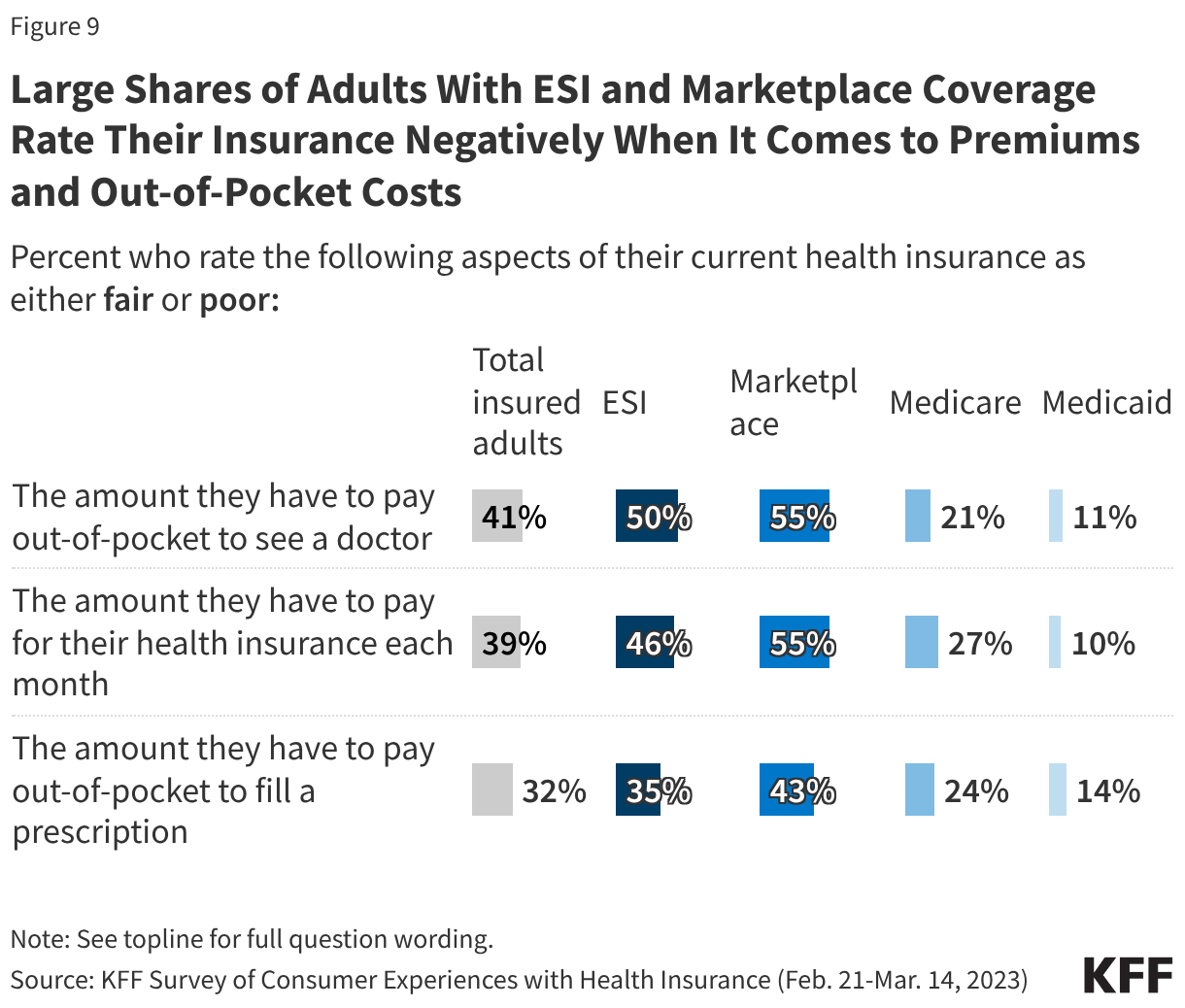
The rising price of prescription medications drives many patients to alter how they take their prescribed treatments. Roughly three in ten adults report taking an over-the-counter drug instead of filling a prescription due to cost concerns. Similarly, about a quarter report leaving prescriptions unfilled, and approximately one in five admit to cutting pills in half or skipping doses to stretch their supply.
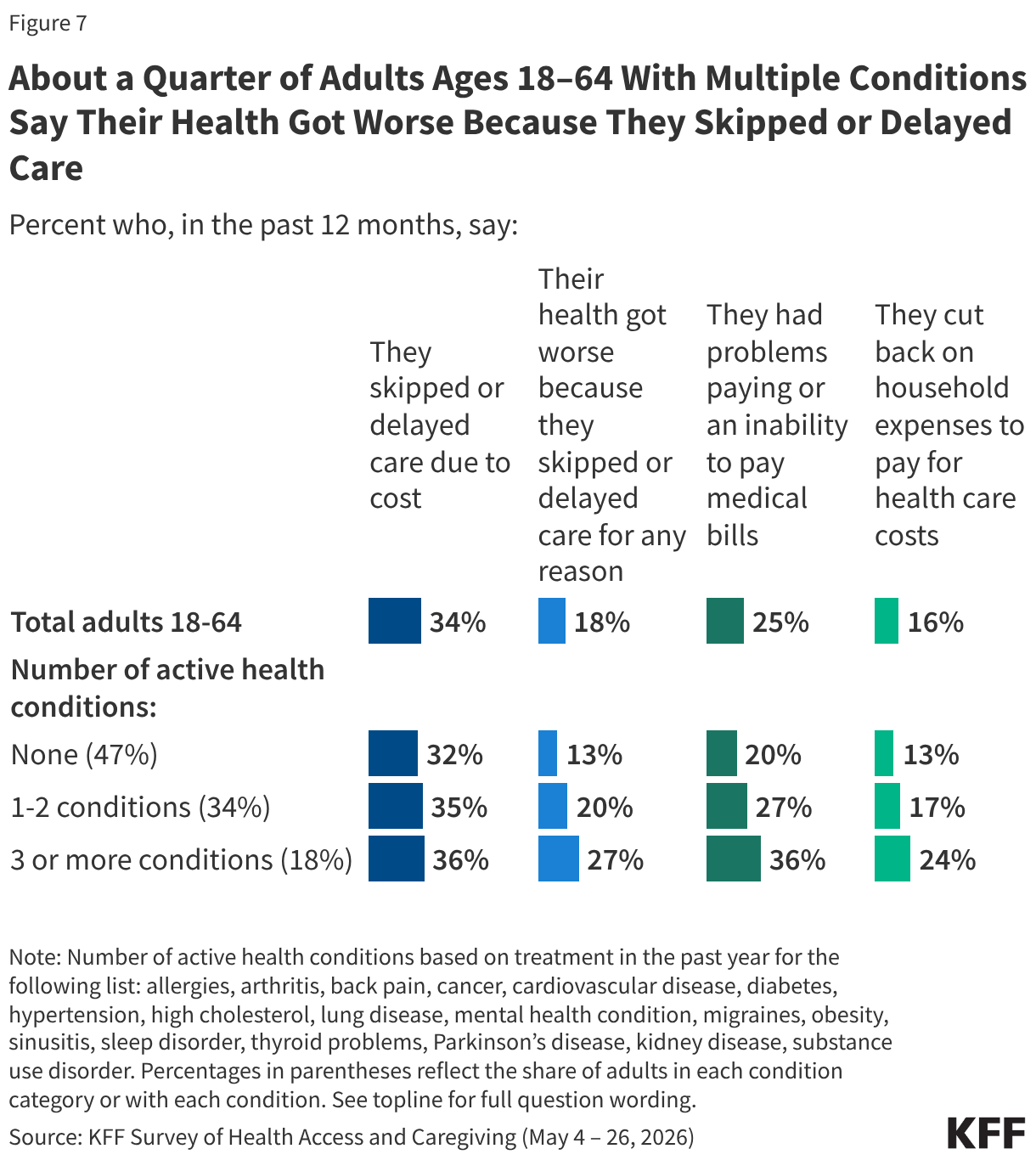
Altogether, more than four in ten adults report utilizing at least one of these cost-saving measures over the past year, continuing a steady upward trend observed in previous polling cycles. Middle- and lower-income households are significantly more likely to resort to these measures compared to wealthier households. Uninsured working-age adults, women, and Black and Hispanic respondents also report taking prescription-rationing steps at higher rates than their demographic counterparts.
Health Insurance Ratings and Long-Term Financial Vulnerability
While health insurance provides a vital buffer against catastrophic medical expenses, many policyholders still grapple with significant out-of-pocket costs and monthly premiums. Most insured adults rate their coverage positively regarding prescription co-pays, doctor visit costs, and monthly premiums. However, at least three in ten rate their insurance as fair or poor across these metrics, with satisfaction levels varying significantly by coverage type.
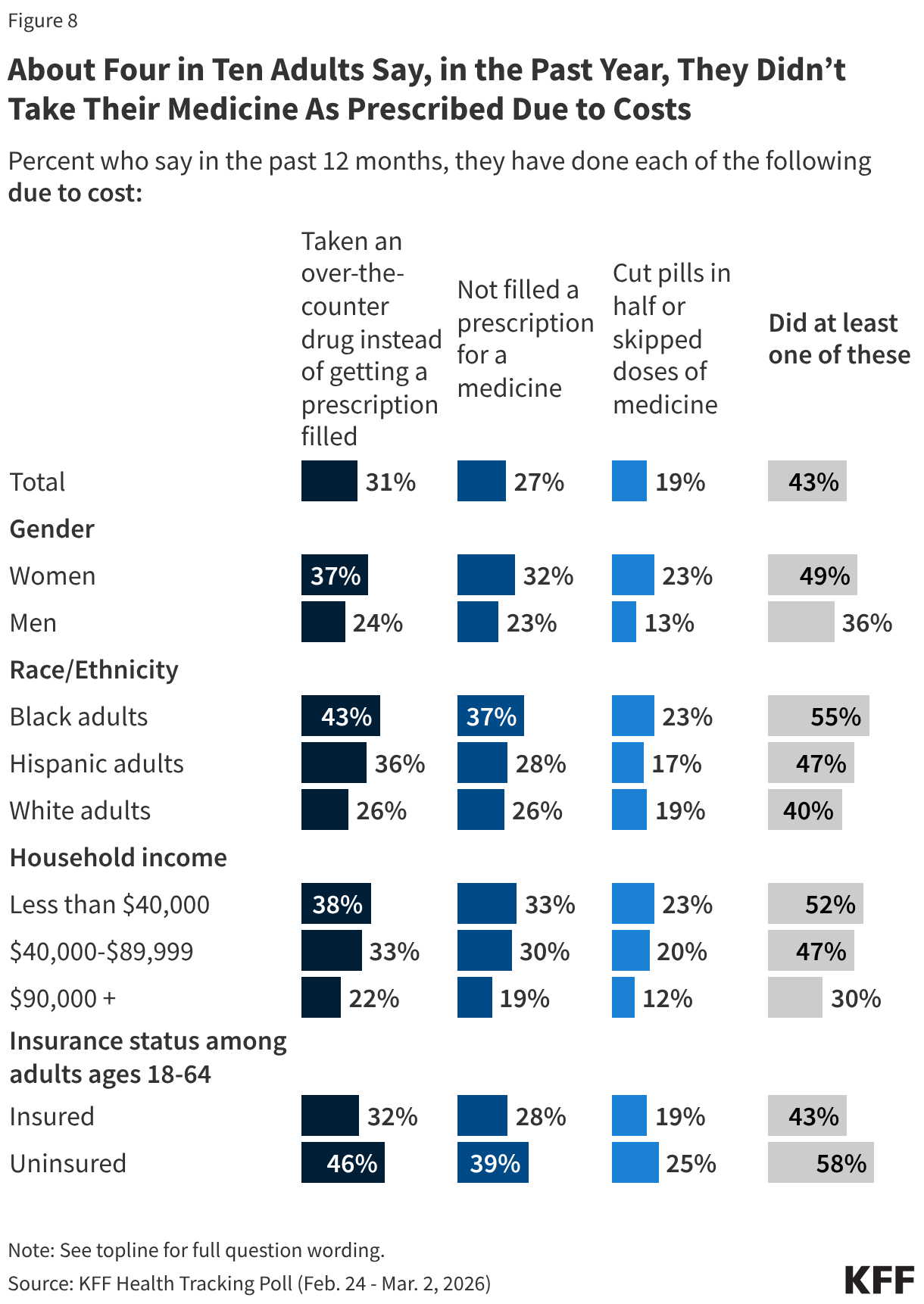
Adults with private insurance—whether obtained through an employer or a health insurance marketplace—tend to give lower ratings to their monthly premiums and out-of-pocket costs compared to those enrolled in Medicare or Medicaid. Medicaid enrollees generally report the highest satisfaction regarding affordability, reflecting structural protections such as minimal or absent monthly premiums and regulated copays.
Beyond routine medical bills and prescriptions, long-term financial liabilities remain a profound source of anxiety. Extensive historical and ongoing research into health care debt reveals that a substantial portion of the U.S. population carries medical or dental debt, stemming from unpaid bills, provider payment plans, bank loans, credit cards, or money borrowed from friends and family.
Many households remain perpetually vulnerable to unexpected health expenses. Approximately half of all adults state they would struggle to pay an unanticipated out-of-pocket medical bill of five hundred dollars without incurring debt or failing to pay it entirely. For older adults and those approaching retirement age, the potential costs of long-term care—such as nursing homes, assisted living facilities, and paid home health aides—generate widespread anxiety, underscoring the deep and enduring financial shadow that health care costs cast over American society.