The classic "I’ve fallen and I can’t get up" pendant has officially become a relic of the past. Modern medical alert systems have progressed entirely beyond that original single-purpose concept, transforming into comprehensive safety hubs that can ultimately determine whether an older adult remains independent at home or must transition to a structured care facility.
According to data compiled by AARP, almost 90 percent of people aged 65 and older want to stay in their homes rather than move to a formal care facility. Because independent living remains the preferred standard for aging populations, the technology supporting it has rapidly matured to meet modern demands. Market analysts indicate that the global medical alert systems market size is projected to reach $11.8 billion, driven directly by an escalating consumer demand for advanced safety monitoring and proactive health tracking tools.
The Old Medical Alert Standard and Its Limitations
To understand the scope of today’s technology, it helps to examine the legacy format. The traditional system relied on a wearable button connected to a localized base unit, which then depended on a standard landline to contact a monitoring center. While groundbreaking for its time, it was remarkably simple and severely limited in daily application.
Those older systems only functioned if an aging adult remembered to wear the device, stayed within a few hundred feet of the base station, and remained conscious enough to physically press the button after experiencing an emergency or a fall. If a user wandered into the yard, visited a neighbor, or lost consciousness immediately upon impact, the legacy device failed to bridge the communication gap, leaving families vulnerable to prolonged delays in emergency response.
What Advancements Have Modern Medical Alert Systems Made?
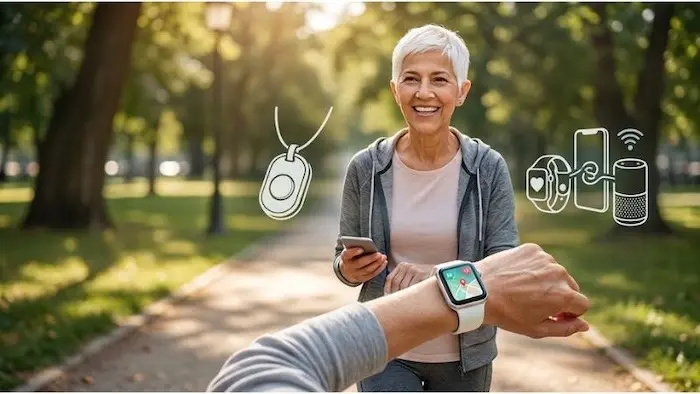
Today, wearable artificial intelligence devices are transforming these tools from basic, reactive alarm triggers into real-time health-monitoring systems designed for proactive care. The technology has shifted away from tethered base stations toward versatile cellular networks and ambient monitoring devices that provide seamless protection across entire households and outdoor environments.
When evaluating the shift from traditional to modern options, industry observers point to three distinct tiers of safety technology currently available to caregivers.
The traditional standard remains tied to home bases with limited ranges of roughly 800 feet, basic impact triggers that frequently generate false alarms, and zero caregiver app integration beyond automated phone calls. This model primarily suits budget-conscious, homebound adults whose mobility patterns rarely change.
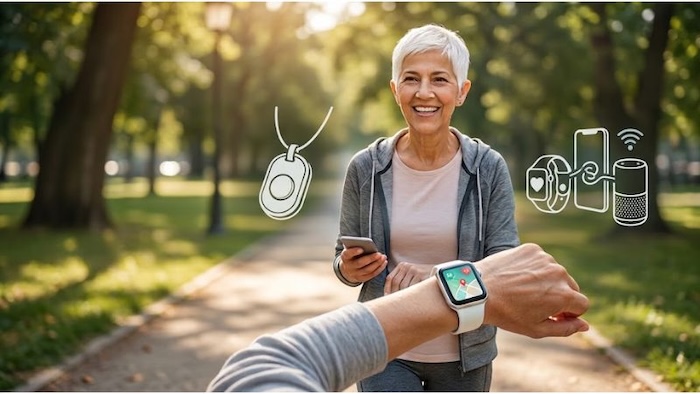
In contrast, modern smartwatches utilize unlimited nationwide cellular coverage alongside built-in GPS tracking. These devices feature AI-filtered accelerometers and gyroscopes that dramatically reduce false alarms while providing real-time location tracking, battery status updates, and comprehensive call logs via connected mobile applications. They are ideally suited for active seniors seeking a discreet, everyday design that matches modern aesthetics.
Meanwhile, whole-home ambient sensors represent an entirely different approach to safety. Utilizing Wi-Fi and wall-mounted radar monitors, these systems provide comprehensive coverage without requiring the user to wear a physical device. They feature passive radar capable of detecting falls without a wearable, along with activity tracking and routine deviation alerts. This approach is particularly effective for seniors with cognitive decline or dementia who frequently refuse to wear traditional buttons or smartwatches.
How to Choose the Right Medical Alert System
Despite these technological leaps, caregivers face the ongoing challenge of matching the medical alert system to a loved one’s actual needs and cognitive abilities. An advanced smartwatch featuring a complex touchscreen interface, for instance, will inevitably fail for a user dealing with severe dementia or advanced macular degeneration, who might find the display confusing or overwhelming.
Experts emphasize that a medical alert system is never a substitute for direct supervision or structured in-home care. Instead, these technologies function as vital risk-mitigation tools designed to buy families precious minutes during an unexpected emergency. Reviewing foundational resources, such as the National Institute on Aging’s fall prevention guidelines, remains a mandatory first step before relying solely on a wearable device or automated sensor network.
Frequently Asked Questions About Modern Medical Alert Systems
Questions regarding coverage and functionality frequently arise as families navigate the expanding market. Original Medicare, encompassing Part A and Part B, does not cover medical alert systems because they are not classified as durable medical equipment. However, some Medicare Advantage Part C plans or state Medicaid programs may offer limited coverage, equipment discounts, or financial reimbursement depending on local regulatory frameworks.

Regarding connectivity, modern systems have entirely eliminated the need for a traditional landline. While older iterations required a standard telephone jack to transmit signals, today’s devices utilize built-in cellular networks, allowing them to function reliably anywhere cellular service is available.
Automatic fall detection has likewise grown more sophisticated. Using integrated accelerometers and gyroscopes, devices continuously monitor changes in motion, orientation, and speed. When the internal software identifies a movement pattern consistent with a hard, uncontrolled fall, it automatically contacts the monitoring center. This ensures that help is dispatched even if the user is unconscious or physically unable to press a button. Furthermore, caregivers can monitor these automated safety alerts alongside daily medication reminders through connected mobile applications.
The Bottom Line on Modern Medical Alert Systems
Finding the right balance between personal safety and daily independence remains one of the most difficult challenges in modern caregiving. Fortunately, the evolution of medical alert systems has successfully replaced the social stigma of the bulky, outdated panic button with sleek, proactive health hubs.
Whether a family opts for a discrete GPS medical alert watch for an active parent or passive ambient sensors for a loved one navigating cognitive decline, today’s technology is engineered to preserve personal dignity while offering invaluable peace of mind. While no electronic device can ever replace the warmth and watchful eye of dedicated human caregiving, integrating these advanced tools into an overall safety plan ensures that help remains quietly and reliably available when it matters most.
Disclaimer: The information provided in this article is for educational and informational purposes only and is not intended as a substitute for professional medical advice, diagnosis, or a comprehensive physical risk assessment. Medical alert systems and wearable technologies are risk-mitigation tools and should never replace direct caregiver supervision or appropriate in-home care. Always consult with a qualified healthcare provider or occupational therapist before relying solely on technology to manage a senior’s safety and mobility needs.