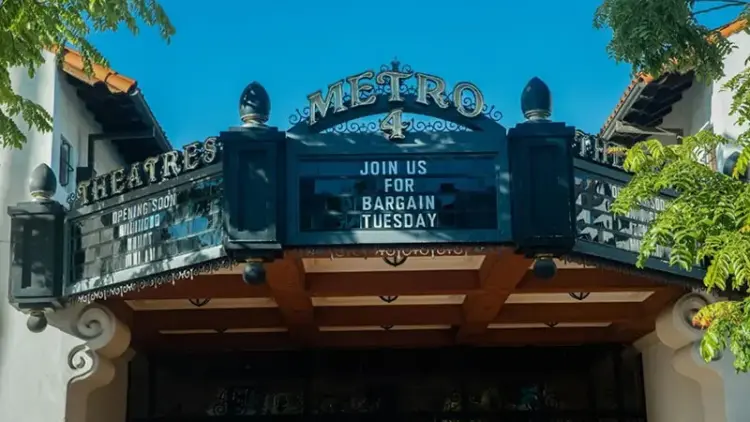
“Want to go see a movie today?” For millions of people with hearing loss, that simple invitation does not always yield a simple answer.
Going to the movies should be a universally enjoyable leisure activity, yet for many patrons, a trip to the local theater is historically fraught with uncertainty. Will assistive listening or captioning devices actually be available at the box office? Will those devices be fully charged and functioning properly throughout the runtime, or will they malfunction halfway through the feature? Too often, moviegoers with hearing impairments find that the answer to these questions is no, turning what should be a relaxing night out into a frustrating ordeal.
That persistent barrier is precisely what motivated accessibility advocates across Virginia, including dedicated members of the Hearing Loss Association of America (HLAA), to push for a comprehensive legislative solution. Their tireless advocacy culminated in the passage of House Bill 602, a transformative measure requiring major movie theater operators in the commonwealth to offer open-captioned screenings for widely released films. Taking effect on July 1, 2026, the new law applies to any movie theater company with five or more locations across the state, ensuring that more residents can share the communal magic of the cinema experience with their family and friends.
“My husband Ken has hearing loss,” says Claire Fornsel, co-vice president of the HLAA Virginia Beach Chapter. “In the past, he would go along to movies he couldn’t hear, just because he loves me. Now, with the passage of the Virginia movie theater open captioning legislation, we can enjoy the entertainment together.”
A Clearer Picture on the Silver Screen
Unlike closed-captioned devices designed for individual users—which can be cumbersome, easily lost, frequently broken, or socially awkward to operate—open captions display dialogue, speaker identifications, and crucial sound cues directly on the main movie screen for the entire audience to see. Because the text is integrated into the projection itself, no specialized hardware is required, eliminating technical failures that have long frustrated theatergoers with hearing loss.
In addition to mandating open-captioned screenings, HB 602 dramatically improves public awareness and transparency. The legislation requires theaters to clearly label these designated viewings with an “OC” designation in their showtimes and promotional materials. Furthermore, theaters must provide clear information about how patrons can request open captioning later in a film’s theatrical run, ensuring that accessibility is not abandoned after opening week.
Together, these systemic changes empower people with hearing loss—as well as anyone else who simply prefers open captioning—to make entertainment plans with the same confidence as any other consumer. The policy effectively replaces years of uncertainty and exclusion with dignity, equal access, and shared cultural experiences.
Grassroots Advocacy Meets Legislative Action
The groundbreaking legislation was championed by Delegate Phil Hernandez of the 94th District. Hernandez was first approached in August 2025 by a local accessibility advocate who had been inspired by successful open-caption policies enacted in other states. Hernandez, whose sister is deaf, immediately embraced the cause as a natural extension of his broader legislative commitment to making the commonwealth more accessible for all residents.
To craft a viable and effective bill, Hernandez sought guidance and strategic support from Neil Snyder, the HLAA’s director of public policy, alongside dedicated disability advocacy organizations such as Access Virginia and the Virginia Department for the Deaf and Hard of Hearing (VDDHH). Building on this strong coalition, the bill was formally introduced in January 2026. It moved swiftly through both chambers of the Virginia General Assembly before being signed into law on April 6, 2026, by Governor Abigail Spanberger.
The legislative victory was propelled by robust grassroots advocacy led by members of the HLAA Virginia Beach, Virginia Peninsula, and Greater Richmond chapters. Kenneth Reichert, president of the HLAA Virginia Beach Chapter and a 30-year U.S. Navy veteran with service-connected hearing loss, became a prominent voice for the community. He spoke publicly about the urgent need for accessible moviegoing experiences during a town hall event hosted by Delegate Hernandez in Norfolk.
Other HLAA members across the commonwealth, including chapter leaders Angela Hill, Kathy Richter, Keith McAllister, Claire Fornsel, Richard Wiltse, Bobby Graves, and Larry Herbert, actively mobilized. They contacted state lawmakers, shared personal stories, and urged strong bipartisan support for the measure. Their collective success underscores how deeply committed local advocates can drive sweeping societal change when they collaborate effectively with policymakers and community stakeholders.
Beyond Hearing Loss: A Win for Families and Communities
The positive ripple effects of Virginia’s new law will extend far beyond the deaf and hard-of-hearing community. As Claire Fornsel and Ken Reichert’s experiences illustrate, spouses, family members, and friends who do not personally require captions can now share cinematic experiences fully and comfortably with their loved ones.
“Imagine grandparents taking their grandchildren to see the latest Disney or Pixar film,” Reichert says. “In the past, hearing loss might have made the outing frustrating or even impossible. With open-captioned screenings, the whole family can enjoy the film together without the need for specialized equipment.”
Moreover, educational research highlights that viewing media with captions can reinforce literacy skills in school-age children, regardless of their hearing ability, by reinforcing the connection between spoken words and written text in real time. English-language learners also frequently rely on captions to strengthen vocabulary and language comprehension. Advocates point out that a growing demographic of younger viewers already routinely watches video content with captions enabled simply out of personal preference, signaling a broader cultural shift toward universal accessibility.
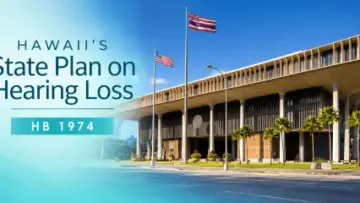
With this legislative milestone, Virginia joins a rapidly expanding national movement. States and districts including Hawaii, Maryland, Washington, D.C., New York City, and Washington State have already adopted open-captioning regulations for movie theaters. Each regional victory helps pave the way for other jurisdictions to follow suit, creating a more uniform standard of entertainment accessibility nationwide.
For advocates across the country, these consecutive wins serve as a powerful reminder that meaningful progress often begins when ordinary community members speak out, share their lived experiences, and work together toward a common goal.
As the HLAA continues its nationwide advocacy work, the organization is actively tracking similar open-caption bills currently moving through the Michigan and New York state legislatures. Residents of those states are encouraged to engage with their local representatives through HLAA Action Alerts to support ongoing expansion efforts.