
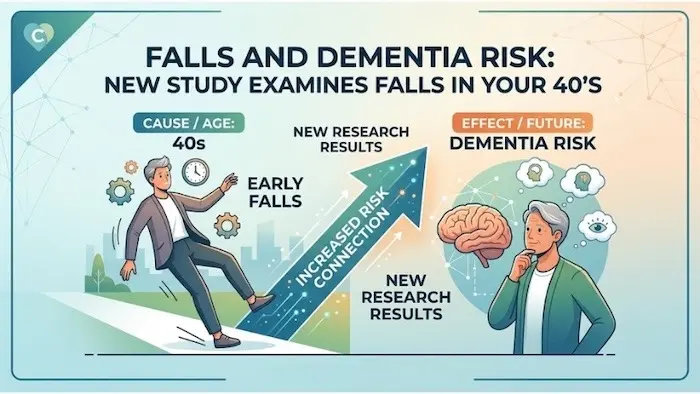
Getting older inevitably requires facing uncomfortable medical realities, yet few are as deeply misunderstood as the established link between physical instability and cognitive decline. For generations, medical science viewed physical injuries and neurological decay as entirely separate issues, treating a stumble or a fall as a simple accident of balance or an unfortunate consequence of aging. However, a growing body of robust clinical data proves that this long-held assumption is fundamentally wrong. When adults in their middle years experience unexplained physical instability, it is rarely just a momentary loss of balance; rather, it serves as a blinking red warning light, indicating underlying neurological changes that demand immediate attention long before traditional memory loss becomes obvious.
For individuals in their 40s and 50s, a simple fall functions as a critical message regarding brain health. Researchers and medical professionals are now urging the public to shift how they perceive these incidents, moving away from dismissing them as mere clumsiness and recognizing them as potential early indicators of cognitive decline. As medical science continues to uncover the complex ways the brain governs motor skills, spatial awareness, and physical coordination, the physical body is increasingly seen as an external mirror of internal neurological status.
New Review Exposes the Hard Truth About Falls and Dementia Risk in Middle-Aged Adults
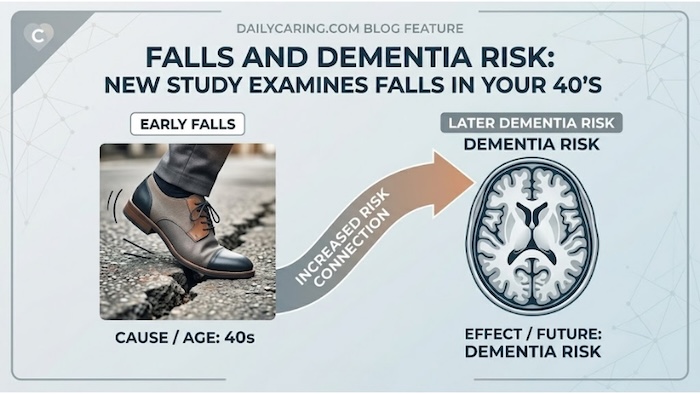
The urgency of this medical shift is underscored by a landmark systematic review published in the Journal of Post-Acute and Long-Term Care Medicine. Analyzing comprehensive data from nearly 3 million participants, the research team at Changchun University delivered findings that are difficult to ignore. According to the study, a single fall after the age of 40 increases an individual’s future risk of developing dementia by 20 percent. More alarmingly, if a patient experiences multiple falls during this stage of life, that future risk skyrockets by 74 percent.
These staggering statistics highlight a grim reality for middle-aged adults who experience unexpected physical instability. Researchers concluded that these incidents act as robust clinical markers of accelerating neurodegenerative decline. They have the power to reveal underlying neurological decay years before a person might notice lapses in their memory or cognitive processing speed. By the time physical instability manifests, the brain has often been quietly battling neurodegeneration that has silently eroded balance, judgment, and spatial orientation.
Early Signs of Dementia: What Recent Studies Confirm
The Changchun University review is far from an isolated finding, as independent research from several premier institutions fully supports this disturbing medical trend. Investigators from the Washington University School of Public Health recently uncovered deep connections between physical falls and the onset of Alzheimer’s disease. Their data reveals that unexpected falls signal a much faster rate of cognitive decline, placing them on par with the presence of recognized Alzheimer’s brain proteins as a serious risk factor for long-term cognitive impairment.

Further reinforcing these conclusions, a massive epidemiological study conducted out of Brigham and Women’s Hospital analyzed health records from two million Medicare patients. The findings revealed that an astounding 10.6 percent of older adults who suffered a traumatic fall were subsequently diagnosed with Alzheimer’s disease or a related form of dementia within just one year of the incident. This rapid transition from physical trauma to a formal neurological diagnosis emphasizes that the connection between falls and dementia risk is an established medical reality that patients and physicians can no longer afford to ignore or brush aside.
Recognizing Early Signs of Dementia Through Physical Trauma
The physical trauma resulting from a fall is intrinsically tied to the quiet progression of Alzheimer’s disease and other forms of cognitive impairment. Neurological professionals confirm that the brain changes associated with these conditions typically begin years before a formal diagnosis can be made. As these degenerative processes slowly damage the brain’s internal architecture, they subtly impair the systems responsible for keeping the body upright and coordinated.
When underlying brain atrophy finally results in a fall, the resulting physical trauma to both the brain and the body can aggressively accelerate the progression of the disease. Furthermore, adults who experience a severe fall often develop a profound fear of walking or moving independently. This psychological aftermath frequently leads to immediate social isolation and a drastic reduction in everyday physical activity, creating a vicious cycle that further speeds up cognitive decay and overall physical decline.

Taking Action: Preventing Falls to Protect Cognitive Health
Because the stakes are so high, medical experts emphasize that hope alone is not a viable strategy when facing the threat of cognitive decline; proactive intervention is required. Preventing falls must become a primary focus for anyone wishing to maintain their neurological and physical health as they age. This involves a multi-layered approach, beginning right inside the home where the vast majority of accidents occur.
Conducting a thorough home safety audit is a vital first step, as removing trip hazards, installing secure grab bars, and dramatically improving indoor lighting can drastically lower the immediate physical danger. Alongside environmental changes, scheduling a comprehensive clinical assessment with a healthcare provider is essential if unexplained falls occur after the age of 40, allowing medical professionals to evaluate baseline cognitive function and investigate potential underlying causes.
Additionally, patients must take a close look at their current prescriptions. Many commonly prescribed medications cause severe dizziness, drowsiness, or orthostatic hypotension, all of which directly contribute to physical instability. Working closely with a primary care physician to review potential drug interactions and adjust medication regimens can eliminate avoidable triggers for balance issues.
The Bottom Line: Do Not Ignore the Warning Signs
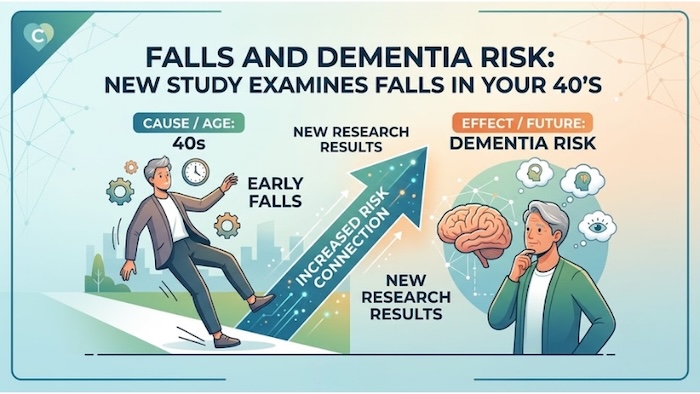
The medical consensus across multiple major research institutions is now undeniably clear. A fall in middle age is neither a normal part of the natural aging process nor a simple moment of casual clumsiness. Instead, it frequently serves as an early warning system for the brain, acting as a powerful clinical marker for cognitive decline that shares the exact same risk profile as established Alzheimer’s biomarkers.
For individuals or families noticing unexplained falls, addressing the possibility of underlying physical and neurological risks is paramount. By taking steps to schedule professional clinical assessments, securing living spaces against environmental hazards, and prioritizing overall physical stability, patients can work to break the destructive cycle of neurodegenerative decay. Ultimately, waiting for the next fall to occur is a dangerous gamble with long-term cognitive health that modern medicine advises against.
Disclaimer: The content provided is for informational and educational purposes only and does not constitute professional medical advice, diagnosis, or treatment. Always seek the advice of a physician or other qualified healthcare provider with any questions regarding a medical condition or physical injury.



