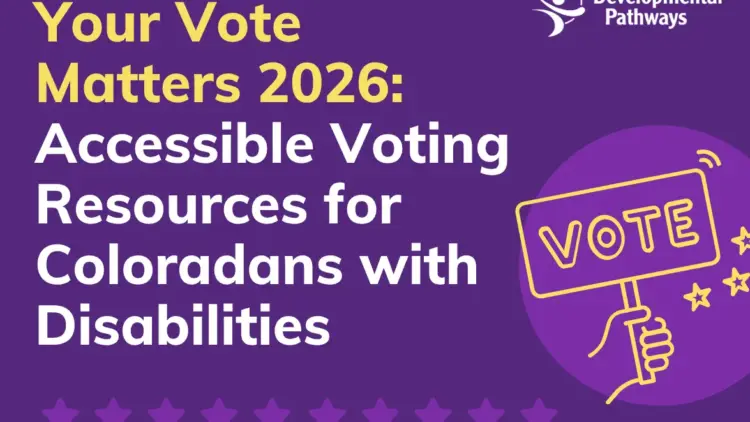
As the political landscape shifts toward the upcoming 2026 election cycle, advocacy groups and community organizations are redoubling their efforts to ensure that every eligible citizen can make their voice heard at the ballot box. At the heart of this movement is a striking statistic regarding voter participation among individuals with disabilities. According to data highlighted by Developmental Pathways (DP) and supported by federal research from the U.S. Election Assistance Commission and Rutgers University, if voters with disabilities cast their ballots at the exact same rate as voters without disabilities, roughly two million additional voices would actively participate in shaping American democracy.
To bridge this participation gap locally, Developmental Pathways has launched an extensive initiative aimed at empowering Colorado residents with disabilities to fully engage in their communities through the electoral process. DP has released a comprehensive suite of information and resources tailored specifically to support Colorado voters as they prepare for the 2026 elections, emphasizing that civic participation is a fundamental right that belongs to everyone, regardless of ability.
Your Right to Vote
A central pillar of the initiative is reinforcing the legal protections and rights guaranteed to Colorado voters. Misconceptions surrounding guardianship and legal decision-making often create unnecessary confusion and intimidation among voters with disabilities and their families. To counter this, DP explicitly clarifies that under Colorado law, having a designated guardian or another legal decision-maker does not restrict or affect an individual’s right to vote.
Any resident who is 18 years of age or older and satisfies Colorado’s basic eligibility requirements retains the full legal authority to cast a ballot and make independent choices on election day. To provide absolute clarity, organizations point prospective voters directly to the official eligibility guidelines maintained by the Colorado Secretary of State, alongside the specialized Voters with Disabilities Frequently Asked Questions page. These resources outline the exact statutory criteria required for voter registration and participation within the state.
Furthermore, voters seeking specialized legal advocacy or clarification on their protections can turn to Disability Justice Colorado. Operating as the state’s designated Protection and Advocacy System, this organization is equipped to help individuals understand their voting rights, explore accessible voting technologies and options, and formally file complaints if their rights are ever compromised or violated during the electoral process. The presence of these robust legal safeguards ensures that voters with disabilities are not only welcomed at the polls but are legally protected throughout every stage of the voting experience.
Make a Plan to Vote
Translating the right to vote into practical action often requires deliberate preparation. To assist voters in navigating the logistics of the upcoming election, Developmental Pathways has developed and distributed a specialized planning tool titled the "My Voting Plan" sheet, which voters can easily print and utilize to outline their schedule, location, and method of casting a ballot.
Logistical accessibility remains a cornerstone of Colorado’s election infrastructure. Every Voter Service and Polling Center (VSPC) across the state is legally required to meet rigorous accessibility standards, ensuring physical entry, privacy booths, and voting equipment accommodate individuals with diverse mobility, sensory, and cognitive needs. In addition to in-person voting at secure VSPC locations, Colorado provides multiple flexible options for returning mail-in ballots securely and efficiently.
To ensure transparency and peace of mind from the moment a ballot is cast or dropped off until it is fully processed, the Colorado Secretary of State provides the BallotTrax online tracking tool. This system allows voters to monitor the exact status of their ballot in real time, offering confirmation when it is mailed, received by election officials, and successfully counted. By utilizing these tools, voters can eliminate uncertainty and take full ownership of their participation in the democratic process.
Understanding Your Ballot
While casting a ballot is the ultimate goal, understanding the contents of that ballot is just as vital to meaningful civic engagement. As elections approach, voters are routinely met with a complex array of candidates, constitutional amendments, and state or local ballot measures. Navigating this vast amount of information requires careful consideration, as numerous organizations publish independent ballot guides representing diverse viewpoints and perspectives.
Because these guides can range from strictly nonpartisan educational summaries to partisan analyses, DP emphasizes the importance of selecting trusted, transparent sources that align with an individual’s personal values and priorities. To assist voters in this crucial phase of preparation, Developmental Pathways has compiled an evolving collection of reliable ballot guides and educational resources designed to foster informed decision-making for the 2026 election. As additional guides, nonpartisan breakdowns, and accessibility resources are published by community partners and civic organizations, the collection will continue to expand, encouraging voters to check back frequently for the most up-to-date information as election day draws nearer.