
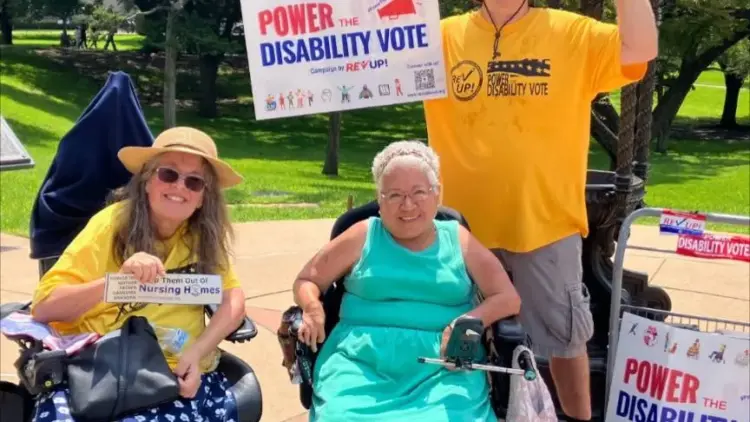
WASHINGTON — The American Association of People with Disabilities (AAPD) has officially announced the nationwide rollout of Disability Voting Rights Week (DVRW) for 2026, marking a significant milestone in an ongoing movement to secure equitable access to the ballot box. Scheduled to take place from September 14 through September 18, 2026, this year’s mobilization brings together grassroots activists, community organizations, allies, and voters with disabilities from coast to coast to celebrate community and harness the political power of a vital voting block.
What began a decade ago as a grassroots initiative launched by dedicated activists in Texas has grown into a powerful national phenomenon. Over the past ten years, DVRW has expanded its reach far beyond its southern origins, evolving into a cornerstone event for civic engagement and advocacy within the disability community. Today, the initiative serves as both a celebration of resilience and a strategic platform designed to build the power of the disability vote through targeted education, community building, and direct civic action.
As the 2026 dates approach, organizers emphasize that the urgency for systemic reform remains as pressing as ever. Across the United States, voters living with disabilities continue to encounter a myriad of persistent barriers that render the democratic process unnecessarily difficult, and in some cases, entirely impossible to navigate. From physical accessibility issues at polling places and poorly trained poll workers to complex absentee and mail-in ballot procedures, these systemic hurdles often foster an atmosphere of intimidation. For many eligible participants, the ideal of a truly accessible democracy—where every single citizen can cast a ballot independently and in a manner that best suits their individual needs—can frequently feel frustratingly out of reach.
Yet, despite the formidable nature of these institutional challenges, organizers and advocates stress that meaningful transformation is forged through the accumulation of deliberate, everyday actions. A resilient democracy is not built overnight by sweeping legislative mandates alone; rather, it is sustained by small, conscientious efforts implemented at the ground level. These vital contributions take many forms: a conscientious poll worker taking extra care to properly place signs and secure clear routes for curbside voting; an engaged citizen taking the time to drive a neighbor to their designated polling location; a thoughtful friend reminding another to request their mail-in ballot well ahead of looming deadlines; or a dedicated advocate providing accessible, easy-to-understand voter education materials to members of the public.
Each of these localized actions possesses the capacity to transform an otherwise stressful or exclusionary voter experience into something positive, affirming, and powerful. Much like the act of voting itself, where a single ballot contributes to a broader electoral outcome, individual choices and community-level interventions grow organically into collective power and lasting systemic change.
In alignment with this year’s overarching theme emphasizing small actions and collective power, the AAPD is extending a wide-ranging invitation to disabled individuals, community allies, civic organizations, and local election workers to step forward and take active roles during the upcoming week. The broader objective is to empower everyday citizens to become "Accessible Democracy Defenders," individuals equipped with the knowledge and resources necessary to identify, challenge, and help dismantle voting barriers in real-time. To facilitate this widespread participation, the organization has made a comprehensive DVRW Toolkit publicly available, offering educational resources, advocacy strategies, and communication tools. Furthermore, participants nationwide are encouraged to dial into the official National DVRW Kickoff Call scheduled for September 14, which will serve as the launchpad for the week’s events and provide guidance on how to organize locally.
Across the country, various state-level REV UP coalitions and allied partner organizations are already translating these guiding principles into vibrant, localized action. These groups are convening community members to learn, organize, celebrate, and actively harness the political influence represented by the more than 40 million eligible disabled voters currently residing in the United States.
In Pennsylvania, for instance, REV UP Philly is preparing to host a community-focused gathering designed to foster social connection alongside civic participation. Their scheduled September 16 event, appropriately titled the "Bites, Ballots, & Belonging Social," brings local residents together to share food, exchange valuable resources, and strengthen the interpersonal networks that underpin effective grassroots advocacy. Meanwhile, in Tennessee, organizers are taking a multifaceted approach that blends practical civic preparation with unbridled community celebration. Their upcoming "Disabled to the Front" event uniquely centers both practicality and joy, offering essential voter registration support and mobility device cleaning services alongside live music and dancing, thereby redefining what civic engagement events can look and feel like for disabled communities.
In the Northeast, REV UP Maine is focusing heavily on voter literacy and empowerment, ensuring that community members are fully informed about their rights and options. On September 14, the coalition will host the Maine Voting Rights Training, an educational session dedicated to helping voters understand the diverse methods available for casting a ballot safely and securely within their state.
Building crucial cross-movement connections and demonstrating profound solidarity, REV UP North Carolina is joining forces with prominent legal and civil rights entities. Partnering alongside Disability Rights North Carolina and the Lawyers’ Committee for Civil Rights Under Law, the coalition is organizing a specialized event for September 15 titled "Our Power, Our Vote: Disability Voting Rights in North Carolina." This collaborative effort is specifically tailored to help voters prepare for potential obstacles, teaching them how to accurately identify and effectively address accessibility barriers when they arrive at the polling place.
These dynamic initiatives represent only a fraction of the diverse ways communities nationwide are showing up and making their voices heard for Disability Voting Rights Week 2026. From Alabama to Arkansas, and across Massachusetts and Florida, disabled leaders spanning more than 30 states are stepping forward to share their personal stories, advocate for institutional improvements, and create welcoming spaces that encourage broader participation in the democratic process. Organizers have compiled an extensive directory of state and local events, allowing interested individuals to easily locate and participate in gatherings happening within their immediate geographic areas.
As the launch date for Disability Voting Rights Week approaches, the core message from national coordinators and local advocates remains clear: building a genuinely accessible and inclusive democracy begins with the active participation of each and every individual. Every community and every voter must be afforded the opportunity to engage in the electoral process in the manner that works best for them, effectively utilizing their constitutional power to shape the future of the nation. By exploring scheduled state and local DVRW events, registering for the upcoming National DVRW Kickoff Call on September 14, and stepping up to serve as Accessible Democracy Defenders, citizens everywhere have the opportunity to turn small, localized actions into an unstoppable wave of collective power.



