By HLAA Communications
August 6, 2026
In modern households, television has evolved far beyond a simple medium for entertainment, becoming an essential tool for news, connection, culture, and daily engagement. For millions of viewers with hearing loss, closed captions are the vital bridge that makes television accessible, transforming spoken dialogue and crucial background sounds into readable text on the screen. However, when these captions fail to function properly—whether through missing text, garbled words, or out-of-sync audio—the viewing experience is severely disrupted. The Hearing Loss Association of America (HLAA) is reminding viewers that addressing these shortcomings relies heavily on active participation from the public, emphasizing that reporting captioning errors is a necessary step toward ensuring true media accessibility.
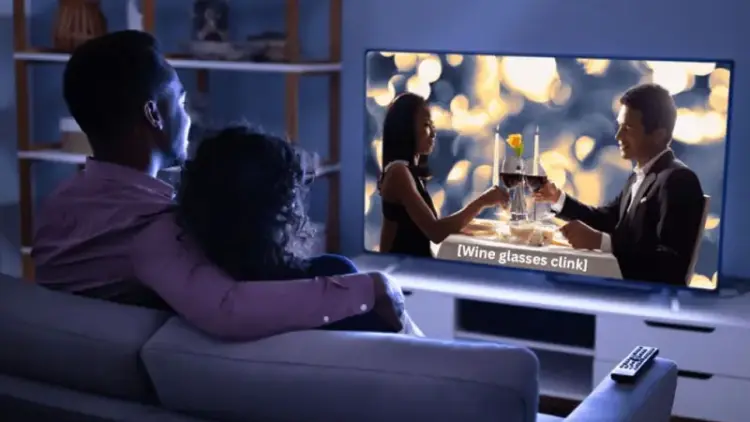
Closed captions are designed to display the comprehensive audio portion of a television program as text, encompassing not only the primary spoken dialogue of the characters or anchors but also identifying important non-speech sounds such as music cues, sound effects, and speaker identifications. To ensure that these services remain reliable and universally accessible, the Federal Communications Commission (FCC) has established strict legal requirements for television programming distributors and broadcasters. These federal standards govern the accuracy, synchronicity, completeness, and placement of closed captions across broadcast, cable, and satellite television platforms, ensuring that individuals who are deaf or hard of hearing can follow programming on equal footing with hearing audiences.
Despite these established federal mandates, television viewers frequently encounter situations where captions fall well short of required quality standards. Common technical and operational problems reported by audiences include missing segments where dialogue goes completely uncaptioned, severe inaccuracies or misspellings that alter the meaning of a scene, and synchronization failures where the text appears seconds ahead of or behind the corresponding spoken words. Additionally, poorly formatted captions can sometimes obstruct critical visual information on the screen, such as graphics, lower-third news banners, or facial expressions, creating an entirely new set of barriers for the viewer.
When viewers encounter these kinds of substandard captioning experiences, the established regulatory framework provides a clear path for recourse, but it depends entirely on the initiative of the audience. The initial step in addressing captioning flaws is to report the specific problem directly to the programming distributor, network, or local station responsible for airing the content. Broadcasters and distributors are legally required to provide contact information for handling accessibility inquiries and complaints, allowing them an opportunity to investigate and rectify technical glitches at the source. If a distributor fails to address the reported issue, or if a persistent pattern of non-compliance is identified, viewers retain the right to file a formal complaint with the FCC, which holds the authority to investigate and enforce federal accessibility regulations.
Drawing a parallel to everyday civic life, the HLAA points out that filing a formal accessibility report or complaint may not always feel like an exciting or immediately rewarding task. Much like a pothole on a municipal street that remains unpatched until a local resident formally notifies the city, systemic accessibility services cannot be effectively monitored, maintained, or improved unless specific problems are thoroughly documented by the people experiencing them. Every single report serves as an actionable data point that helps regulatory agencies and broadcasters identify recurring technical failures, software bugs, or operational oversights that might otherwise go unnoticed.
This community-driven documentation forms an essential part of a broader ecosystem dedicated to hearing wellness and equal access. Organizations like the HLAA continue to advocate for the rights of individuals with hearing loss through a variety of ongoing educational initiatives, public awareness campaigns, and community resources. Among these efforts are regular programming initiatives such as the HearingU Webinars, which HLAA hosts frequently to explore a wide range of hearing wellness topics, provide expert insights, and offer platforms for community engagement. Viewers interested in these educational offerings can access schedules for upcoming live sessions or browse an extensive archive of previously recorded video presentations through the organization’s dedicated channels.
As media technology continues to advance and shift across traditional broadcast networks and modern digital platforms, maintaining rigorous standards for closed captioning remains as critical as ever. By taking the time to report inaccuracies, synchronization issues, and missing text to the appropriate authorities, television viewers actively contribute to higher standards of digital inclusion. It represents a small, manageable action that yields substantial collective results, ensuring that television remains a welcoming and accessible medium for all members of the public.
For those looking to stay informed about ongoing advocacy efforts, federal regulatory updates, and upcoming educational events, the HLAA maintains an active public presence across multiple digital and social media channels. Audiences can follow the organization’s official communications networks and subscribe to regular news updates to ensure they never miss important announcements regarding hearing health, accessibility rights, and community wellness initiatives.