

In an era defined by endless digital pings, multi-screen multitasking, and a near-constant stream of environmental stimuli, maintaining concentration has become one of the modern youth’s most formidable challenges. Educators, parents, and adolescent development experts increasingly recognize that attention is not merely a personality trait or a fixed academic asset, but a foundational executive functioning skill that can be systematically cultivated.
Recent research underscores a reassuring reality for growing minds: children and teenagers can actively learn, practice, and master evidence-based attention strategies to tune out distractions, process complex information, and work effectively toward their personal and academic goals.
For a strategy to be deemed evidence-based, it must be supported by substantial scientific research demonstrating its efficacy. Researchers often identify these approaches through meta-analyses—comprehensive reports that synthesize findings across numerous individual studies. By examining the peer-reviewed science behind various cognitive and behavioral interventions, educators and families can implement targeted approaches that address what attention strategies are, why they work neurologically, and how they can be successfully integrated into daily routines and classrooms.
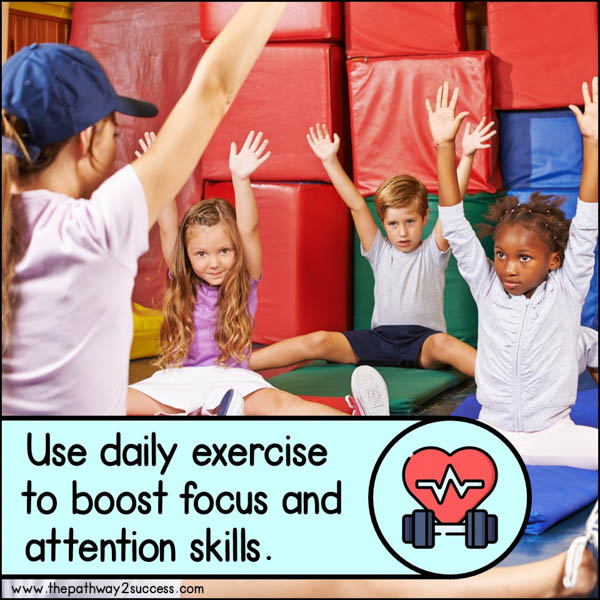
Physical exercise stands as one of the most robustly researched methods for enhancing cognitive control and academic performance. A comprehensive meta-analysis conducted by de Greeff and colleagues in 2018 demonstrated that regular physical activity yields a distinctly positive effect on attention spans and overall scholastic achievement, with the most pronounced benefits emerging from consistent exercise routines sustained over multiple weeks. Further supporting this, a 2013 report by the Committee on Physical Activity and Physical Education in the School Environment emphasized that embedding movement directly into classroom instruction significantly increases student attention and time-on-task behavior.
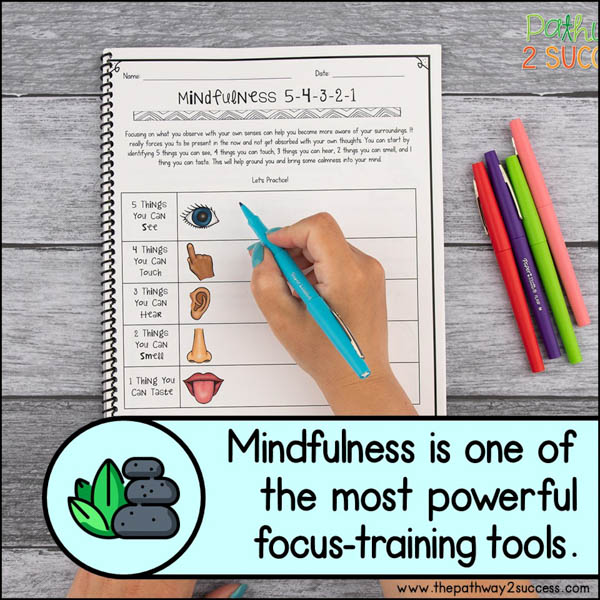
Closely related to physical regulation is the practice of mindfulness and meditation, which centers on anchoring awareness in the present moment. Mindfulness can be cultivated through diverse techniques, including mindful breathing, guided relaxation exercises, and sensory observation. Substantial research compiled by Keng and colleagues in 2013 highlights the broad psychological benefits of mindfulness, such as improved behavioral regulation, reduced emotional reactivity, and enhanced psychological well-being. Furthermore, a meta-analysis by Verhaeghen in 2021 revealed that mindfulness practices produce significant positive outcomes specifically in focused and sustained attention, cementing its status as a powerful cognitive training tool.
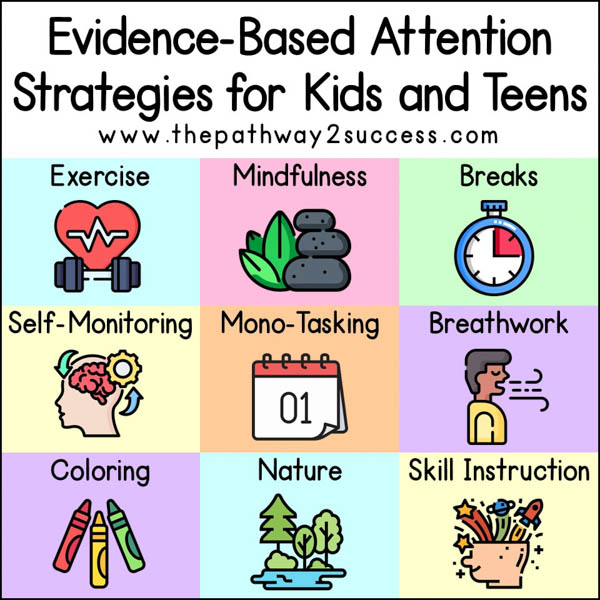
Cognitive stamina is also heavily influenced by how young people navigate periods of rest. Breaks play a vital role in providing the brain with short, necessary intervals to regroup and refresh, which subsequently translates into higher productivity and sharper focus. Experimental findings from Janssen and colleagues in 2014 demonstrated that both passive breaks—such as listening to a narrative—and active breaks involving physical movement yielded measurable improvements in attention. These findings align with broader educational research indicating that routine academic breaks lead to sustained on-task behavior and improved academic outcomes.
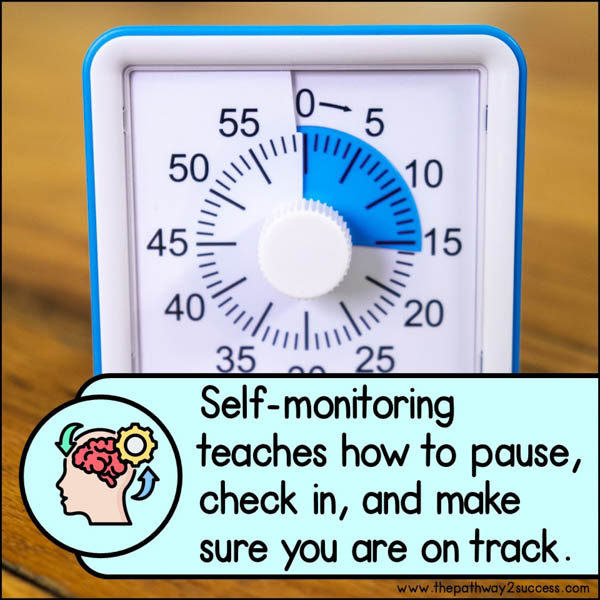
To ensure these efforts translate into lasting behavioral change, self-monitoring serves as a critical internal mechanism. Self-monitoring involves encouraging learners to continuously evaluate, assess, and adjust their own behaviors to ensure alignment with their immediate objectives. For instance, when a student pauses mid-task, recognizes that their attention has drifted, and deliberately deploys a strategy to re-engage, they are exercising metacognitive control. A foundational meta-analysis by Reid and colleagues in 2005 established that self-monitoring is an exceptionally effective intervention for students experiencing attention-related challenges.
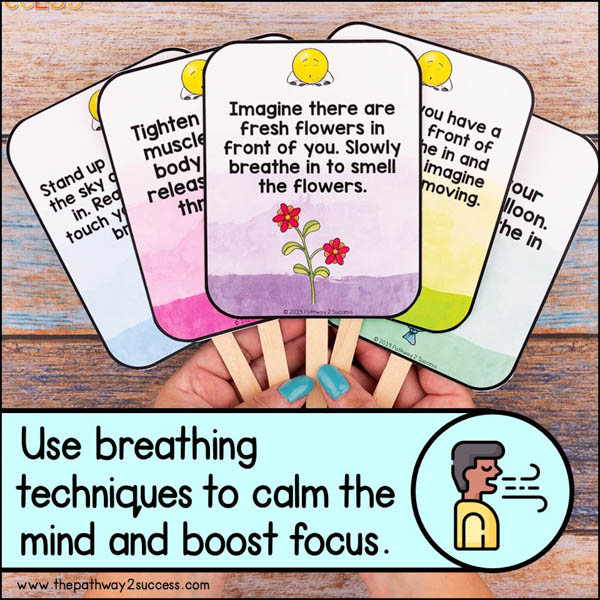
Physiologically, deep breathing techniques offer an immediate bridge between physical relaxation and cognitive alertness. Controlled, purposeful diaphragmatic breathing is strongly supported by scientific literature for its ability to enhance sustained attention while simultaneously mitigating negative emotional affect and reducing physiological stress markers such as cortisol, as demonstrated in a 2017 study by Ma and colleagues. By utilizing deep breathing to soothe the amygdala—the brain’s emotional processing center—young people can transition from a state of stress or distraction to one of calm concentration.
In the digital age, the cultural push toward multitasking often undermines cognitive efficiency. Research by Gopher and colleagues in 2000 clarifies that when individuals attempt to multitask, they are not genuinely processing multiple inputs simultaneously; rather, they are rapidly switching back and forth between tasks. This constant shifting diminishes attention, reduces productivity, increases error rates, and accelerates mental fatigue. Mono-tasking—the deliberate act of focusing on a single objective at a time—serves as the necessary antidote, allowing attention resources to be fully deployed where they matter most.
Beyond the classroom and the home, the natural environment offers powerful restorative properties for the developing brain. Attention Restoration Theory suggests that exposure to natural settings helps mitigate cognitive fatigue. A meta-analysis conducted by Stevenson and colleagues in 2018 confirmed that working memory, cognitive flexibility, and attention control all show measurable improvement following exposure to natural environments. Crucially, research by Berman and others in 2008 demonstrated that even simulated views of nature can yield positive cognitive restorative effects when physical access to the outdoors is unavailable.
Direct skill instruction represents another cornerstone of evidence-based intervention. Synthesizing decades of educational research, Hattie in 2018 highlighted direct instruction as a highly effective approach for helping learners acquire new proficiencies. By explicitly teaching and providing structured practice in areas where students struggle—ranging from reading and writing to task initiation and executive functioning, as noted by Meltzer and colleagues in 2007—educators help students build a comprehensive internal toolbox of actionable strategies.
Creative outlets like coloring have also gained empirical backing as dual-action tools that foster relaxation while sharpening focus. Research by Holt and colleagues in 2019 found that college students engaging in coloring experienced reduced anxiety alongside enhanced selective attention. More recently, a 2024 study by Suryagayathri reported that students who incorporated coloring activities exhibited significant improvements in their capacity to concentrate amidst noisy environments, regulate distractions, and efficiently refocus their attention.
Similarly, yoga bridges physical posture maintenance with mental discipline. A comprehensive review of 18 studies focusing specifically on yoga and children’s attention skills, conducted by Yadav and colleagues in 2022, indicated that yoga practice yields significant enhancements in attentional control, alongside secondary benefits such as improved memory and reduced anxiety.
Cognitive engagement through brainteasers and puzzles offers another interactive avenue for strengthening executive functions. A 2022 study by Winarsunu and Fasikkhah showed that children who collaborated on puzzles in group settings developed stronger self-regulation and attention skills. These findings build upon earlier experimental work by Altun and colleagues in 2016, which found that incorporating a structured brainteaser curriculum three times a week significantly expanded children’s attention spans compared to control groups.
Finally, while sleep is not a traditional classroom strategy, its foundational role in cognitive performance cannot be overstated. In his comprehensive synthesis of sleep science, Dr. Matthew Walker outlined the profound neurological functions performed during high-quality rest, noting that sleep deprivation directly impairs attention span, concentration, and reaction time.
Ultimately, experts emphasize that because children and teens are unique individuals, attention strategies should be selected and tailored to fit personal needs and changing contexts. By experimenting with these scientifically backed approaches and thoughtfully assessing what works best, young people can build sustainable habits that support lifelong focus and well-being.



