WASHINGTON, D.C. and NORWELL, Mass. — Three of the nation’s most prominent federal health leaders are set to address more than 900 rare disease stakeholders during the upcoming national summit in the nation’s capital. The high-profile officials will join patient advocates, industry leaders, policymakers, scientists, and medical professionals at the 2026 NORD® Rare Diseases and Orphan Products Breakthrough Summit®, scheduled for October 25–27 in Washington, D.C.
The annual event, recognized as the nation’s largest and longest-standing gathering dedicated entirely to rare diseases and orphan products, marks its 16th year convening diverse sectors to address complex systemic challenges. Organizers have confirmed that the comprehensive event agenda and registration details are publicly available through the official portal at NORDSummit.org.
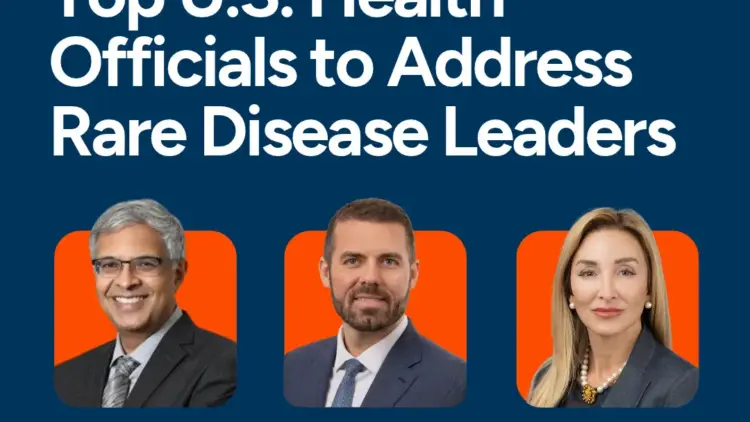
The trio of key federal speakers features Acting Commissioner of Food and Drugs Kyle Diamantas, J.D., representing the U.S. Food and Drug Administration (FDA); Dr. Jay Bhattacharya, M.D., Ph.D., Director of the National Institutes of Health (NIH); and Dr. Stephanie E. Haridopolos, M.D., DABFM, Director of National Health Communications for the Office of the Surgeon General and Principal Deputy Assistant Secretary for Health Policy. These leaders will take center stage to engage directly with attendees, focusing heavily on the most pressing hurdles and emerging opportunities involved in scaling healthcare solutions for the more than 30 million children and adults currently living with rare diseases in the United States.
Pam Gavin, Chief Executive Officer of the National Organization for Rare Disorders (NORD), emphasized the critical timing of the upcoming conference and the significance of high-level government participation.
"Rare disease is at a pivotal moment, and it is important for our community to hear directly from the federal leaders helping shape what comes next," Gavin stated. "Their presence at the NORD Breakthrough Summit reflects our longstanding partnership and continued collaboration with the FDA, NIH and Office of the Surgeon General, as well as their commitment to the rare disease community. The work they lead across research, regulation and public health is critical to building on today’s scientific breakthroughs and translating that progress into meaningful advances for people living with rare diseases."
For the estimated 30 million Americans facing a rare disease diagnosis, the current scientific landscape represents a complex mixture of unprecedented hope and systemic friction. Rapid advancements in biomedical science are continuously unlocking new possibilities for earlier diagnoses and targeted treatments. However, these emerging technologies, complex gene-targeted therapies, and modern approaches to therapeutic development are simultaneously challenging the nation’s established research, regulatory, and healthcare delivery systems to keep pace.
The participation of these three senior federal health officials underscores the vital necessity of cross-sector collaboration. Bringing together government agencies, academic researchers, clinical medicine, the biopharmaceutical industry, and the patient community is viewed as essential to translating laboratory progress into faster diagnoses, broader treatment access, and significantly improved health outcomes for the roughly 1 in 10 Americans impacted by a rare condition.
FDA Acting Commissioner Kyle Diamantas
As Acting Commissioner of Food and Drugs, Kyle Diamantas leads the federal agency tasked with regulating the pharmaceutical drugs, biological products, medical devices, and diagnostic tools that remain absolutely critical to advancing clinical care for rare disease patients. In one of his earliest official actions following his appointment, Acting Commissioner Diamantas organized a dedicated roundtable discussion with rare disease advocates, including representatives from NORD, to listen directly to community concerns regarding how the FDA can better navigate and overcome the unique regulatory hurdles faced by patients and developers.
His scheduled participation at the October summit will provide rare disease stakeholders with a direct channel to hear from primary FDA leadership regarding the specific regulatory priorities, expedited pathways, and modernized frameworks shaping the future of rare disease medical innovation. Regulatory agility remains a frequent point of discussion across the community, as developers of orphan products navigate the complexities of clinical trials for exceedingly small patient populations.
NIH Director Jay Bhattacharya
As Director of the National Institutes of Health, Dr. Jay Bhattacharya oversees the world’s premier public biomedical research enterprise. The agency plays an indispensable foundational role in funding and conducting the foundational scientific discoveries that ultimately underpin novel diagnostics, targeted treatments, and eventual cures.
The NIH is currently deeply entrenched in cutting-edge science central to modern rare disease breakthroughs. This includes the expanding use of artificial intelligence and advanced machine learning algorithms to analyze electronic health record data, as well as vital public-private partnerships designed to develop shared platforms and standardized protocols for gene-targeted therapies. These technological investments aim to dramatically accelerate the development and safe delivery of advanced gene therapies for rare and ultra-rare conditions.
Dr. Bhattacharya’s perspective during the summit is expected to offer crucial insights into how the various independent institutes and centers comprising the NIH coordinate their efforts to comprehensively support both children and adults living with one or more rare disorders.
Director of National Health Communications Stephanie E. Haridopolos
Dr. Stephanie E. Haridopolos brings a deep, longstanding professional commitment to rare disease advocacy into her influential roles within the Office of the Surgeon General and the Department of Health and Human Services. During the summit, Dr. Haridopolos is scheduled to deliver remarks focusing heavily on her ongoing work surrounding newborn screening initiatives. In addition to her speaking engagement, she will be formally presented with NORD’s 2026 Rare Impact Award® in the category of Policy Changemaker.
The recognition follows a landmark year in 2026 for federal health policy regarding early childhood intervention. In 2025, two significant rare conditions—Duchenne muscular dystrophy and metachromatic leukodystrophy—were successfully added to the Recommended Uniform Screening Panel (RUSP). Dr. Haridopolos played a key leadership role in advancing this expansion. Furthermore, she has served as a vital contributor to the Newborn Screening Working Group, an entity established to systematize how the RUSP operates and to systematically expand opportunities for earlier, life-altering diagnoses and medical interventions for infants born with rare genetic conditions.
Federal Regulatory Panels and Broader Event Scope
Beyond the high-profile keynote addresses from Diamantas, Bhattacharya, and Haridopolos, the 16th annual NORD Breakthrough Summit will feature a comprehensive federal regulatory panel. This session will bring together senior representatives from across the FDA’s organizational structure, including the Center for Drug Evaluation and Research (CDER), the Center for Biologics Evaluation and Research (CBER), the Center for Devices and Radiological Health (CDRH), and the agency’s dedicated Rare Disease Innovation Hub. This specialized panel is designed to synthesize multidisciplinary perspectives spanning traditional drug development, biologics, cell and gene therapies, advanced medical devices, and diagnostic testing.
Now spanning a decade and a half of continuous operation, the NORD Breakthrough Summit has established itself as the premier national forum for stakeholders dedicated to the orphan product ecosystem. The 2026 event will draw over 900 diverse attendees representing every facet of the rare disease landscape. Participants will engage in intensive discussions aimed at driving forward momentum across scientific research, commercial therapeutic development, clinical care delivery, legislative policy, and patient access frameworks.
About the National Organization for Rare Disorders (NORD®)
Founded in 1983, the National Organization for Rare Disorders (NORD) operates as an independent, nonprofit, nonpartisan health organization dedicated to driving improvements in the health and daily lives of the more than 30 million Americans living with rare diseases. Working in active partnership with over 350 disease-specific member patient organizations, NORD coordinates an expansive Rare Disease Centers of Excellence network. This network currently spans more than 170 leading medical research institutions and specialized children’s hospitals across the country, collaboratively advancing clinical care, investigator-initiated research, public education, and legislative advocacy on behalf of the entire rare disease community. Additional information regarding the organization’s ongoing initiatives can be accessed directly through rarediseases.org.
Media Contact:
Cheryl Herbert
Vice President, Marketing & Communications
National Organization for Rare Disorders
719-330-4053