QUINCY, Mass. — The National Organization for Rare Disorders (NORD®), the leading national nonprofit serving more than 30 million Americans living with rare diseases, has announced the recipients of its latest seed grant funding cycle. Totaling $145,000, these new awards are designed to support innovative, early-stage studies targeting four critically underserved conditions that have historically lacked sufficient research funding and therapeutic options.
The grants have been awarded to researchers investigating appendix cancer and pseudomyxoma peritonei (ACPMP), epidermodysplasia verruciformis (EV), Peutz-Jeghers syndrome (PJS), and partial trisomy 6q. This vital financial backing is made possible through the collaborative support of the ACPMP Research Foundation—a NORD Member patient advocacy organization—alongside the pseudomyxoma peritonei, Peutz-Jeghers syndrome, and epidermodysplasia verruciformis patient communities. Additional funding was provided by Dylan’s Rare Chromosome Dream Team in partnership with the partial trisomy 6q community, highlighting a unified grassroots effort to drive scientific progress for neglected conditions.
Tracey Sikora, NORD Vice President of Research and Clinical Programs, expressed enthusiasm for the impact of these grants on the rare disease landscape.
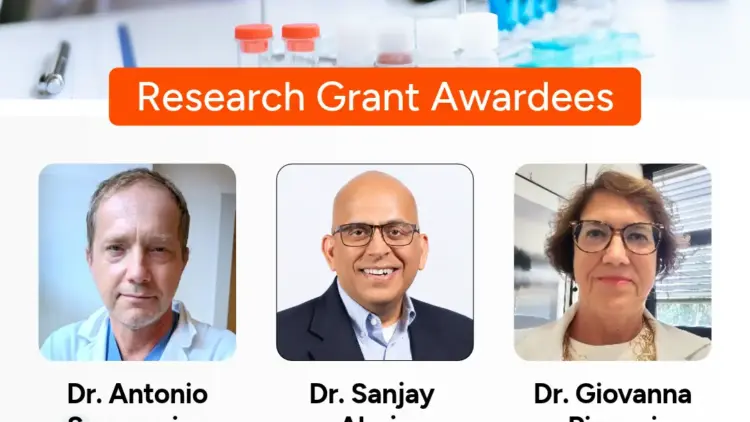
"Huge congratulations to our seed grant recipients — Drs. Sommariva, Ahuja, and Piovani! Their groundbreaking work represents a major leap forward for everyone affected by ACPMP, EV, PJS, and Partial Trisomy 6q," said Sikora. "We’re thrilled to champion innovative research that directly tackles the urgent, unmet needs of rare disease communities. We can’t wait to see how their insights will transform patient care and drive the future of rare disease research."
Targeting New Therapeutic Avenues for Pseudomyxoma Peritonei
One of the newly funded studies is led by Dr. Sommariva, whose research is titled "Analysis of TROP2 expression in Pseudomyxoma Peritonei (PMP)." Pseudomyxoma Peritonei is a rare and challenging condition that originates from the appendix.
Current clinical understanding recognizes that cytoreductive surgery associated with hyperthermic intraperitoneal chemotherapy (CRS-HIPEC) greatly improves survival and quality of life for patients affected by pseudomyxoma peritonei. However, a significant portion of patients cannot undergo this aggressive surgical approach. For these individuals, therapeutic opportunities using systemic chemotherapy are very limited and consist essentially of palliative measures.
Sommariva’s research focuses on a potential new therapeutic target known as the trophoblast cell surface antigen 2 (TROP2). Specific agents targeting TROP2 have already been developed and approved by the U.S. Food and Drug Administration (FDA) for other solid tumors, raising hopes for repurposing or expanding these treatments. Preliminary results have already confirmed the overexpression of TROP2 in PMP tumor cells. The primary aim of the new study is to expand and strengthen this initial evidence while gaining deeper insights into the role of TROP2 in PMP pathogenesis. Establishing this foundational knowledge is a critical prerequisite for identifying a new target for combinatory and adjuvant therapies.
Leveraging Artificial Intelligence in Epidermodysplasia Verruciformis Research
Another recipient, Dr. Ahuja, has secured funding for a study titled "Quantifying Malignancy and Treatment Effectiveness in EV: A Real-World Evidence Study of Surveillance Gaps."
Individuals with epidermodysplasia verruciformis (EV) face a remarkably high lifetime risk of skin cancer due to specific genetic mutations coupled with persistent human papillomavirus (HPV) infections. Despite this severe prognosis, real-world data regarding clinical surveillance and treatment outcomes remains severely limited.
To overcome this information gap, Ahuja’s project utilizes advanced, privacy-preserving artificial intelligence to securely extract critical clinical details directly from unstructured dermatopathology reports. These details include specific HPV subtypes, skin cancer recurrence patterns, and the anatomical locations of lesions. By translating this otherwise hidden information into robust real-world evidence, the project aims to quantify current surveillance gaps and help establish standardized, evidence-based care guidelines to improve malignancy-free survival for the EV community.
In addition to the EV project, Ahuja has been awarded a second grant for a study titled "Risk-Stratification of PJS Complications: A RWE Study on STK11 Variant Effects on Emergency Surgery and Cancer Onset." This investigation centers on Peutz-Jeghers Syndrome (PJS), a rare hereditary condition characterized by a high lifetime risk of severe gastrointestinal complications and aggressive cancers.
Current medical screening guidelines for PJS do not adequately account for the specific underlying genetic mutations driving the disease. Ahuja’s second project also leverages advanced, privacy-preserving artificial intelligence to securely extract complex genetic data from medical records. By correlating specific STK11 mutations with the age of onset for emergency surgeries and malignancies, the research team aims to translate this real-world data into actionable evidence. The ultimate goal is to help establish precision, variant-specific surveillance protocols capable of preventing life-threatening medical emergencies and improving long-term outcomes for patients with PJS.
Investigating Chromosomal Disorders Through Stem Cell Models
The fourth grant has been awarded to Dr. Piovani for a study titled "Partial Trisomy 6q: Clinical Characterization, Genomic Profiling, and Patient-Specific iPSC Models for Functional Disease Investigation."
This research aims to provide a much-needed understanding of partial trisomy 6q, an exceptionally rare chromosomal disorder about which very little is currently known. The scarcity of scientific literature makes accurate diagnosis and genetic counseling extraordinarily challenging for affected individuals and their families.
Piovani’s project will combine clinical and genomic information with patient-derived induced pluripotent stem cell (iPSC) models to investigate how partial trisomy 6q affects human development at a cellular level. Furthermore, the work will seek to identify the underlying biological mechanisms driving the disorder. The results of this study are expected to provide valuable scientific resources for the rare disease community and lay essential groundwork for future research aimed at improving clinical management and patient care.
The Critical Role of Early-Stage Rare Disease Funding
NORD’s Rare Disease Research Grant Program provides essential funding to qualified researchers, supporting new or existing scientific studies and clinical trials designed to generate preliminary data. This initial momentum has the potential to attract much larger funding from major federal agencies, such as the National Institutes of Health (NIH) and the FDA, as well as from corporate sponsors and private foundations.
Since 1989, NORD has awarded more than $9 million in research grants to advance scientific discovery for rare diseases that lack effective treatments and sufficient financial backing. The urgency of these programs is underscored by sobering statistics: fewer than 5% of the approximately 10,000 known rare diseases currently have an FDA-approved therapy. Because developing a single prescription medication requires millions of dollars and years of rigorous testing, early-stage seed funding plays an irreplaceable role in unlocking scientific progress. Over the decades, NORD’s grant program has successfully jump-started urgent rare disease research, supported numerous peer-reviewed publications, and directly contributed to the development of two FDA-approved treatments.
Founded in 1983, the National Organization for Rare Disorders operates as an independent, nonpartisan nonprofit organization dedicated to improving the health and well-being of the more than 30 million Americans living with rare diseases. NORD collaborates with more than 350 disease-specific member patient organizations and maintains a Rare Disease Centers of Excellence network spanning over 170 medical institutions, research facilities, and children’s hospitals across the country. Through these partnerships, the organization continues to advance care, research, education, and advocacy on behalf of the entire rare disease community.