
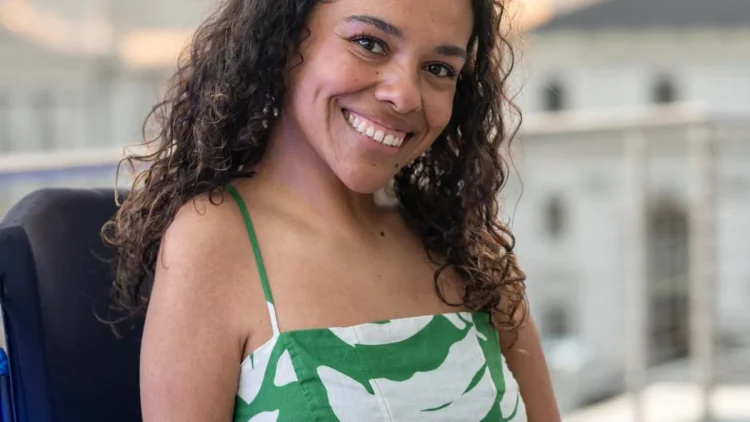
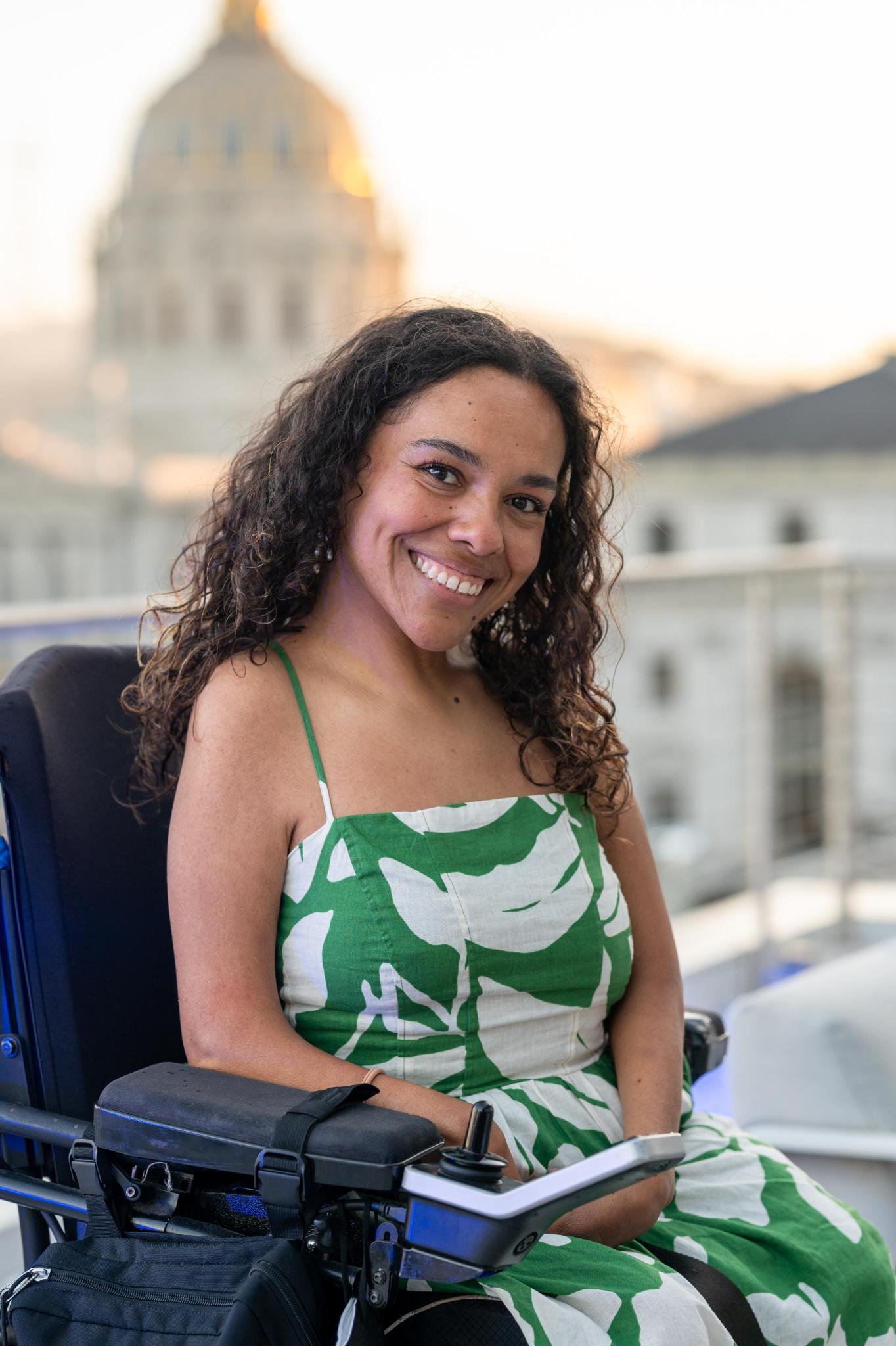
Brittanie Hernandez-Wilson knows what it looks like to see systemic change unfold in real time. As a recipient of the American Association of People with Disabilities (AAPD) 2026 Paul G. Hearne Emerging Leader Award, Hernandez-Wilson has dedicated her career to ensuring that disabled individuals are not only seen and heard, but that they are actively positioned at the center of the legislative decisions that govern their daily lives.
Using the funding and recognition from her AAPD award, Hernandez-Wilson launched "Our Stories, Our Care," a transformative initiative designed to support disabled Californians in sharing their personal narratives as a powerful tool for advocacy. When explaining the deep impact of the project, her face lights up as she describes the profound shift she witnesses in participants who realize the weight and value of their own stories.
For many involved, the initiative marks their first time stepping into the political arena. "For the first time, they were able to speak to legislators and to tell their story," Hernandez-Wilson said. "I could just see how empowering it is and how much it changed their life and their view of what they could do and their view of their own power. There is nothing more exciting to me, and it’s truly an honor to be a part of that in any way."
Hernandez-Wilson is making a tangible difference across multiple fronts: within the California disability advocacy space, in the national fight to protect vital health programs like Medicaid, and directly in the lives of the disabled people she works alongside every day. As a longtime disability justice advocate and the California Lead Homecare Organizer at Hand in Hand: The Domestic Employers Network, she recognized a glaring gap in the local community. She saw an urgent need to create an accessible space dedicated to teaching storytelling as an advocacy instrument, welcoming individuals regardless of their prior experience.
"I just felt in my heart that something that California was really missing was a space for people who had all types of experience, from absolutely nothing, to being in this for years and decades," she explained. "Folks needed a place where they could go, where they could feel welcome, where they could have accessible everything, and where we could be in community to learn about how our stories can be impactful, and to go through it bit by bit."
That community-building approach proved vital during a critical legislative cycle in California. As lawmakers deliberated on state policies that threatened to impose severe cuts to Medi-Cal and In-Home Supportive Services (IHSS)—programs that allow disabled and elderly residents to live independently rather than in institutional settings—Our Stories, Our Care and the LTSS4All Grassroots Coalition answered the call. Hernandez-Wilson helped mobilize storytellers from the coalition to push back against the proposed austerity measures.
The scope of their mobilization efforts over the past year highlights the sheer scale of grassroots organizing. The programs hosted 11 virtual action hours, generated nearly 1,000 direct phone calls to legislative offices, and successfully mobilized more than 70 people to attend six separate rallies and press conferences. Additionally, Hernandez-Wilson personally hosted three intensive storytelling trainings with over 95 attendees in total, laying the groundwork for a continuously expanding network of advocates.
Thanks to this phenomenal wave of grassroots advocacy led by Hernandez-Wilson and numerous other disability advocates throughout the state, the California legislature ultimately rejected all of the major proposed cuts to in-home supportive services. For Hernandez-Wilson, the victory validates the hard work of her community, though she remains acutely aware that the fight is far from over.
"We did so much, and I think that the proof is in the fact that they again were able to prevent all of those major cuts," Hernandez-Wilson noted. "Pero we do know that it really is only a breath, and that we’ll be here again next year doing similar things, fighting for our right to live in our community and to receive care in our homes."
Beyond shifting legislative outcomes, Hernandez-Wilson firmly believes that the advocacy trainings she facilitates provide profound personal benefits to the participants themselves. By helping individuals articulate their lived experiences, the program fosters a renewed sense of self-worth and identity.
"I know that these folks are going to continue to advocate with us in whatever capacity they’re able to, but that it helps develop their identity, that it helps contribute to their self-concept and their understanding of themselves in a positive way," she said.
Maya Morya Selkie Scott is one of the many participants whose life was touched by the initiative. After working closely with Hernandez-Wilson to refine their storytelling skills for public audiences, Scott shared deep appreciation for the supportive environment and the lasting effect Hernandez-Wilson had on their personal growth.
"She was really good at bringing out my own words and my own experiences in a way that would emotionally touch the people that were listening," Scott recalled.
"She just has a real gift and a very, very deep passionate commitment to access and amplifying the voices and experiences of people and communities that often are disappeared or marginalized even within disabled communities," Scott added.
Looking ahead, Hernandez-Wilson has ambitious plans to scale up Our Stories, Our Care, ensuring it becomes even more impactful and inclusive for marginalized groups. Her vision centers on organic growth and deep intersectionality, reaching populations that are frequently overlooked by mainstream political processes.
"My hope is that this will continue to snowball, and that the people that were a part of it this year will get even more involved next year in bringing their communities," Hernandez-Wilson said. "We also have just a lot more work to do to make sure that we are as intersectional as we can be, that we are really as grassroots as we need to be, and that we’re bringing in people into the fold that are rarely heard or seen."
For Hernandez-Wilson, the ultimate power of advocacy lies in the undeniable authenticity of human experience. When individuals speak truth to power using their own lived realities, the political landscape shifts.
"There’s nothing more powerful than using your real lived experience to make people understand that the pen that they’re using to sign can greatly impact your life, can change your life, can make or break your life, can make or break the opportunities that you have," she emphasized.
Despite the tangible impact she and her initiative have achieved over the past year, Hernandez-Wilson remains remarkably humble and sincere. She is quick to point out that this kind of systemic change cannot be accomplished by a single individual. Instead, she views her contributions as just one small thread within a much larger, collective movement for social justice.
"Although my name is recognized as one of the winners this year, along with Katie, it’s not just about me," Hernandez-Wilson said. "This is about our whole entire community. This is about stewarding people into the legislative process and about teaching them how to share the most impactful parts of their story to really change legislation."
Receiving the Paul G. Hearne Emerging Leader Award serves not as a capstone or a final achievement, but rather as a profound recommitment to her ongoing advocacy efforts. With critical battles looming on the horizon, her primary focus remains locked on the work ahead and the community standing resolutely by her side.
"Because of what’s happening nationally with H.R. 1 being passed, with the attacks on 504 and Olmstead, now more than ever, it’s going to take all of us," she concluded.



