
In the landscape of modern education, educators are continually searching for innovative yet practical methods to support students’ cognitive development. While traditional academic instruction remains central, growing attention is being directed toward executive functioning skills—the foundational mental processes that enable children and teenagers to plan, maintain attention, exercise self-control, stay organized, and adapt to changing circumstances. Recently, educators and curriculum specialists have begun leveraging a surprisingly simple tool to target these vital competencies: the strategic use of daily motivational quotes.
Long recognized for their ability to inspire, quotes are now being reframed in classrooms as targeted catalysts for executive functioning development. Because young minds are still developing, targeted interventions can make a profound difference in a student’s academic journey and overall life trajectory. By examining thoughtfully selected quotations, students are encouraged to engage in deep reflection, bridging abstract concepts of cognitive regulation with their own everyday experiences inside and outside the classroom.
The Educational Value of Quotes in Cognitive Development
The integration of quotes into daily classroom routines offers a straightforward, low-barrier approach to addressing complex cognitive skills. Rather than treating quotations as mere decorations on a bulletin board, modern educators are embedding them into the fabric of the school day as bell-ringers or discussion prompts. This practice allows students to pause, reflect, and connect broader philosophical ideas to practical habits, such as organizing school materials, managing time efficiently, and pushing through difficult assignments.
Selecting the right quotations requires strategic intention. Effective quotes for this purpose are not just pleasant platitudes; they are substantive statements designed to provoke critical thinking and self-awareness among adolescents. Whether educators curate their own collections or utilize comprehensive resources—such as structured yearlong daily quote sets complete with educator guides and targeted discussion questions—the ultimate objective remains the same: seamlessly integrating cognitive skill-building into the daily rhythm of school life.
Core Executive Functioning Competencies Explored Through Quotations
To understand how this methodology operates in practice, educators often focus on specific quotations tailored to individual executive functioning domains. Each selected statement targets a unique mental process, supported by guided questions that encourage learners to examine their own behaviors and thought patterns.
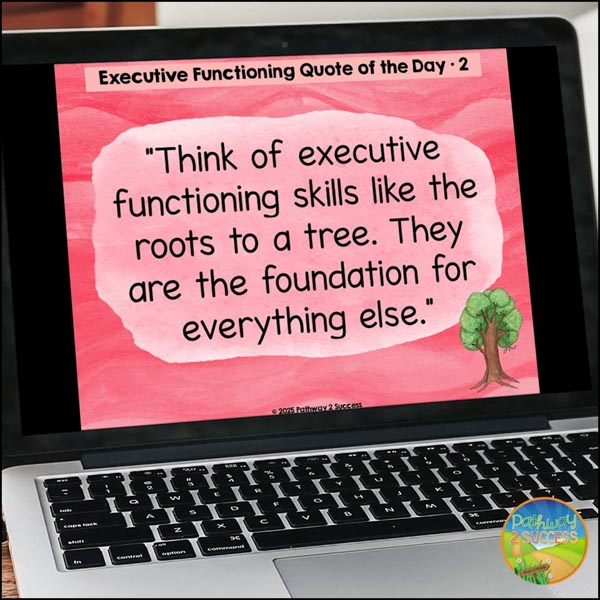
When introducing the broad concept of executive functioning, educators often turn to foundational imagery. A widely utilized quote frames these mental processes by stating that executive functioning skills are like the roots of a tree, serving as the hidden foundation for everything else a person does. This metaphor helps students grasp that planning, organizing, time management, and problem-solving are embedded in virtually every daily activity, from holding a focused conversation to completing a complex project. Guided discussions around this concept typically prompt learners to identify activities they enjoy and analyze how foundational cognitive skills make those pursuits possible.
Self-control represents another critical area of focus. Addressed through the perspective that exercising self-control is fundamentally an act of kindness toward one’s future self, this concept reframes impulse regulation from a restrictive rule into a supportive, proactive choice. For instance, students might discuss how organizing a messy binder at the end of a long school day is an unappealing chore in the present moment, yet ultimately acts as a gift of preparedness for the future. Discussion questions invite learners to define self-control in personal terms and identify concrete ways to show kindness to themselves throughout the school day.
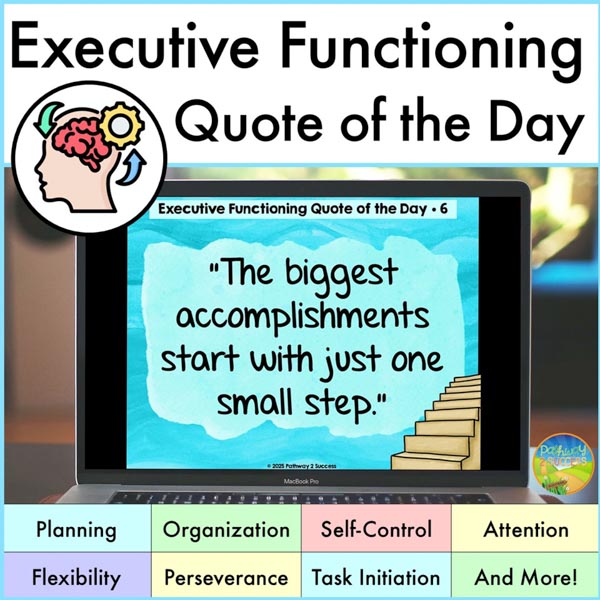
Task initiation—the often-challenging ability to simply begin an assignment—is frequently addressed through the straightforward reminder that the most important part of reaching any goal is the beginning. Educators note that getting started is often the highest hurdle for students experiencing executive dysfunction, but once momentum is established, continuity follows more naturally. Conversations around this theme explore the common barriers that stall productivity and encourage students to share practical strategies for overcoming hesitation.
Attention and emotional regulation are similarly intertwined in classroom discussions. A frequently referenced maxim suggests that a calm mind is a more focused mind, highlighting the direct link between emotional stability and cognitive clarity. By recognizing that stress and overwhelm disrupt concentration, students learn that practicing calming techniques can directly enhance their ability to focus and produce their best work. Dialogue centers on identifying personal relaxation methods that clear the path for better attention span.
Perseverance is addressed through the reminder that while persistence is not always easy, the fundamental path forward is simple: just keep going. This perspective validates the frustration students feel when facing academic or personal hurdles while emphasizing the importance of resilience. Through reflective questioning, learners examine past challenges they have successfully navigated and discuss the specific mental tools they rely on when tempted to give up.
Finally, cognitive flexibility is underscored by the observation that every problem has a solution, and most have many. Flexibility allows individuals to perspective-take, cope with unexpected changes, and brainstorm alternative paths when initial efforts fail. By discussing recent problems they have encountered and exploring the various ways those situations could have been handled, students reinforce their capacity for adaptable thinking.
Through the intentional incorporation of these discussions, educators continue to find creative ways to embed essential life skills into daily instruction, offering students a reliable framework for navigating academic challenges and personal growth.



