Carlos Murillo has never allowed a physical diagnosis to dictate the boundaries of his life. Born with spina bifida—a congenital condition in which the spinal cord fails to develop properly—the 32-year-old Illinois resident has used a wheelchair since he was three years old. Rather than viewing mobility challenges as a barrier to an active lifestyle, Murillo is spending his 30s demonstrating that disability does not preclude adventure, personal purpose, or high-intensity athletic achievements.
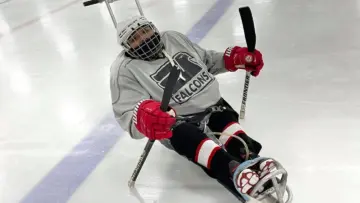
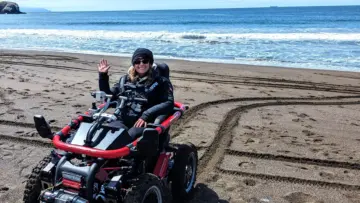
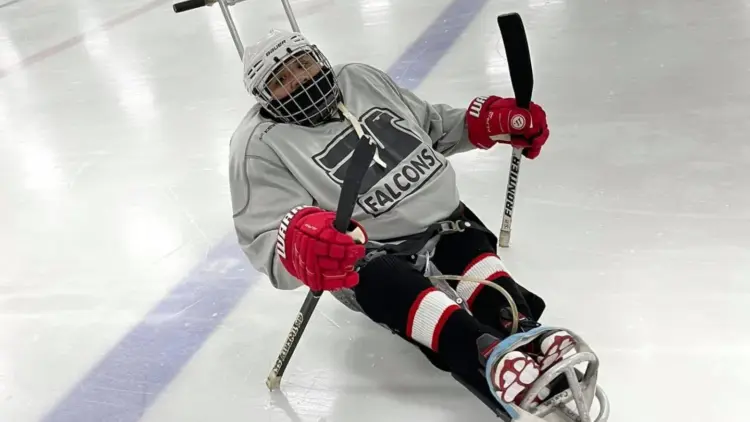
Over the years, Murillo has built an extraordinary roster of accomplishments across adaptive sports and outdoor recreation. His list of completed activities includes zip-lining, waterskiing, kayaking, snow skiing, scuba diving, go-kart racing, sled hockey, wheelchair rugby, archery, horseback riding, and rock climbing. Yet, despite having conquered challenges across land, water, and ice, he remains continuously driven to find his next physical trial.
His expanding bucket list features high-octane goals ranging from NASCAR driving experiences and supercar rides to adaptive paragliding, helicopter flights, parasailing, adaptive surfing, whitewater rafting, and adaptive mountain biking. Alongside these extreme sports pursuits, Murillo is actively executing an ambitious stadium tour, attending games across professional, collegiate, and minor league sports venues throughout North America. For Murillo, the journey hinges on a blend of adaptive sports programs, accessible travel, personal determination, and an absolute refusal to let physical obstacles define what is achievable.
Origin Story and Mindset
Murillo’s entry into adaptive athletics began nearly two decades ago. His initial spark occurred in 2007 during a holiday Christmas party, where he first tried wheelchair basketball through the Great Lakes Adaptive Sports Association (GLASA). That single event introduced him to a broader community of adaptive athletes and opened the door to a wider world of specialized sports recreation.
While sports had been a presence in his life for years, Murillo’s structured "bucket list into a mission" philosophy fully took shape roughly two years ago. Recognizing that there were numerous extreme activities he wished to experience but lacked immediate knowledge on how to pursue, he decided to formally write down his ambitions. Creating a dedicated bucket list transformed his scattered interests into a concrete, actionable roadmap for adventure.
For Murillo, entering his 30s brought a renewed sense of discovery that far surpassed his earlier years. He notes that he is finding considerably more fulfillment and new opportunities in his 30s than he ever did in his 20s. When reflecting on the mental hurdles or physical strain that come with demanding sports, Murillo maintains an uncompromisingly constructive outlook on setbacks. Rather than experiencing fear or dwelling on difficulties, he refuses to look back with regret.
"I don’t have doubts or regrets," Murillo said. "I have lessons!"
Navigating the World of Adaptive Sports
Engaging in a wide spectrum of sports requires adapting to specialized equipment and learning distinct physical techniques, but Murillo approaches each new discipline with a pragmatic, hands-on attitude. Rather than relying on rigid training regimens, he points out that mastering a new adaptive sport usually takes just a few trial runs to get the hang of the mechanics and movement involved.
Among the various activities he has attempted—ranging from sled hockey and wheelchair rugby to rock climbing and underwater scuba diving—certain experiences stood out unexpectedly. Zip-lining provided one of his greatest revelations simply because he initially believed no adaptive programs existed for wheelchair users. Discovering an accessible zip-lining program and soaring through the air proved to be both a physical thrill and a major emotional breakthrough.
Other activities pushed his physical limits to the maximum. Handcycling, in particular, presented a severe physical test, especially when encountering elevated terrain. Navigating inclines proved exceptionally demanding, as pushing an adaptive cycle uphill requires intense upper-body exertion and stamina.
Despite the physical demands, several disciplines immediately captured his passion. Zip-lining, paramotoring, and waterskiing instantly stood out as activities he knew he would continue doing long-term. Murillo credits established adaptive organizations—including GLASA, H2O Adaptive Sports, Diveheart, Shirley Ryan AbilityLab, and Wisconsin Adaptive Skiing—with making these experiences possible. For newcomers arriving at these organizations for the very first time, Murillo stresses that the experience is defined by social connection and enjoyment, where interacting with fellow athletes and trying out different equipment creates an encouraging and welcoming environment.
Chasing the Next Adrenaline Rush: The Bucket List
The pursuit of speed and elevation drives much of Murillo’s future planning. His desire to complete upcoming bucket-list goals like NASCAR driving experiences and adaptive paragliding stems from a fundamental love for high-speed thrills.
"I love the adrenaline rush they give me," Murillo explained.
Curating his personal bucket list involves a pragmatic decision-making process. Murillo regularly searches the internet for new possibilities, carefully evaluating the pros and cons of each activity while prioritizing those that offer the strongest personal appeal. Whenever he checks an item off his list, he immediately researches fresh ideas online to replace it, ensuring his schedule remains filled with upcoming challenges.
His current list represents a balance of high anticipation and calculated apprehension. While he is particularly excited about taking supercar rides and going parasailing, he candidly admits to feeling nervous about other pending ventures, specifically adaptive surfing and whitewater rafting. Additionally, skydiving remains high on his list of ultimate goals as he continuously seeks out new aerial challenges.
The Stadium Tour: A Passion for Live Sports
Beyond participating in adaptive athletics, Murillo is a devoted sports fan whose passion has sparked an extensive stadium-collecting journey. Driven by a simple love for live sports, his objective is to visit as many venues as possible across Major League Baseball (MLB), the National Hockey League (NHL), the National Basketball Association (NBA), the National Collegiate Athletic Association (NCAA), the National Women’s Soccer League (NWSL), rugby, and minor league baseball.
Minor league ballparks hold a particularly strong presence in his travel itinerary. Murillo has visited minor league venues in cities such as Kenosha, Schaumburg, South Bend, Midland, and San Antonio. His preference for minor league games is rooted in practical considerations, primarily the affordable cost of attendance. To help facilitate his visits, Murillo routinely contacts team management directly via email to inquire about ticket accommodations for wheelchair users.
Evaluating sports venues has also given Murillo direct experience with how modern stadiums handle accessibility standards. Among the dozens of facilities he has visited, the home stadium of the Schaumburg Boomers stood out as an exemplary model for getting accessibility right, offering a smooth and hassle-free experience for disabled fans. With scores of sports venues operating across North America, Murillo keeps his future stadium goals open-ended, noting that there are far too many facilities remaining on his wishlist to select just a single favorite destination.
Navigating Accessible Travel
Murillo’s athletic and personal travel has taken him across North America. He has explored major portions of the United States—including California, Texas, Florida, Michigan, Indiana, Minnesota, and Wisconsin—alongside international trips to Canada and Mexico. Looking ahead, his travel itinerary includes an upcoming international cruise featuring ports of call in Honduras, the Bahamas, and Mexico.
Traveling as a full-time wheelchair user requires extensive advance coordination. Unlike standard travel planning, Murillo must systematically research hotel accommodations, verify accessible transit options, and confirm that target destinations feature step-free infrastructure before booking.
Through his journeys, Murillo has experienced firsthand how accessibility infrastructure varies by region. States like Texas and California stood out as top travel destinations due to their highly developed accessibility standards and accommodations. In contrast, international destinations presented noticeable physical hurdles; his travels in Mexico proved particularly challenging due to widespread cobblestone streets and uneven surfaces that hinder wheelchair movement.
These real-world travel experiences highlight what Murillo sees as a key oversight in mainstream travel resources: brochures and travel guides frequently fail to inform travelers that full wheelchair accessibility is far from guaranteed everywhere. For first-time wheelchair users who feel anxious about taking their first solo trip, Murillo offers straightforward, empowering advice: "Just do it. Be fearless."
Advocacy, Motivation, and Message
Throughout his demanding schedule of athletic training and travel, Murillo relies on strong support networks and internal resolve to maintain momentum when tackling intimidating new sports. He gives strong credit to his coaches and his own core philosophy, asserting that giving up is simply not an option.
The emotional impact of his journey is best captured by moments like his first zip-lining experience—an activity he once believed was entirely out of reach due to a lack of known adaptive facilities. Overcoming that perceived barrier served as a powerful reminder of what can be accomplished through persistent searching and adaptation.
Looking forward, Murillo hopes his accomplishments will help dismantle societal misconceptions surrounding disability, encouraging both able-bodied individuals and wheelchair users to explore adaptive athletics. His message to individuals newly using a wheelchair who worry their adventurous days are over is brief and direct: "Don’t be afraid to try new things. Just send it."
For anyone uncertain about how to begin their own journey into adaptive sports, Murillo emphasizes that resources are readily available to those who actively look for them. Reflecting on his evolution from getting his first wheelchair at age three to conquering extreme sports in his 30s, Murillo takes pride in every milestone achieved along the way. His journey serves as a clear testament to hard work and resilience: "A lot of things are possible. You just have to work for them."