Carlos Murillo refuses to allow a physical disability to dictate the boundaries of his life. A 32-year-old wheelchair user residing in Illinois, Murillo was born with spina bifida—a spinal birth defect—and was introduced to his first wheelchair at three years old. Rather than allowing his mobility requirements to restrict his experiences, Murillo has spent his adult life, particularly his 30s, demonstrating that living with a disability can coexist with high-octane adventure, personal purpose, and limitless ambition.
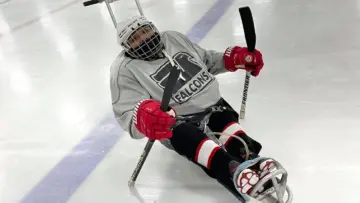
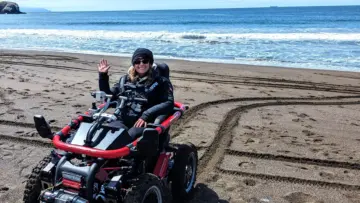
Over the past several years, Murillo has built a resume of athletic achievements that rivals that of seasoned thrill-seekers. His list of completed activities spans a broad spectrum of adaptive sports and extreme recreation, including zip-lining, waterskiing, kayaking, snow skiing, scuba diving, go-kart racing, sled hockey, wheelchair rugby, archery, horseback riding, and rock climbing. Despite this extensive list of accomplishments, he remains continually focused on chasing his next challenge.
Origin Story and Mindset
Murillo’s journey into the world of adaptive sports did not happen overnight, but rather grew from a single moment of community engagement. His athletic path officially began in 2007 at a holiday Christmas party hosted by GLASA Adaptive Sports (Great Lakes Adaptive Sports Association), where he participated in a game of wheelchair basketball. That initial taste of organized adaptive athletics opened a door to broader physical activity, but it was not until much later that his personal goals transformed into a systematic mission.
Roughly two years ago, Murillo decided to convert his long-standing personal aspirations into an organized bucket list. He recognized that there were numerous adventurous activities he dreamed of trying, but he initially lacked a clear roadmap for how to pursue them. Creating a structured bucket list provided the catalyst needed to actively seek out specialized adaptive programs and turn abstract ideas into concrete experiences.
Reflecting on his personal growth, Murillo notes that his 30s have proven to be far more expansive and fulfilling than his 20s. "I’m finding so much more in my 30s than I ever did in my 20s," he explained. Crucial to this evolution is his resilient attitude toward trial and error. Where others might see intimidation or potential failure, Murillo maintains an outlook grounded in self-improvement, asserting that he harbors no doubts or regrets on his path—only valuable lessons learned along the way.
The Landscape of Adaptive Sports
Navigating the world of extreme and specialized sports requires adaptability, patience, and a willingness to step into unfamiliar territory. Throughout his athletic pursuits, Murillo has engaged with a broad network of community organizations dedicated to adaptive recreation. Organizations such as GLASA, H2O Adaptive Sports, Diveheart, Shirley Ryan AbilityLab, and Wisconsin Adaptive Ski have played an essential role in providing the specialized equipment, instruction, and safety infrastructure necessary for athletes with mobility impairments to participate.
When entering an adaptive sports program for the first time, Murillo emphasizes that the atmosphere is defined by camaraderie and collective discovery. On day one, newcomers are introduced to supportive peer networks and fellow athletes, transforming what could be an intimidating process into an engaging and enjoyable social environment.
Despite the technical nature of adaptive equipment, Murillo approaches new sports with an intuitive mindset rather than relying on strict mechanical formulas. He notes that mastering a new discipline rarely involves complex technical strategies; instead, it simply takes a few attempts to get the hang of each sport.
Some disciplines, however, present intense physical challenges. Among the dozens of sports he has undertaken, Murillo identified cycling as the most demanding on his physical and mental limits, largely due to the sheer exertion required to navigate inclines. "Cycling was hard because going uphill was very challenging," Murillo recalled. "Pushing a bike uphill is not the greatest."
Conversely, other activities provided instant inspiration or unexpected revelations. Prior to discovering specialized organizations, Murillo assumed that zip-lining was entirely out of reach for a wheelchair user due to a lack of accessible options. Locating an adaptive zip-lining program stood out as one of the most surprising and emotionally resonant milestones of his journey. That experience, along with waterskiing and para-motoring, quickly emerged as activities he fell in love with and planned to continue long into the future.
Chasing the Next Thrill: The Bucket List
Having already tackled rock faces, scuba dives, and frozen hockey rinks, Murillo remains focused on expanding his horizons. His current bucket list features an ambitious selection of high-speed and extreme recreational activities, driven primarily by his passion for intense sensations. "I love the adrenaline rush they give me," Murillo shared when discussing his interest in motorsports and aerial adventures.
Among the upcoming pursuits on his target list are immersive NASCAR experiences, high-performance supercar rides, adaptive paragliding, skydiving, helicopter flights, parasailing, adaptive surfing, whitewater rafting, and adaptive mountain biking.
Murillo balances his enthusiasm with a pragmatic evaluation of the risks and physical sensations involved in each venture. He actively anticipates the thrill of supercar rides and parasailing with excitement. At the same time, he acknowledges feeling a natural sense of nervousness when contemplating turbulent water environments, specifically adaptive surfing and whitewater rafting.
To manage his expanding ambitions, Murillo systematically evaluates potential additions to his list by weighing the pros and cons of each activity, prioritizing those that offer the strongest appeal. Once an objective is accomplished, he continuously updates his itinerary through online research and creative brainstorming, ensuring that one completed goal naturally makes way for the next target.
The Stadium Collector: Life as an Adaptive Sports Fan
Parallel to his personal participation in sports is Murillo’s deep passion as a spectator. Over the years, he has channeled his love for athletics into an extensive campaign of stadium visits, collecting experiences at venues across professional, collegiate, and minor league ranks. His travels have taken him to stadiums and arenas representing Major League Baseball (MLB), the National Hockey League (NHL), the National Basketball Association (NBA), NCAA collegiate athletics, National Women’s Soccer League (NWSL), and professional rugby.
While major league venues offer high-profile atmospheres, minor league ballparks hold a particularly strong appeal in Murillo’s sports travel. He has frequented minor league venues across the country, including ballparks in Kenosha, Schaumburg, South Bend, Midland, and San Antonio. The draw toward minor league games is practical as well as experiential: affordability plays a major role, and Murillo proactively reaches out to team front offices via email to inquire about complimentary ticket availability for accessible seating areas.
Evaluating stadium infrastructure from the perspective of a wheelchair user has given Murillo sharp insight into venue accessibility standards across the country. Among the numerous facilities he has visited, the home stadium of the Schaumburg Boomers stood out as a premier example of a venue that successfully prioritized clear, effective accessibility for fans with mobility needs. With numerous stadiums across the nation still on his travel radar, Murillo views his stadium collection as an ongoing, open-ended journey.
Navigating Accessible Travel
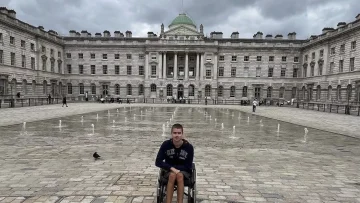
Executing long-distance stadium tours and adventure trips requires thorough logistical preparation. Murillo’s travels have covered extensive ground across North America, taking him through states such as California, Texas, Florida, Michigan, Indiana, Minnesota, and Wisconsin, alongside international excursions into Canada and Mexico.
For a full-time wheelchair user, travel involves far more than simply purchasing a ticket. Murillo outlines a detailed planning process that mandates securing appropriate hotel accommodations, verifying accessible ground transportation, and identifying fully wheelchair-accessible attractions well before setting out.
Through his extensive travel, Murillo has observed stark contrasts in regional infrastructure. Domestically, states like California and Texas stood out for offering strong accessibility standards and manageable mobility options. Internationally, however, certain destinations presented significant physical barriers. Mexico, for instance, posed noticeable challenges due to widespread historic cobblestone streets, which present severe navigation hurdles for wheelchair users.
Reflecting on the realities of travel, Murillo emphasizes that accessible travel resources often overlook a fundamental truth: not everything marked as accessible truly is, and universal access remains an unfinished project. Nevertheless, logistical hurdles do not deter his travel plans. His next major international journey includes an upcoming cruise that will take him to ports in Honduras, the Bahamas, and Mexico.
Advocacy, Philosophy, and Advice
Through his achievements in sports and travel, Murillo has emerged as a practical advocate for the adaptive community. His message to both able-bodied observers and fellow wheelchair users is straightforward: opportunities exist, but taking initiative is essential to finding them.
Murillo urges individuals who assume adaptive sports are unavailable to look deeper, noting that dedicated programs exist across the country for those willing to research them online. For individuals who have recently acquired a disability or started using a wheelchair—and who may believe their adventurous days are over—Murillo offers direct, encouraging advice: "Don’t be afraid to try new things. Just send it."
This mindset of fearless persistence extends to his recommendations for first-time solo travelers in wheelchairs, where his guidance remains equally concise: "Just do it. Be fearless."
Sustaining this momentum over years of physical exertion requires strong internal drive and community support. Murillo credits his personal coaches and his own intrinsic determination for keeping him focused when facing intimidating new challenges, maintaining that giving up simply is not an option.
Looking back on everything he has accomplished since receiving his first wheelchair as a toddler, Murillo takes equal pride in all his endeavors, maintaining that if an activity were not worth being proud of, he would not have undertaken it in the first place. His ultimate reflection encapsulates his entire life philosophy: a world of possibilities exists, but realization requires dedication and effort. "A lot of things are possible," Murillo reflected. "You just have to work for them."