

The encounter began with a lingering stare, the kind that feels entirely too familiar to anyone who moves through the world with a visible disability. Her lips were caught somewhere between a downturned pout and a sympathetic smile, a facial expression that usually signals an upcoming platitude. As someone who was already well-acquainted with the disability experience through Robert, I fully expected to hear one of those standard inspirational affirmations, perhaps something along the lines of being told he was an angel. But what was said next completely bypassed the usual script and caught me entirely off-guard.
To set the scene, John and I were on our second date, enjoying a quiet breakfast before heading out to spend the afternoon at the Knoxville Museum of Art. Our first in-person date had taken place just the night before, but the connection we shared meant we were already well past the introductory stages. We had built a deep friendship over a sustained long-distance relationship, laying a solid foundation for what was to come. There we were, immersed in the simple excitement of sharing quality time together, when a staff member abruptly interrupted us. She expressed sheer amazement at the fact that John was managing his own meal and independently fetching his own juice from the serving station. Then, she blurted out the astonishing remark: "He doesn’t even have a whole body!"
The comment was so pointed and so remarkably specific that it rendered me momentarily speechless. I tried to stifle a grin that was threatening to spread across my face, gave a curt, polite nod, and briskly walked away from the restaurant. I barely made it outside the front door before bursting into the first of many hearty giggle-fits that John would come to witness throughout our relationship.
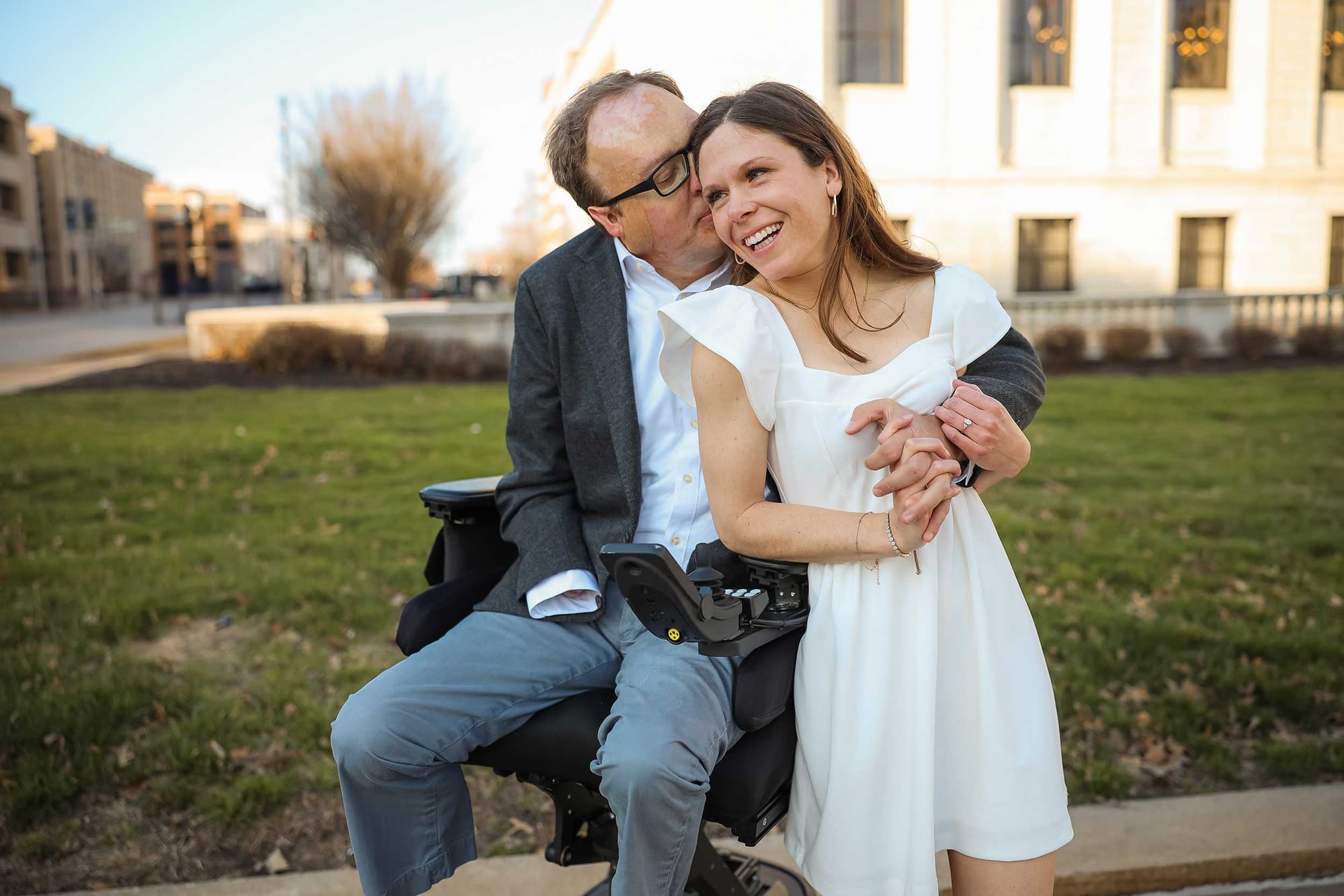
Finding humor in the absolute absurdity of everyday ignorance has become a staple of how we navigate the world together. It is an approach that occasionally elicits an eye-roll from Robert, though we chalk that up to standard teenage angst while knowing full well that he ultimately benefits from the shared humor we model as parents in our everyday moments.
Reflecting on that interaction later, I found myself wondering if I would have reacted differently had Robert been sitting across from me, or if I would have expected Robert to respond differently to such a jarring intrusion. Teaching a young person how to respond to ableism is a constant mental task. It is a nuanced and complex process that frequently runs counter to many of the unspoken rules we unknowingly adopt as we learn how to function smoothly in polite society. Uncovering these hidden social biases and teaching Robert how to effectively address ableism has become one of the most recurring and vital conversations in our journey as parents.

Society often teaches us that it is considered rude to ignore people, yet I have taught Robert that he has every right to simply walk away when faced with intrusive or infantilizing comments. Similarly, we are conditioned to automatically submit to authority figures without question. However, John actively models and helps Robert practice how to prioritize his own needs while critically evaluating which claims to authority are actually valid.
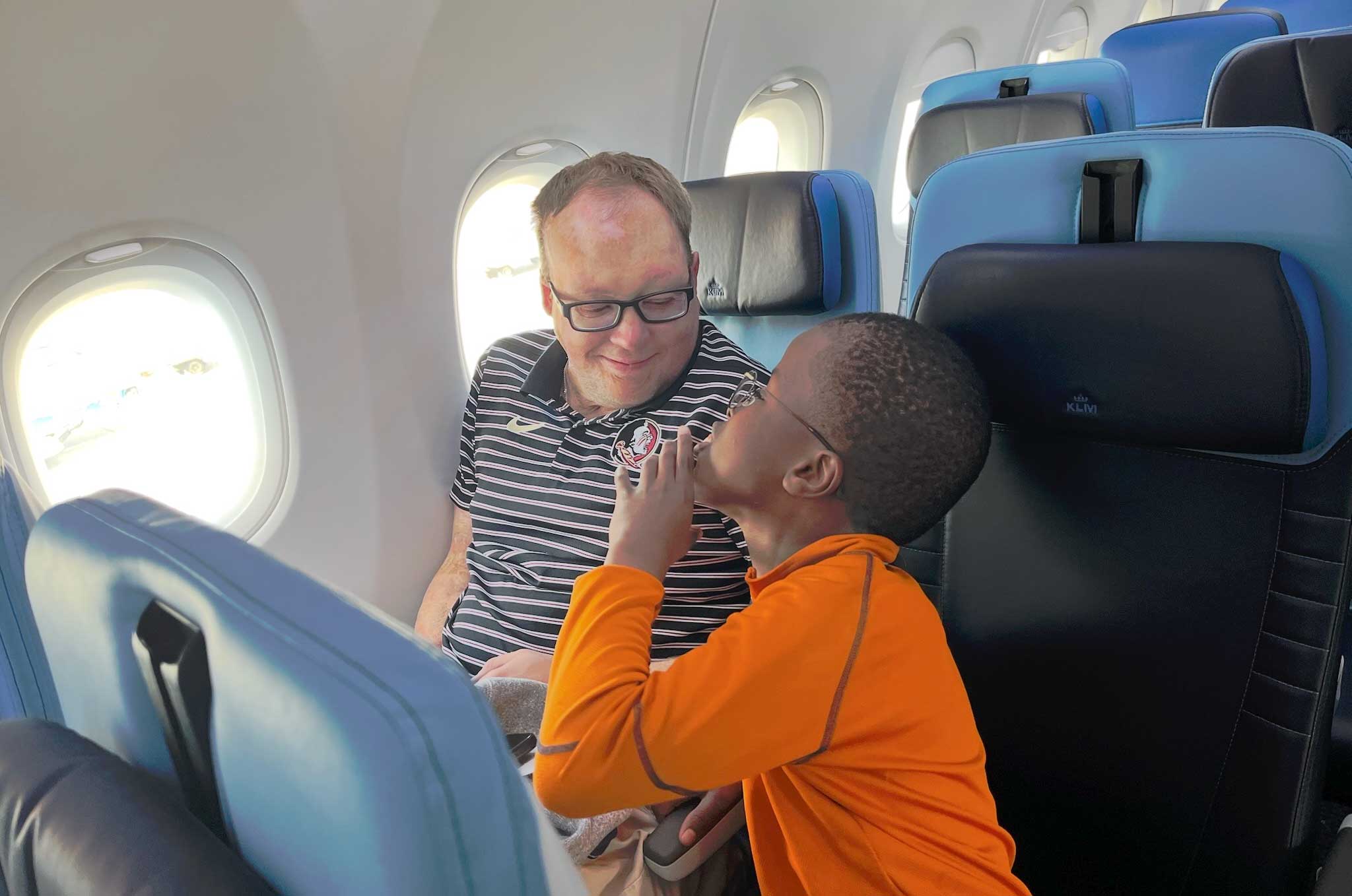
A prime example of this dynamic occurs when airline wheelchair assistance staff demand that John and Robert exit an airplane before their personal wheelchairs have been successfully returned to the jetbridge. In those moments, they rightly decline to comply with the rushed instructions. John has documented these systemic travel challenges extensively, writing about the importance of challenging the authority of gate agents and assistance staff when accessibility rights are compromised.
Public expectations around disability often include an implicit demand for explanations regarding mobility aids and specific accommodations. To counter this, our household maintains a repertoire of prepared responses, such as stating plainly that we do not share personal medical information, keeping these phrases practiced and ready for use when intrusive questions arise.
Cultural norms heavily emphasize saying "thank you" as the expected response whenever assistance is offered. Yet, I have explicitly told Robert that he can pull away without so much as a glance if an uninvited stranger reaches out to grab his wheelchair. This dynamic of forced gratitude is something I explored in depth in a previous essay discussing how disabled children are frequently conditioned to feel overwhelmingly thankful simply for receiving equal access, and whether that level of thanksgiving is truly warranted.

Honesty is held up as one of the most important values in our home, with one notable exception: making up completely fabricated, entirely laughable tales about how Robert or John acquired their disabilities. For instance, John has occasionally used a dramatic shark attack as a completely fictional origin story to shut down intrusive, boundary-crossing questions about what happened to his legs.
Some critics might argue that it would be easier to maintain a single, uniform response strategy for Robert, or to strip him of his agency in responding to avoid how he might be perceived by the public. But that approach comes with a steep cost. When making choices about our strategies in the present, we have to look toward the future. We could help shape a teenager who rigidly follows the rules and fits neatly into a societal mold at the expense of a piece of his dignity, or we could help raise a teenager who might ruffle a few feathers along the way but remains steadfastly true to himself and capable of fierce self-advocacy. Between those two outcomes, the path that serves the greater good is glaringly obvious.
Even with clear goals, tackling such a heavy and seemingly lofty social issue in the context of day-to-day life can feel overwhelming. Confronting ableism on a personal level is undeniably hard work. Over time, I have developed a few mental shifts that have helped align my focus and sustain our efforts.
One of the most effective shifts in perspective has been thinking of our work against ableism much like doing the laundry. There is never a point in time when the laundry is permanently finished, and accepting that reality is essential. Our household is always in some stage of the laundry cycle—piling up dirty clothes, washing, drying, folding, and eventually putting garments away. At times, I avoid the entire chore for an embarrassing number of days. At other times, I double down, power through multiple loads, and spend a full day catching up. Even when I accomplish that, the clothes currently on my body eventually become dirty, and the cycle continues. Recognizing this cyclical nature rather than holding onto a rigid checklist mentality has afforded me a much more balanced viewpoint. I no longer judge my success on the total completion of a task that can never truly be finished. Responding to ableism operates on the exact same premise. We do a little bit here, a little bit there, learning and practicing one response before pivoting to a different approach. Sometimes we take a necessary break simply because we are exhausted or lacking the bandwidth. That rest is all part of the human experience.

When it comes to discussing these incidents, the most important takeaway for deciding how to teach a child to respond to ableism is to continuously ask questions and examine responses together. I am constantly asking Robert what we can learn from a given situation, what worked, what fell short, or noting a specific dynamic and asking how it made him feel. His responses and emotional processing naturally change with time and growth, and his insights occasionally surprise me. The ultimate goal is not to find a single magic fix, but to engage in collaborative problem-solving.
Once a recurring problem is identified, we actively rehearse our responses. We have practiced scenarios using stuffed animals, acted out different potential interactions, and even collaborated on drawing comic books to visualize strategies we wanted to implement. For instance, boarding an airplane has historically been a consistent source of stress. Assistance staff frequently make assumptions about Robert’s physical abilities, attempting to move his wheelchair or dictate boarding procedures without asking. By discussing what approach would work best and practicing those scenarios at home—where I might pretend to be an overzealous staff member grabbing his chair without permission while Robert practices responding clearly and respectfully—we build muscle memory. That repetition significantly helps us remember how to act when facing similar scenarios in high-stress real-world environments.
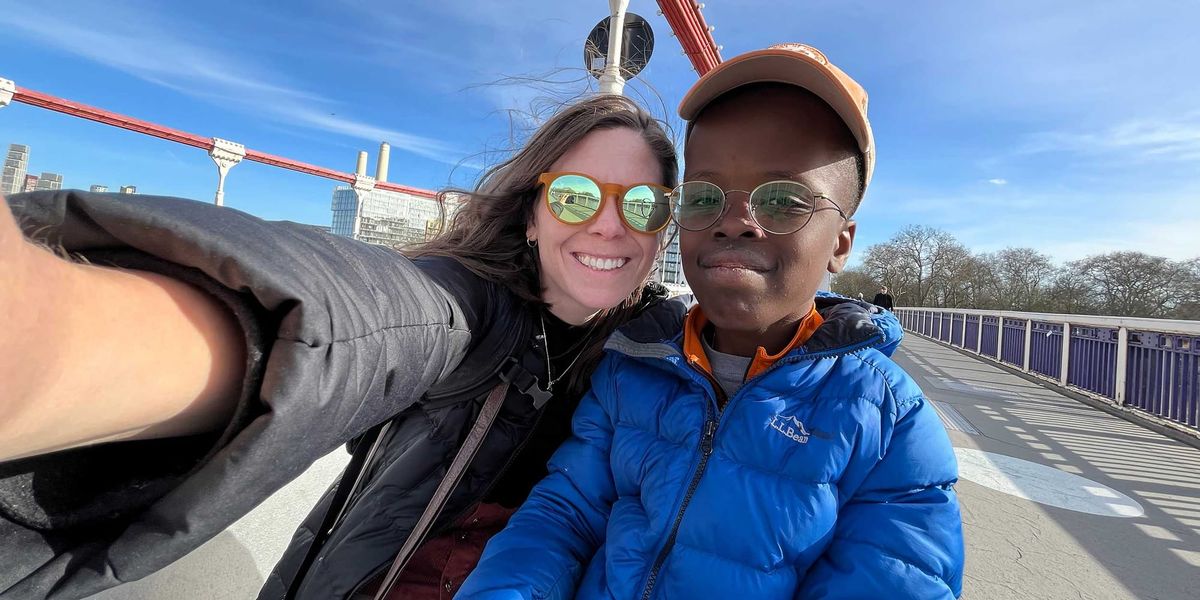
At this point in our lives, our family possesses a wide array of skills designed to respond to ableism effectively. Yet, we still occasionally find ourselves stumbling through interactions, walking away with the lingering feeling that we should have chosen a completely different approach. Constantly examining our social interactions and public encounters places a heavy burden of pressure on us all. John and I also recognize that what constitutes an acceptable response to ableism shifts depending on various intersecting factors, including age, race, gender, and the specific type of disability involved, as all of these elements heavily influence the pre-existing assumptions held by the public.
Ultimately, combining careful planning ahead of time with a willingness to experiment with different approaches has noticeably aided Robert’s confidence in standing up to ableism. We share these experiences simply as a springboard for other families and individuals navigating these complex and delicate situations in their own lives.



