

The moment began with a lingering stare, lips caught delicately between a downturned pout and an empathetic smile. It was a facial expression instantly recognizable to anyone familiar with public encounters involving disability—the universal prelude to an unsolicited, all-too-familiar inspirational affirmation. Expecting someone to utter something along the lines of "you’re an angel," Stevie Morris initially believed she knew what script the interaction would follow. Having already navigated the disability experience alongside her son, Robert, she felt prepared for the usual public reactions. However, what was said next caught her completely off-guard, shattering any expectations of a predictable script.
The scene unfolded during the second date between Stevie and John, just over breakfast before a planned trip to the Knoxville Museum of Art. Their first in-person meeting had taken place only the night before, but the two were already well past the introductory stages of a relationship. Sharing a deep friendship and an ongoing long-distance dynamic, they were enjoying the quiet excitement of quality time together. That atmosphere of unbothered normalcy was abruptly interrupted when a restaurant staff member approached their table. The employee expressed sheer amazement that John was not only responsible for his own meal but had actually managed to retrieve his own juice from the serving station. Then, leaning into the surreal nature of the moment, the staff member exclaimed, "He doesn’t even have a whole body!"
The remark was so pointed and so remarkably specific that Stevie found herself momentarily speechless. Stifling a rising grin, she offered a curt nod of the head and briskly left the restaurant. She barely made it outside the front doors before bursting into a fit of laughter—the first of many such giggle-fits that John would come to witness throughout their relationship.
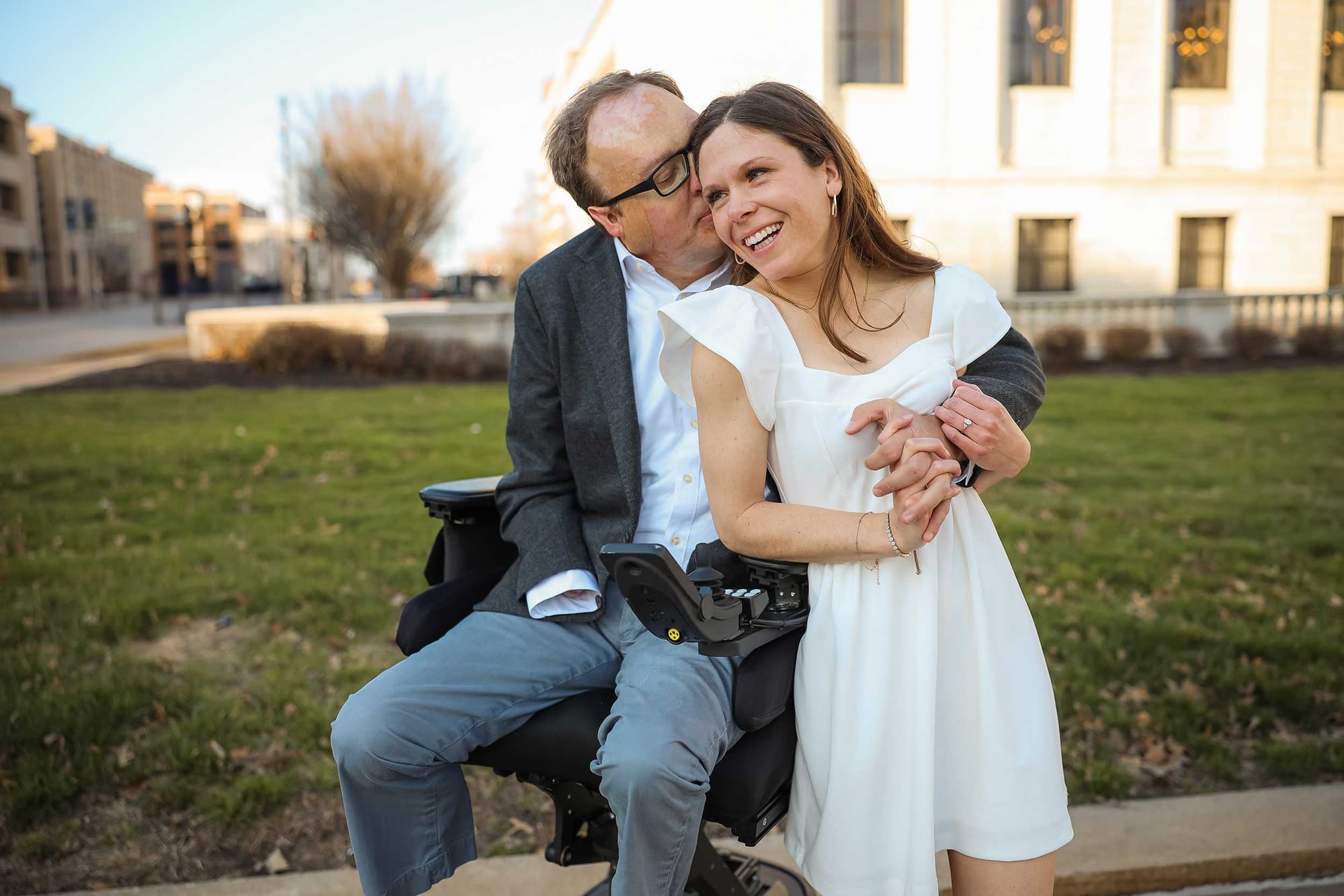
Finding humor in the absolute absurdity of public ignorance has become a cornerstone of how John and Stevie process these moments together. While such antics frequently elicit an eye-roll from Robert, they attribute this response to normal teenage angst, recognizing that the teenager ultimately benefits from the shared humor and resilience modeled by his parents in everyday life.
Reflecting on that interaction later, Stevie often visualized how she might have reacted had she been with Robert, or how she would have expected Robert to respond to a similar comment. Teaching a teenager how to navigate and respond to ableism is a continuous, nuanced mental task. It requires actively dismantling many of the unspoken social rules that individuals unconsciously adopt while learning to function within society. Uncovering these hidden biases and preparing Robert to stand his ground against microaggressions and intrusive remarks has become one of the most recurring and vital conversations in their household.
Society heavily conditions people to believe that ignoring someone is inherently rude, yet Stevie has taught Robert that walking away is a valid and necessary response when faced with intrusive, infantilizing, or demeaning commentary. Similarly, people are routinely taught to automatically submit to authority figures, but John models and helps Robert practice prioritizing his own needs while critically evaluating which claims to authority are actually legitimate.
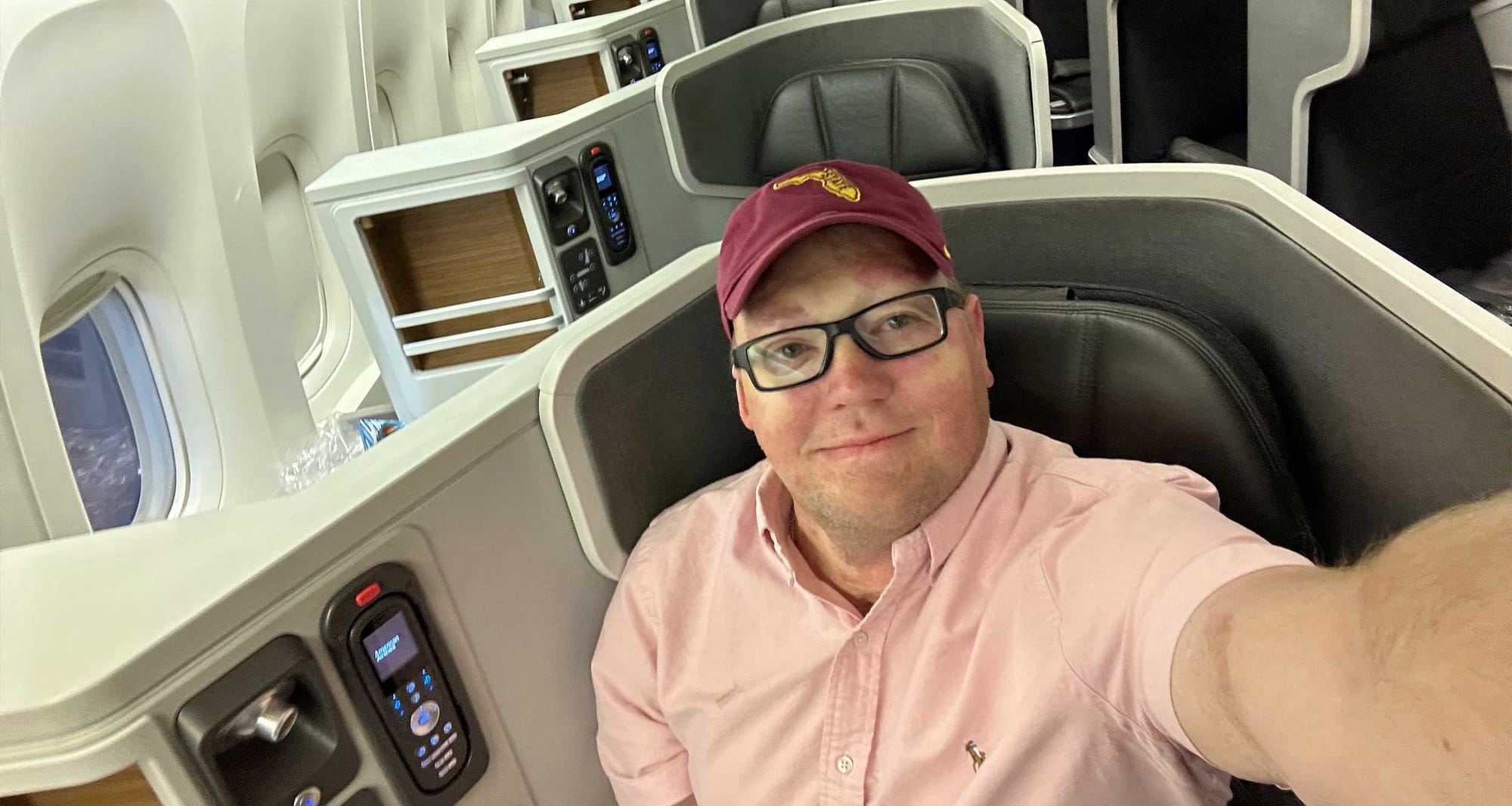
A prime example of this dynamic occurs during air travel. Airline wheelchair assistants frequently demand that John and Robert exit the aircraft before their personal wheelchairs have been brought up to the jetbridge, a directive that places mobility-aid users in a vulnerable and precarious position. Both John and Robert routinely decline these demands, prioritizing their safety and independence over compliance with arbitrary airline protocol. John has documented these challenges extensively, writing detailed accounts on how to safely and effectively challenge the authority of gate agents and assistance staff when travel accommodations fall short.
Public expectations around disability often dictate that disabled individuals owe complete strangers detailed explanations regarding their mobility aids and medical accommodations. To counter this pressure, the family maintains a set of practiced responses, such as stating plainly that they do not share personal medical information, ready to be deployed at a moment’s notice.
Likewise, societal norms dictate that a grateful "thank you" is the mandatory response whenever assistance is offered, regardless of whether that help was solicited or even safe. Stevie has explicitly told Robert that he is fully permitted to pull away without so much as a glance if an unfamiliar person attempts to grab his wheelchair without permission. Stevie has explored this complex societal conditioning in depth, questioning whether lifelong gratitude is truly warranted for basic equal access and reasonable accommodations.

Honesty remains a fundamental value within their home, with one notable exception: inventing utterly absurd, completely fabricated stories regarding how John or Robert acquired their disabilities. When confronted with intrusive, deeply personal "What happened to you?" questions from curious strangers, John has occasionally shut the conversation down by attributing his leg amputations to an improbable shark attack.
Critics might argue that maintaining a single, uniform response strategy or stripping Robert of his agency to respond would make public outings easier or shield him from how he might be perceived by the broader public. However, Stevie and John must constantly weigh the immediate short-term comfort against the long-term cost. The choice comes down to either helping shape a teenager who follows every unwritten social rule and fits neatly into an ableist mold at the expense of his personal dignity, or supporting a young teen who may occasionally ruffle feathers but remains unapologetically true to himself and capable of fierce self-advocacy. For Stevie, the right choice for the greater good is glaringly obvious.
Even so, tackling such a pervasive social justice issue on a personal, day-to-day basis can often feel overwhelming and exhausting. To maintain focus without burning out, Stevie has adopted specific mental shifts and routines.
She has come to view the ongoing work against ableism much like doing the household laundry—a never-ending cycle that is never truly finished once and for all. Acknowledging that there is no final checkbox to tick has brought a more balanced perspective. Whether piling up dirty clothes, washing, drying, folding, or stepping away from the chore for days out of sheer exhaustion, the cycle simply continues. Recognizing this cyclical nature means Stevie no longer judges her success by the impossible standard of eradicating ableism entirely. Some days involve active pushback and education, while other days require stepping back to rest because the bandwidth simply is not there.

Communication and continuous dialogue form another vital pillar of their approach. Whenever an incident occurs, Stevie and Robert make a point to analyze the interaction together. Questions like "What can we learn from this?", "What worked and what didn’t?", and "I noticed this happening—how did that make you feel?" are frequent fixtures of their routine. Because Robert’s perspectives and emotional responses naturally evolve as he grows older, these discussions often yield surprising insights, emphasizing collaborative problem-solving over rigid formulas.
To build confidence before entering high-stress environments, the family frequently rehearses potential scenarios. Whether using stuffed animals, acting out hypothetical encounters, or drawing comic books together to map out a strategy, preparation transforms abstract concepts into practical skills. For instance, navigating airport boarding historically served as a major source of stress, with assistance staff regularly making unilateral decisions about Robert’s mobility equipment without asking. By discussing preferred approaches and practicing roleplay at home—where Stevie would pretend to be an overzealous assistant attempting to move the wheelchair without permission—Robert could practice responding with clear, respectful boundaries. This repetition ensures that when similar situations arise in real-world, high-pressure environments, the appropriate response feels second nature.
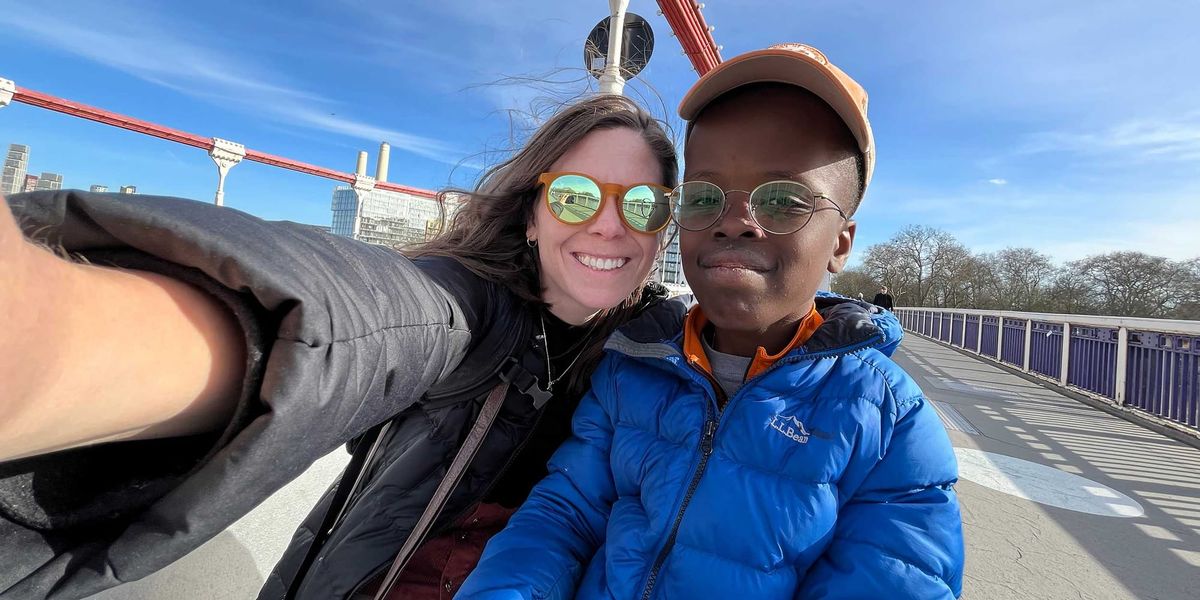
Despite years of experience and a robust toolkit of responses, the family still encounters moments where they stumble or wonder if a different approach might have been more effective. The continuous pressure to monitor and analyze public interactions remains a heavy mental load. Furthermore, John and Stevie acknowledge that what constitutes an acceptable response to ableism can shift dramatically depending on intersecting factors such as age, race, gender, and the specific nature of a person’s disability, all of which heavily influence the pre-existing assumptions held by the public. By combining proactive planning with a willingness to experiment with different strategies, they continue to foster Robert’s confidence in advocating for himself, offering a practical blueprint for other families navigating similar terrain.



