

The lingering stare offered a familiar prelude—lips caught somewhere between a downturned pout and an empathetic smile. For Stevie Morris, who was already well-acquainted with the disability experience through her son, Robert, the expression signaled the approach of an all-too-predictable inspirational affirmation. She braced herself to hear the phrase, "You’re an angel," a staple of unsolicited commentary often directed at people with disabilities and those accompanying them.
However, what followed shattered those expectations entirely.
The scene unfolded during a breakfast date in Knoxville, Tennessee, where Morris and her partner, John, were enjoying a quiet meal before visiting the Knoxville Museum of Art. Their connection had blossomed swiftly; their first in-person date had occurred only the night before, but a deep friendship forged through an ongoing long-distance relationship meant they had already bypassed the standard introductory phases. Amid the excitement of sharing quality time, a restaurant staff member interrupted their conversation.
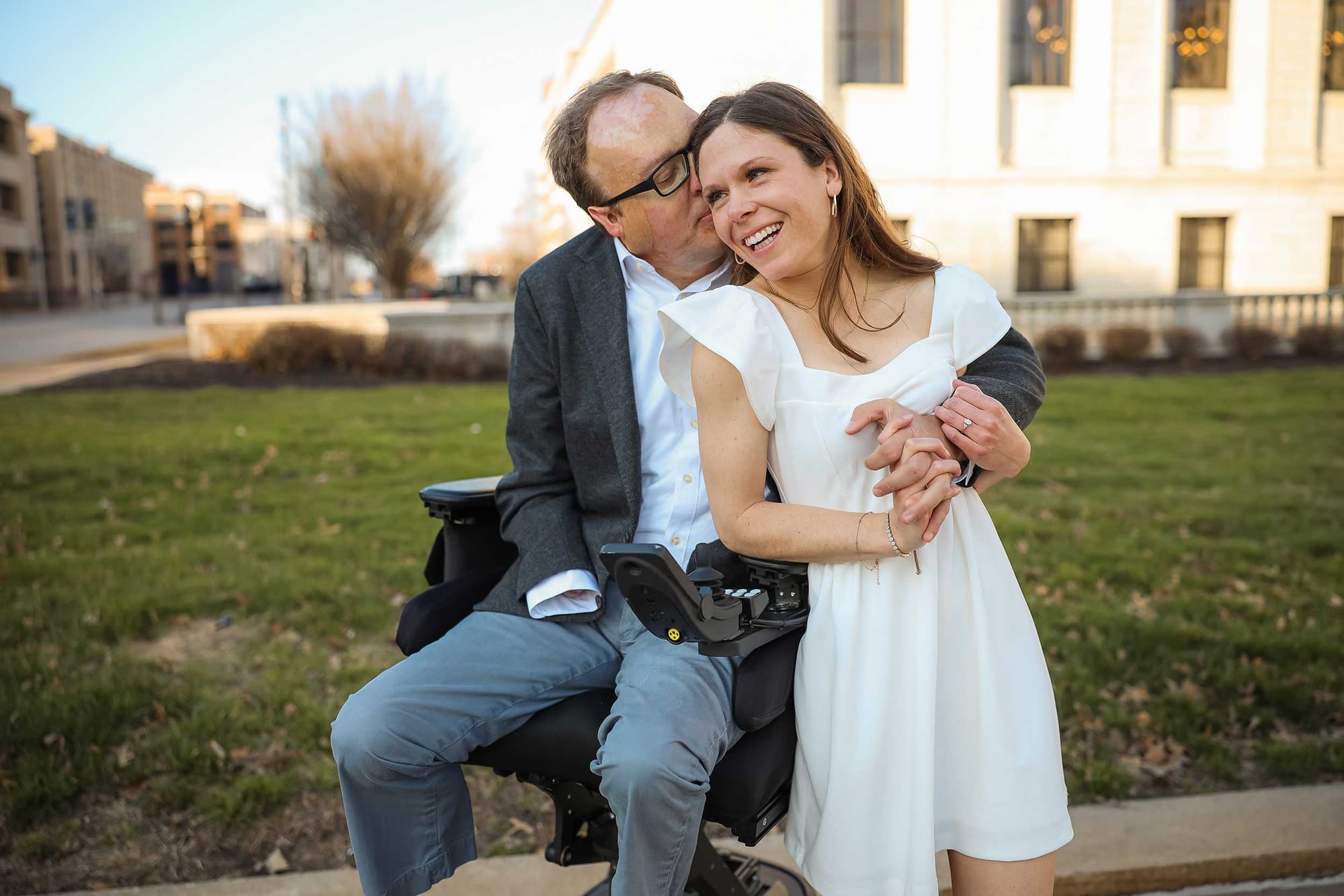
The employee expressed open amazement that John was managing his own meal and securing his own juice from the serving station. Then came the remark that left Morris entirely speechless: "He doesn’t even have a whole body!"
The comment was so remarkably pointed and specific that Morris found herself momentarily devoid of words. Stifling a rising grin, she offered a curt nod of the head and briskly walked out of the establishment, barely making it through the front door before bursting into laughter—the first of many giggle-fits that John would come to witness throughout their relationship.

Finding humor in the absurdity of everyday ignorance has become a cornerstone of their dynamic. While the shared laughter occasionally elicits an eye-roll from Robert, the family recognizes this reaction as typical teenage angst, knowing that the underlying humor helps them process daily interactions constructively.
Reflecting on the encounter later, Morris considered how she might have reacted if Robert had been present, or how she would expect Robert to navigate a similar situation. Teaching a young person how to respond to ableism is a complex, continuous mental exercise that often directly challenges the standard social rules children are taught to follow as they integrate into society. Uncovering these hidden biases and equipping Robert with the tools to address them has become a recurring theme in their parenthood.
Society often dictates strict codes of conduct. For instance, children are routinely taught that ignoring people is impolite. Yet, Morris has explicitly told Robert that he has full permission to walk away when faced with intrusive, infantilizing, or inappropriate comments.
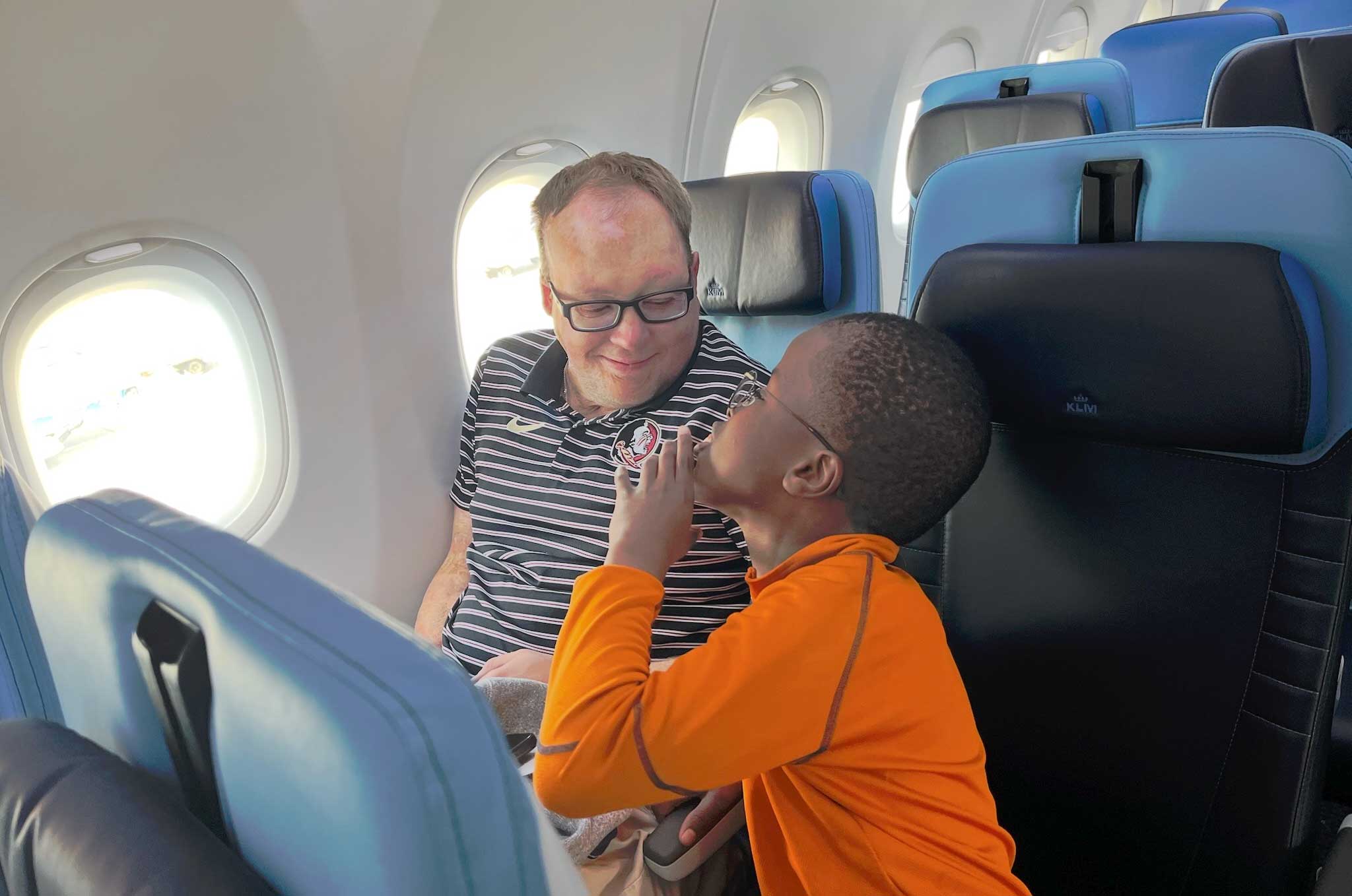
Similarly, people are conditioned to automatically submit to authority figures, yet John actively models and helps Robert practice prioritizing his own needs while critically evaluating which claims to authority are legitimate. A prime example occurs during air travel, when airline wheelchair assistance staff occasionally demand that John and Robert exit the aircraft before their personal wheelchairs have been returned to the jetbridge. Recognizing the compromise to their mobility and dignity, they rightly decline to comply, standing firm against unwarranted pressure from gate agents and airline staff.

Public interactions frequently carry expectations that disabled individuals will provide detailed explanations for their mobility aids and accommodations. To combat this invasive curiosity, the family relies on a set list of practiced responses, such as stating plainly that they do not share personal medical information.
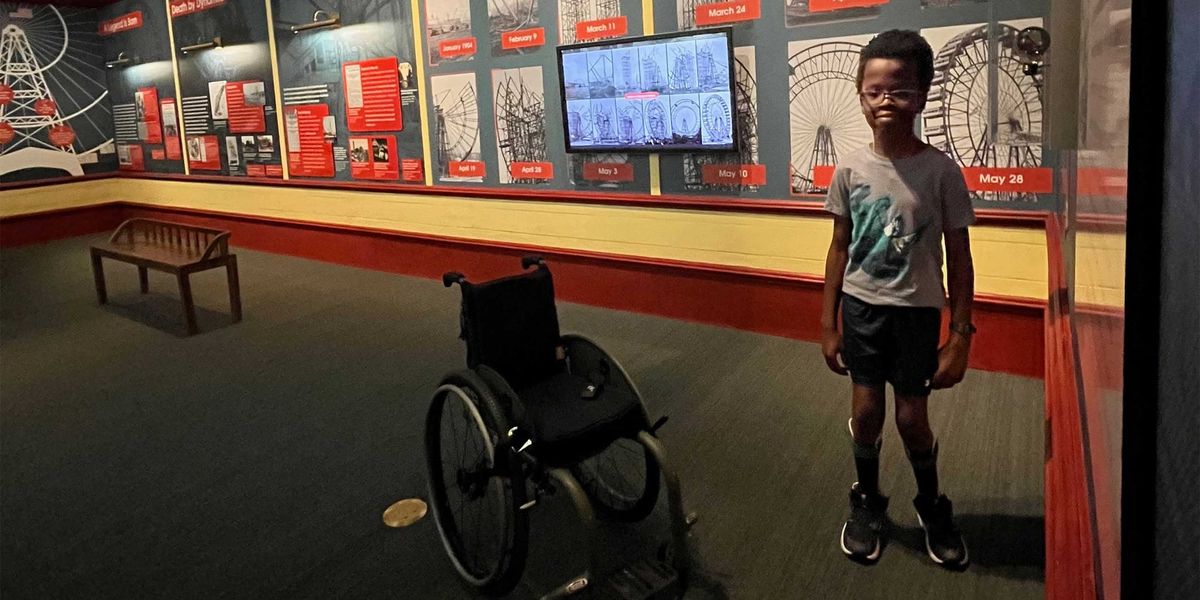
Gratitude is another societal expectation deeply ingrained in disabled individuals, who are often conditioned to offer automatic thanks for basic equal access. Morris and John actively challenge this dynamic. Morris has encouraged Robert to pull away without a backward glance if an unfamiliar person attempts to grab his wheelchair without permission.
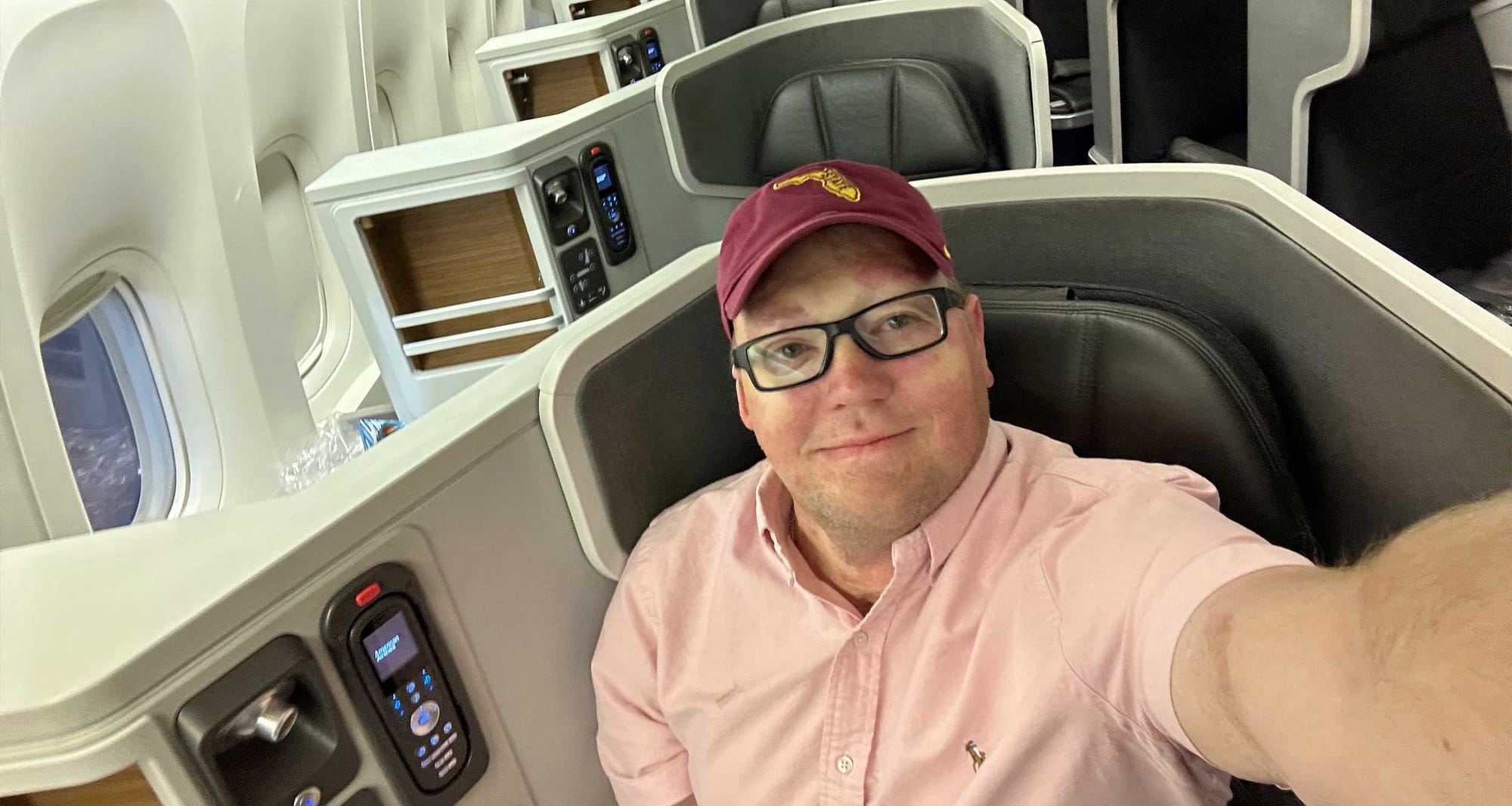
Honesty remains a fundamental value within their household, with one notable exception: the invention of entirely fictional, wildly entertaining tales regarding how John or Robert acquired their disabilities. When faced with intrusive "What happened to you?" inquiries, John has been known to attribute his leg amputations to a dramatic shark attack, effectively shutting down inappropriate questioning with humor.
Some might argue that establishing a single, uniform response strategy or stripping Robert of his agency might make navigating public spaces easier or reduce how he is perceived by others. But Morris and John weigh these considerations against the long-term cost. Choosing the path of least resistance might produce a teenager who strictly follows unwritten social rules and fits a conventional mold, but it would require sacrificing a piece of his dignity. Conversely, encouraging self-advocacy may occasionally ruffle feathers, but it fosters a young person who remains true to himself. For Morris and John, the choice clearly favors the greater good of authentic self-advocacy.

Tackling a widespread systemic issue through personal, day-to-day interactions can undeniably feel overwhelming. To maintain focus and prevent burnout, Morris has adopted specific mental shifts, comparing the ongoing work against ableism to doing laundry. There is no point in time when laundry is ever permanently finished; the cycle of piling, washing, drying, folding, and putting away clothes continues indefinitely. Recognizing this cyclical reality rather than viewing anti-ableism work as a checklist item has provided a more balanced perspective. Success does not require completing an impossible task all at once. Instead, the family addresses ableism incrementally—learning and practicing a response, pivoting to new approaches when necessary, and taking breaks when exhaustion sets in.
A central strategy in their household is open discussion. Morris consistently asks Robert reflective questions to process encounters together, such as asking what can be learned from a specific interaction, what worked or failed, and how a particular situation made him feel. Because Robert’s perspectives evolve as he grows, problem-solving together remains the primary objective rather than seeking a single permanent fix.
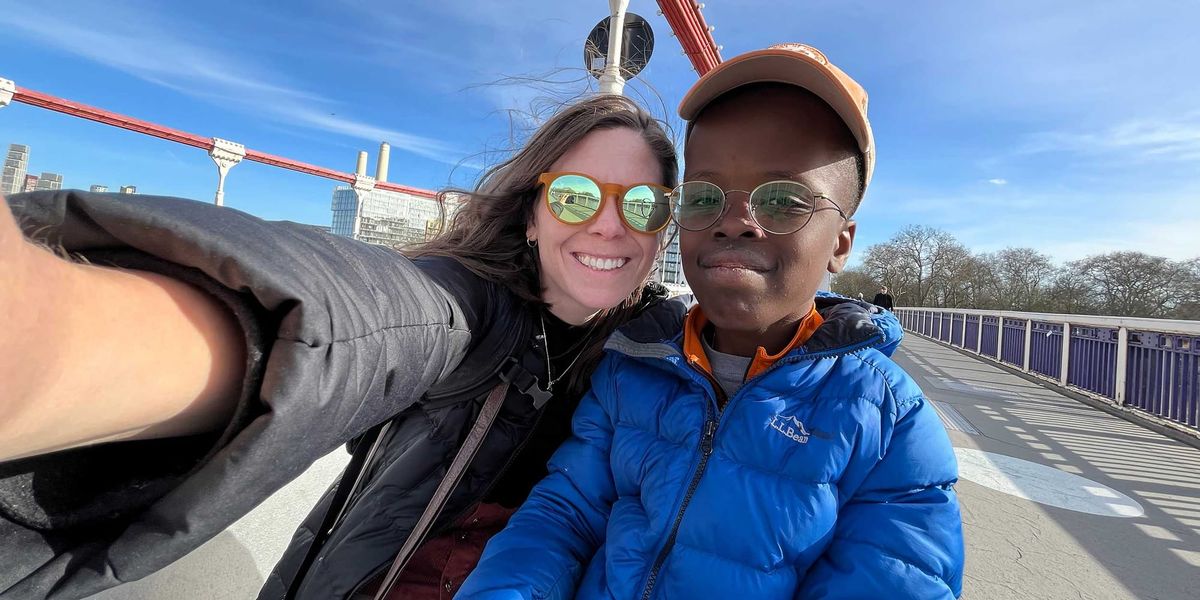
To prepare for high-stress environments, the family actively rehearses responses. They have practiced scenarios using stuffed animals, acted out potential confrontations, and even collaborated on comic books illustrating chosen strategies. Airplane boarding, for instance, historically presented a significant source of stress due to assistance staff moving Robert’s wheelchair without permission or making unilateral decisions about boarding. By discussing preferred approaches and role-playing at home—with Morris simulating an unannounced grab of the wheelchair and Robert practicing a clear, respectful response—the family builds the muscle memory necessary to handle high-pressure situations with confidence.
While the family has developed a diverse array of skills for responding to ableism, they acknowledge that they still occasionally stumble or wonder if a different approach would have been more effective. Navigating these interactions demands constant self-reflection, and what constitutes an acceptable response shifts depending on variables such as age, race, gender, and the specific nature of a disability, all of which intersect with pre-existing societal assumptions. By combining careful planning with a willingness to experiment with different strategies, Morris and John continue to support Robert’s growing confidence, offering a framework for others navigating similar challenges.



