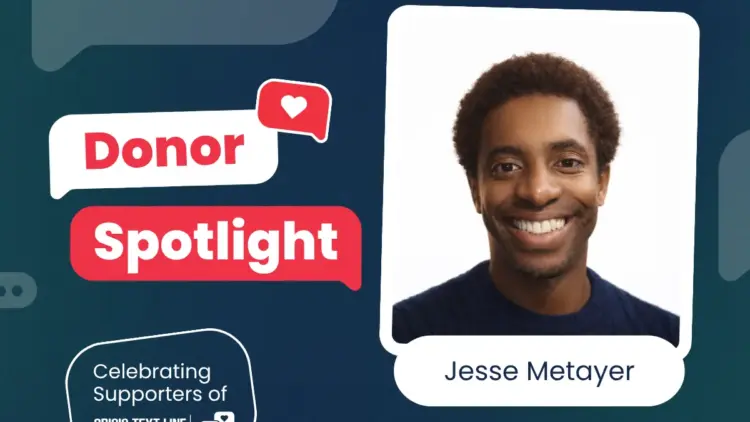
Every text message received by crisis intervention services is answered because someone believed it mattered enough to make that connection possible. This month, that driving force is embodied by Jesse Meyer, a dedicated donor, volunteer, and mental health advocate whose ongoing generosity directly helps train the Crisis Counselors who show up for texters during their absolute hardest moments.
Meyer’s journey to becoming a pillar of support for others is rooted in his own deeply personal experiences with mental health, overcoming social stigmas, and learning the transformative power of being truly heard. In a candid interview, Meyer shares how his own experience in therapy broke down misconceptions he once held, the specific techniques he utilizes to turn heated emotional crises into calm moments of empowerment for texters, and the personal projects and routines that bring him lasting joy and tranquility.
Overcoming Stigma and Finding a Path Forward
Reflecting on what initially inspired him to support crisis intervention services, Meyer opens up about his childhood and early adulthood struggles, noting that he spent most of his early years feeling fundamentally different from his peers.
"I spent most of my childhood feeling different. I was in learning disability classes throughout school and tried to hide how hard things were for me," Meyer explains. The weight of these challenges ultimately led him to drop out of college at the age of 18, after which he began to isolate himself from the world around him. In what he describes as his darkest moment, Meyer felt as though there was no hope left, prompting him to finally reach out for professional help—a turning point that changed the trajectory of his life.
"My therapist listened with empathy and provided emotional support and resources that I was able to use to improve my mental health," Meyer says. "The experience showed me the importance of seeking professional help when you feel that all hope is lost. I used to believe that therapy was for people with severe mental illnesses, which was a stigma that is untrue. Anyone, at any given moment, can experience difficulties in life."
That realization shattered a personal barrier and planted the seeds for his future advocacy. By experiencing firsthand the life-saving impact of nonjudgmental listening and professional guidance, Meyer understood how vital it is to ensure that similar resources remain accessible to anyone facing emotional distress.
Turning Crisis Into Clarity Through Training
That foundational empathy soon translated into active community involvement. After enrolling in a free six-week training program with Crisis Text Line, Meyer acquired practical emotional regulation techniques that he now applies directly when interacting with individuals in acute distress.
"In my free six-week training with Crisis Text Line, I learned emotional techniques that I’ve later used with texters who reached out with their problems," Meyer shares. By deploying these proven frameworks, he has been able to effectively navigate intense initial conversations—what volunteers refer to as "hot moments"—and successfully guide texters toward a sense of calm and self-empowerment by the end of their exchanges. "I feel satisfied knowing that I can make a difference in someone else’s life."
This commitment to crisis intervention stems from a broader philosophical understanding of human interaction and emotional support. Meyer emphasizes that people suffering from emotional distress are often the very individuals we encounter daily, making skilled, compassionate listening an essential community asset. Through his rigorous training, he learned that listening is not merely a passive act, but a deliberate skill that fosters patience and cultivates critical thinking.
"It makes us understand a person’s words, emotions, and needs," Meyer notes, highlighting how crucial it is to meet suffering individuals with patience rather than immediate judgment.
The Mutual Impact of Giving Back
For Meyer, the decision to support mental health initiatives goes far beyond financial contributions; it is an active, ongoing partnership with a platform that delivers free, 24/7 support to anyone in need. When asked about the impact of his contributions, Meyer speaks directly to the validation and shared humanity found in each interaction.
"Being there for texters reassures them that they can reach out at any time, any day, for immediate support. It’s all free," he explains. "There have been times when a texter expressed gratitude at the end of our conversation. This makes me feel a sense of validation, gratitude, and self-worth. By simply being present and listening to someone with compassion, I can help them through a difficult time. That’s why I continue to volunteer."
The support system works both ways. Meyer credits the organizational framework of Crisis Text Line—including readily available coaches and supervisors who answer questions and offer ongoing guidance—with strengthening his own capacities. His philanthropic priorities are firmly rooted in this visible, direct impact. By helping fund the training infrastructure that keeps the platform active and free around the clock, he ensures that financial barriers never prevent someone from receiving critical care.
This continuous cycle of giving and receiving has also profoundly shaped Meyer’s personal and professional life outside of volunteering.
"I feel good when I’m able to help someone who is suffering from psychological distress," he says. Beyond the immediate emotional reward, the discipline of crisis intervention has fundamentally altered how he handles personal stress and interpersonal relationships. "I have learned never to make decisions when my emotions are high. Slowing down helps clear my mind and strengthens my critical thinking skills. I bring that same patience and empathy to help me deal with any stressful situation in my own life."
Furthermore, Meyer notes that his volunteer work has taught him the importance of withholding judgment, allowing him to see the full picture and avoid unfair misunderstandings when interacting with friends and family.
A Call to Action and Personal Balance
When considering what message to share with potential donors and supporters who may be weighing a contribution, Meyer speaks with urgent clarity about the diverse hardships faced by those who rely on the platform.
"I would tell them that they will be helping people who are dealing with disasters, systematic poverty, war, or other hardships," Meyer urges. "Giving our help freely ensures that those who need emotional help the most will be receiving assistance that they would otherwise be lacking if they were forced to pay for help. You are the backbone that keeps this platform free and active 24/7 for people in need of emotional support. If you’re ever struggling, please know you’re not alone and that reaching out is the first step towards hope."
Maintaining his own mental health and emotional equilibrium remains a vital part of Meyer’s daily routine, ensuring he has the inner resources necessary to continue showing up for others. To sustain his well-being, he relies on a balanced mix of community, personal creativity, and physical activity.
"I tend to my mental health by going to church, volunteering for Crisis Text Line, and working on my projects like the StarTalk app, which gives me joy and tranquility," Meyer shares. "I also like going to the gym and taking long walks in parks."