A major study published in JAMA Neurology has delivered a stark projection regarding global health: the number of new dementia cases is projected to double worldwide by the middle of the century. The findings have brought renewed urgency to public health discussions, highlighting the immense challenges ahead for healthcare systems, policymakers, and the millions of families navigating cognitive decline.
For family caregivers who are taking care of a loved one with dementia, as well as those looking ahead at their own cognitive health, projections of this scale can feel overwhelming given their profound societal ramifications. However, public health experts emphasize that understanding the driving forces behind these numbers serves as a critical first step toward prevention and better care planning. Getting this escalating issue under control will ultimately require real global leadership, coordinated advocacy, and targeted medical advancements.

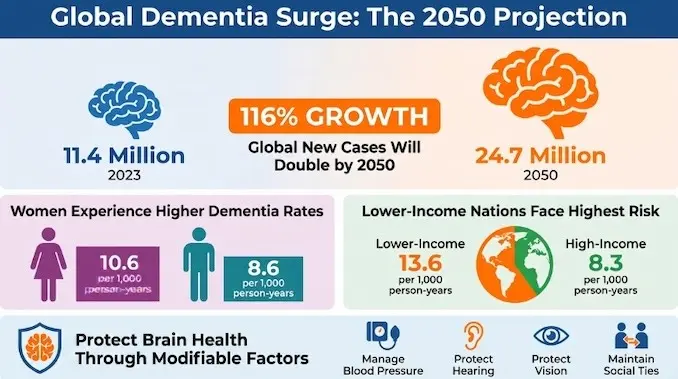
According to the data released in the October 2026 study, the global scale of cognitive decline is shifting dramatically. In 2023, there were an estimated 11.4 million new dementia cases globally. By 2050, that annual figure is projected to surge to 24.7 million new cases, representing a staggering 116% increase.
Researchers are quick to point out that this sharp spike is not driven by the disease itself becoming biologically more aggressive, but rather by the rapid aging of the global population. Age remains the single biggest risk factor for the development of dementia, and as medical advancements and living standards improve, people are living longer than ever before.
Dr. Emer MacSweeney, a consultant neuroradiologist, views this projected increase not as an inevitable consequence of getting older, but rather as a vital wake-up call. She notes that the data demands an immediate acceleration in prevention strategies, earlier diagnoses, and more effective treatments to alter the trajectory before the middle of the century arrives.

Beyond the sheer volume of cases, the research also revealed a significant gender gap in who develops dementia. The study found that the incidence rate for women was 10.6 new cases per 1,000 person-years, compared to just 8.6 for men.
While women generally enjoy longer lifespans than men, researchers indicate that longevity alone does not entirely explain this disparity. Sex-specific biological factors, including the complex hormonal shifts that occur during menopause and the cumulative lifelong exposure to estrogen, appear to play a substantial role in shaping long-term brain health. This physiological reality underscores the critical need for women to prioritize their cognitive and cardiovascular health well before entering their senior years.
The research further highlighted a pronounced geographical divide in dementia incidence, pointing directly to the well-established heart-brain connection. The study revealed that low- and middle-income countries face a notably higher incidence of dementia, recording 13.6 cases per 1,000 person-years, compared to 8.3 cases in high-income nations.

This regional disparity is closely tied to broader socioeconomic and public health trends. Over recent decades, high-income nations have experienced a steady decline in smoking rates, alongside improved management of untreated high blood pressure and high cholesterol. Conversely, many low- and middle-income countries are currently witnessing rising rates of obesity, stroke, and cardiovascular disease. The overarching medical takeaway for researchers and caregivers alike is that protecting cardiovascular health is fundamentally intertwined with preserving brain health.
While individuals cannot stop the passage of time or eliminate the risk of aging, a significant portion of a person’s cognitive trajectory is influenced by modifiable risk factors. Medical experts continue to emphasize the importance of focusing on foundational health habits to support long-term neurological wellness. These include actively managing blood pressure, maintaining cardiovascular fitness, preserving sensory health such as vision and hearing, and remaining socially and intellectually engaged as one ages.
The projection of 24.7 million annual dementia cases by 2050 presents a sobering reality for societies worldwide, yet public health advocates stress that this future is not entirely predetermined. By understanding the intricate connection between heart health and cognitive function, individuals and caregivers can take practical steps to mitigate personal risks. Ultimately, tackling the rising tide of global cognitive decline will require a dual approach: empowering individuals with lifestyle modifications and demanding that global leaders unite to address the systemic drivers of the epidemic before it overwhelms healthcare infrastructure.