A major study published in JAMA Neurology has delivered a stark global health projection, warning that the number of new dementia cases is expected to double worldwide over the coming decades. For family caregivers who are currently supporting a loved one with cognitive decline, as well as for individuals looking ahead at their own long-term health, projections of this magnitude underscore profound societal and healthcare ramifications.
Understanding the driving forces behind these numbers represents a critical first step toward prevention and better care planning. However, healthcare experts emphasize that getting this escalating issue under control will ultimately require concerted global leadership, widespread advocacy, and proactive medical interventions.
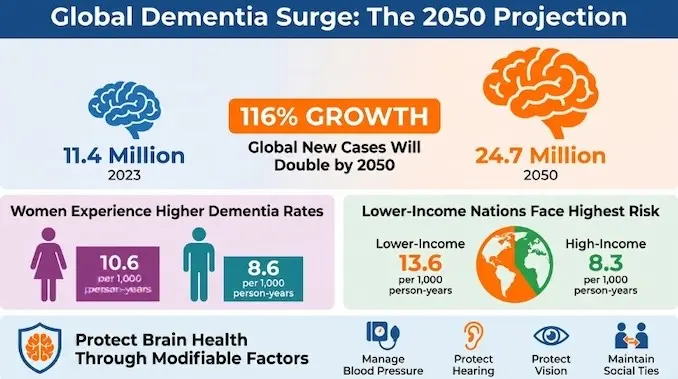
According to the data released in the October publication, the global landscape of neurodegenerative conditions is shifting rapidly. In 2023, researchers estimated there were approximately 11.4 million new dementia cases worldwide. By the year 2050, that figure is projected to surge to 24.7 million new cases annually, representing a staggering 116% increase.

Epidemiologists and medical researchers emphasize that this dramatic spike is not primarily driven by the disease becoming inherently more aggressive or virulent. Instead, the primary catalyst is the rapid aging of the global population. Because age remains the single most significant risk factor for the development of dementia, and because individuals across the globe are living longer lives than ever before, the raw volume of diagnoses is naturally climbing.
Dr. Emer MacSweeney, a consultant neuroradiologist, noted that this projected increase should be interpreted as a vital wake-up call to accelerate prevention, early diagnosis, and therapeutic treatments, rather than viewed as an inevitable and untreatable consequence of getting older.
The study also revealed a notable gender gap in who develops dementia. Researchers found that the incidence rate for women stood at 10.6 new cases per 1,000 person-years, compared to 8.6 new cases per 1,000 person-years for men. While women generally enjoy longer overall lifespans, researchers point out that longevity alone does not entirely account for this disparity. Sex-specific biological factors, including the physiological shifts that occur during menopause and the cumulative lifelong exposure to estrogen, likely play a substantial role in shaping long-term brain health. This distinct gap highlights the critical need for women to prioritize cognitive and cardiovascular wellness well before entering their senior years.
Geographic disparities also figure prominently in the research findings. The study highlighted that low- and middle-income countries face a markedly higher incidence of dementia, recording 13.6 cases per 1,000 person-years, compared to 8.3 cases per 1,000 person-years in high-income nations.

This clear geographic divide points directly to the fundamental connection between cardiovascular health and brain health. Over recent decades, high-income nations have experienced steady declines in smoking rates, alongside improved management of high blood pressure and elevated cholesterol. Conversely, many low- and middle-income countries are currently experiencing rising rates of obesity, stroke, and cardiovascular disease. The primary takeaway for healthcare providers and caregivers alike is that maintaining robust cardiovascular health helps dictate and protect long-term brain health.
While individuals cannot stop the natural passage of time, medical experts point out that a significant portion of a person’s cognitive trajectory is influenced by modifiable risk factors. Healthcare professionals recommend focusing on lifestyle and medical fundamentals to support long-term brain health. This includes proactively managing blood pressure, addressing metabolic conditions like diabetes, protecting sensory health such as hearing and vision, and maintaining strong social connections to ward off the negative impacts of loneliness.
Despite the sobering nature of the 2050 projections, public health officials stress that the future is not entirely predetermined. Through the aggressive management of modifiable risk factors—such as hypertension, diabetes, and overall cardiovascular health—combined with ongoing advancements in medical treatments and therapeutics, global health systems have a tangible opportunity to alter this trajectory.
The brain relies heavily on a vast, healthy network of blood vessels to function properly. Conditions that damage the cardiovascular system, including high blood pressure, high cholesterol, obesity, and tobacco use, restrict vital blood flow to the brain, thereby drastically increasing the risk of both vascular dementia and Alzheimer’s disease.

As the international community grapples with these sobering statistics, experts reiterate that addressing the impending rise in global cognitive decline will require coordinated efforts from political leaders, healthcare systems, and communities. While individual lifestyle modifications remain a powerful defense against the rising tide of dementia, large-scale policy initiatives and expanded access to preventative care will be essential to mitigating the crisis before mid-century.